Penn State develops photomemristor that adapts to light changes in seconds
en.Wedoany.com Reported - A research team co-led by Penn State University has developed a novel photomemristor that mimics the human eye's adaptation mechanism, capable of adjusting from bright to dark environments within seconds. This innovation promises to enhance visual reliability for autonomous vehicles and precision robots under mixed lighting conditions.
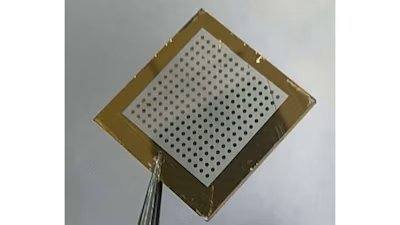
Published on June 9 in Nature Communications, the study details how the team altered the construction of a core electrical component in optical systems, enabling it to absorb water and swell or dehydrate and shrink based on light levels, thereby dynamically adjusting sensitivity. This component, known as a memristor, is a miniature device that retains data even after power loss, mimicking how the brain processes and stores information. The photomemristor variant senses and collects light information, converting it into electrical current to power advanced cameras and optical systems.
Traditional photomemristors are typically calibrated and optimized for constant lighting conditions, making it challenging to maintain recognition accuracy under varying or mixed light. Larry Cheng, co-corresponding author of the paper and James L. Henderson Jr. Memorial Associate Professor of Engineering Science and Mechanics at Penn State, noted that when an autonomous vehicle drives at night, the contrast between the dark sky and the bright headlights of oncoming cars creates mixed lighting conditions where artificial optical systems are prone to errors in identifying details, such as the glow of red lights.
In the human eye, rod and cone cells facilitate visual adaptation to different light levels: rod cells allow the eye to distinguish details in darkness, but their pigments "bleach" under bright light and slowly regenerate; cone cells remain active, enabling the eye to discern contrast details. The research team incorporated this mechanism into the photomemristor design. They primarily used two materials to construct the device: a stretchable gel-like plastic called PEDOT:PSS, and titanium dioxide (TiO2). TiO2 captures light and converts it into photocurrent, which passes across the surface of PEDOT:PSS and regulates the amount of water the plastic absorbs from the surrounding environment. In dark environments, the material rapidly absorbs water; under light, it dehydrates and dries out, allowing the device to self-regulate its sensitivity based on ambient light information.
Larry Cheng pointed out that this key design difference enables the system to dynamically adapt to changing light conditions, unlike traditional systems typically developed for a single static scenario. The team first tested the device by exposing it to ultraviolet (UV) light of varying intensities. Results showed that the new photomemristor efficiently and accurately detected UV light intensity, unaffected by external humidity. Each memristor measures only half a millimeter in diameter, slightly thinner than a credit card. Larry Cheng believes the device can be scaled according to application needs; by connecting them into arrays, it can better recognize a wide range of light patterns without increasing the size of individual components.
To further evaluate performance, the team designed an experiment simulating an eye doctor's test: they integrated a 4×4 photomemristor array with a neural network to form a basic vision system similar to those used in cars and robots. They arranged LEDs in the shape of the letter "F" and placed them in front of a background adjustable to various brightness and dimness levels. After seven training iterations, the device and neural network achieved over 95% accuracy in recognizing the letter pattern under mixed lighting conditions. Larry Cheng noted that while the human eye takes 20 to 30 minutes to fully adapt to different light levels, this photomemristor adapts much faster while capturing detailed information about the external environment.
In the future, the team plans to develop the photomemristor into a larger multimodal sensing system capable of interpreting both visual and tactile data simultaneously, significantly reducing system power consumption. Larry Cheng indicated that the technology could potentially help visually impaired individuals restore vision using artificial optical devices in the long term. It could also be applied to existing power systems in autonomous vehicles or play a role in human-machine interaction and collaboration, enabling systems like factory robots to operate better in dark or rapidly changing environments. The team has filed a provisional patent application for the technology. Larry Cheng also holds appointments in mechanical engineering, biomedical engineering, architectural engineering, industrial and manufacturing engineering, materials science and engineering, and the Materials Research Institute.
This article is compiled by Wedoany. All AI citations must indicate the source as "Wedoany". If there is any infringement or other issues, please notify us promptly, and we will modify or delete it accordingly. Email: news@wedoany.com
Related Products

Automatic Aiming Laser Remote Obstacle Removal Robot
Pinggao Group Weihai High-Voltage Apparatus Co., Ltd.
Industrial and Commercial Point-Type Gas Detector
Jinan Benan Technology Development Co., Ltd.
Conveyor Belt Intelligent Monitoring System
LUO YANG WIRE ROPE INSPECTION TECHNOLOGY CO., LTD.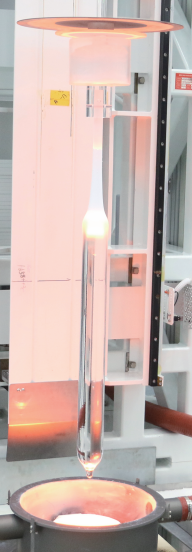
G.652.D Wavelength-extended Non-dispersion Shifted Single-mode Optical Fiber
HONGAN GROUP CO., LTD.
Comprehensive Mining Automation Control System
Beijing Tianma Intelligent Control Technology Co., Ltd.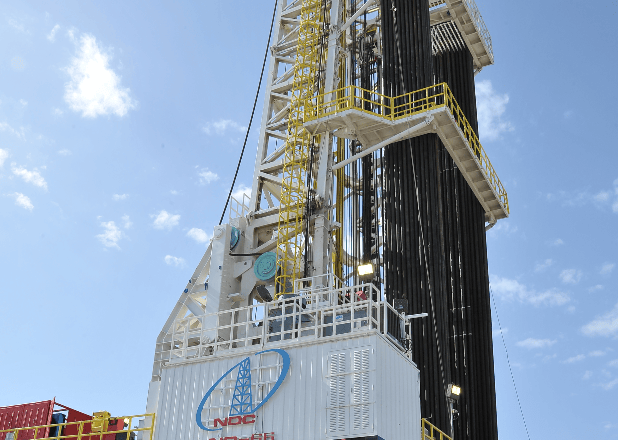




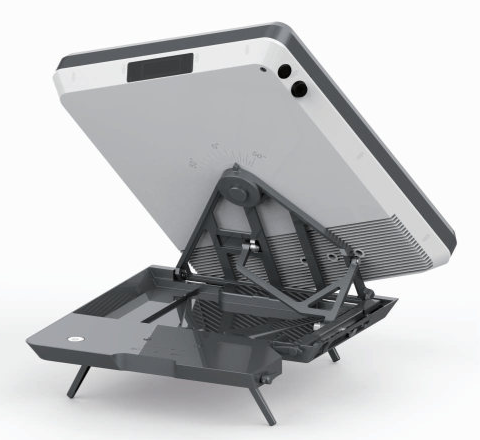
Flat Portable Satellite Terminal 0.35m Aperture Manual Portable Terminal
China Starwin Science & Technology Co., Ltd.