en.Wedoany.com Reported - Imec, the Belgian microelectronics research center, has unveiled what it claims is the world's first narrowband receiver chip compliant with the IEEE 802.15.4ab Ultra-Wideband (UWB) standard, designed to enhance the coverage and reliability of next-generation IoT positioning systems.
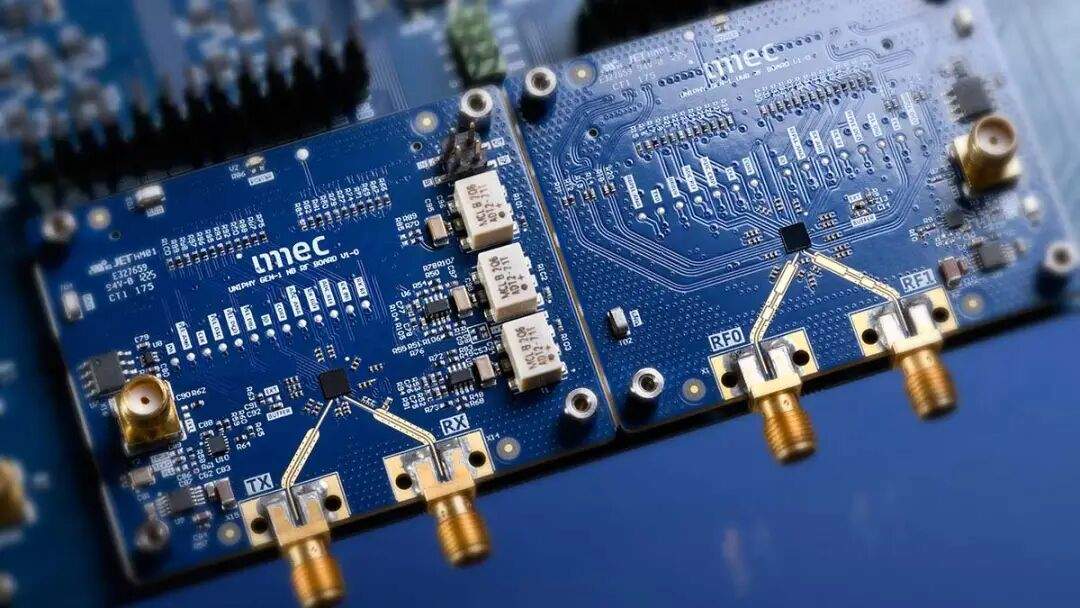
Debuting this week at the IEEE MTT-S Radio Frequency Integrated Circuits Symposium in San Francisco, the chip validates key capabilities of the emerging "Narrowband-Assisted" (NBA) technology, which combines traditional narrowband wireless signals with UWB to improve device discovery, synchronization, and ranging performance. According to imec, the receiver extends UWB detection range by up to four times while maintaining low power consumption and high interference immunity, effectively resisting interference from nearby Wi-Fi networks.
In recent years, UWB technology has rapidly proliferated in smartphones, wearables, connected cars, and industrial IoT due to its high-precision positioning and ranging capabilities. However, its limited coverage and susceptibility to dense wireless environments pose challenges for large-scale deployment. The upcoming IEEE 802.15.4ab standard is specifically designed to address these issues by introducing NBA technology in the 5GHz to 6GHz band to provide auxiliary communication support for UWB. This approach not only improves system scalability and reliability but also reduces the signal strength required for high-precision ranging.
From an engineering perspective, NBA imposes stringent requirements on receivers: devices must operate stably under strong Wi-Fi interference while detecting extremely weak target signals. Imec's solution integrates a novel second-order transimpedance amplifier, high-precision filtering, and an adaptive clipping detector. This detector monitors interference levels in real-time and automatically activates additional filtering and gain control mechanisms when interference intensifies, ensuring signal integrity.
Fabricated using a 22nm CMOS process, the receiver consumes less than 6mW. Anoop Bhat, a senior researcher at imec, stated that this low-power design achieves approximately 9dB improvement in dynamic range over existing advanced solutions, while maintaining high sensitivity to weak signals under strong Wi-Fi interference. Additionally, the solution achieves a low noise figure of 3.2dB and can tolerate Wi-Fi interference of approximately −32dBm, making it suitable for highly congested wireless environments.
Beyond the standalone receiver, imec also unveiled its first complete transceiver architecture compliant with the IEEE 802.15.4ab standard. Through collaborative innovations in the receiver, transmitter, and protocol layers, the platform's ranging performance can be improved by up to 32 times compared to traditional solutions.
These technological advancements will support a variety of emerging IoT scenarios requiring high-precision positioning and low-latency coordination, including robot collaboration in warehouses and factories, industrial asset tracking, and augmented reality devices that interact with the physical environment in real-time. Mitra Gilasgar, imec's product manager for low-power wireless, revealed that the team is also exploring the extension of the NBA architecture to future Bluetooth and other low-power wireless technologies.
The IEEE 802.15.4ab standard is expected to be officially released later in 2026, potentially laying the foundation for the widespread adoption of high-precision wireless positioning technology in consumer, industrial, and enterprise IoT markets.
This article is compiled by Wedoany. All AI citations must indicate the source as "Wedoany". If there is any infringement or other issues, please notify us promptly, and we will modify or delete it accordingly. Email: news@wedoany.com