en.Wedoany.com Reported - Ezviz has released Open Platform 2.0, focusing on three core elements in the AIoT field: engineering capabilities, physical world interfaces, and AI governance.
As AI programming tools become standard in enterprises by 2026, the industry is witnessing a common phenomenon where tool penetration increases but delivery efficiency does not grow in tandem. IoT cloud platform and smart hardware company Ezviz found in its internal practices that company-wide AI experiments costing hundreds of thousands of tokens per month did not lead to a leap in overall throughput. The company believes the efficiency bottleneck stems not from a lack of tools, but from insufficient engineering capabilities. The core signal of the Ezviz Open Platform 2.0 upgrade is "Cloud Leap, Co-creating New AIoT Productive Forces."
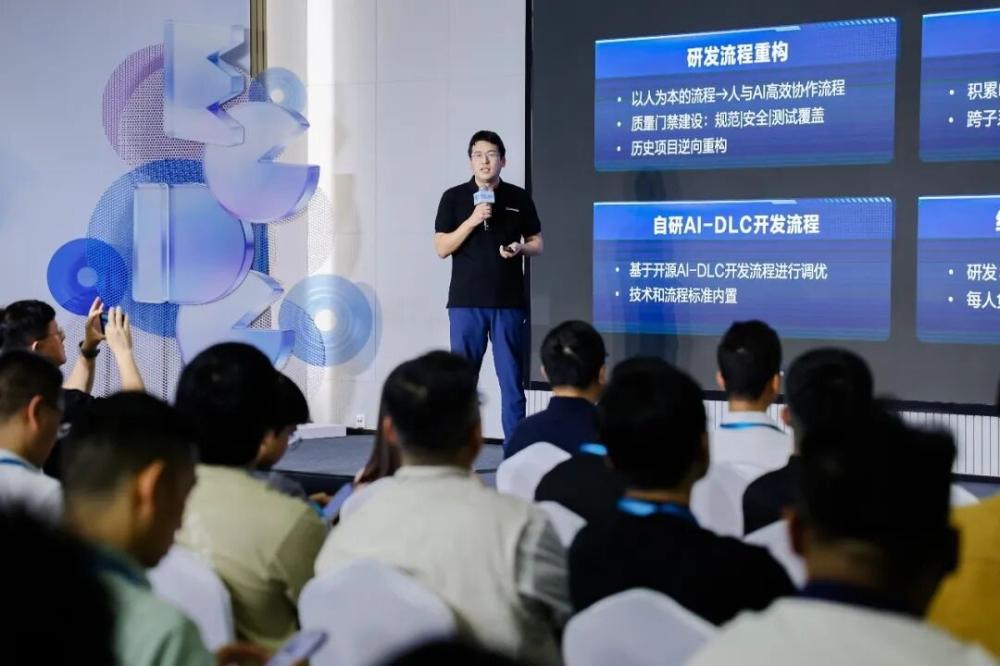
General-purpose large models often struggle to be directly applied in IoT scenarios due to their inability to recognize proprietary protocols and key parameters. Ezviz believes the real gap lies in whether an engineering system can be built to bridge the divide between general AI and vertical industries. Its internal review shows that tools are merely the tip of the iceberg, while "underwater engineering" — such as restructuring R&D processes, distilling industry experience into reusable skills, and ensuring code reliability — is the key. Ezviz Open Platform 2.0 productizes this engineering experience into the "Ezviz Blue Ocean AIoT One-Stop Workbench," aiming to address pain points faced by solution providers, integrators, and hardware manufacturers, including repetitive development, long delivery cycles, and high barriers to entry.
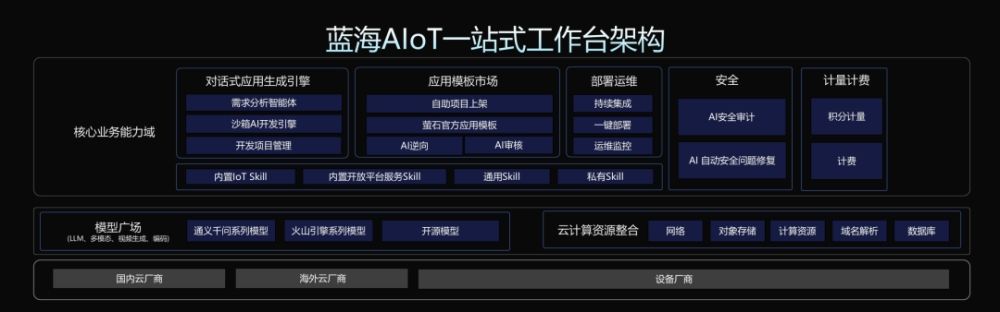
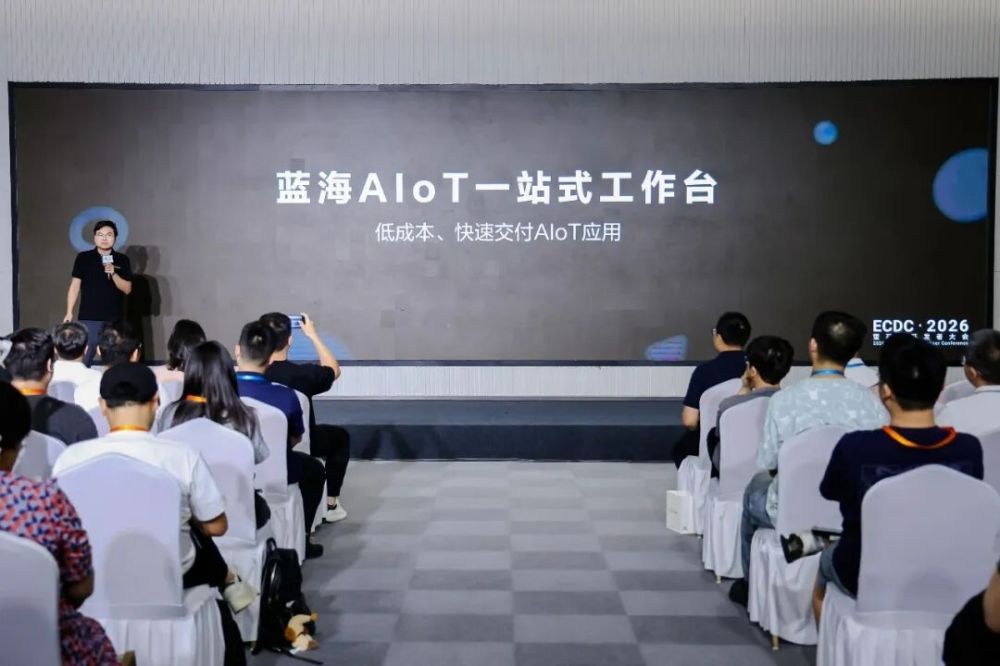
The workbench offers a set of combined capabilities: it converts requirements directly into runnable applications through conversational generation, supporting output across six platforms — backend services, web frontend, Android, iOS, HarmonyOS, and WeChat Mini Programs; it encapsulates cross-vendor protocols and device capabilities; and it provides one-click deployment and an application template marketplace. Platform data shows that the original 45-day development cycle can be shortened to produce a prototype in 15 minutes, delivery projects are compressed from 3 weeks to 1 month down to 2 days, and per-person-day costs are reduced to approximately one-fifth. Developers can quickly get started using official templates from the application template marketplace, or list their own applications on the marketplace for monetization through rental or buyout models, with settlement via a supporting points system. All listed templates undergo AI security review. This mechanism closes the loop of "capability, product, revenue," allowing developers' industry expertise to be distilled into reusable, tradable, and distributable assets.
With model homogenization and the parity of computing power, Ezviz judges that scarce resources in the AI field are shifting toward physical world interfaces. Leveraging its over 360 million connected devices and visual DNA, Ezviz has achieved a closed loop of perception, judgment, and action, and has encapsulated cross-vendor, cross-protocol device capabilities into replicable skill packages, forming access capabilities to the physical world. The platform has developed a unique advantage in addressing the "proprietary protocol wall." For example, by integrating its digital assistant, a large enterprise achieved "one-sentence visual inspection" across over 20 parks and more than 300 inspection points, improving inspection efficiency by 120%, achieving minute-level anomaly response, without the need for custom development.
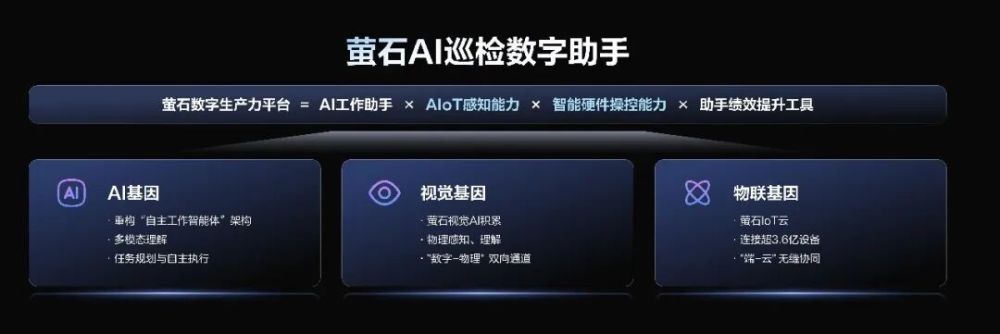
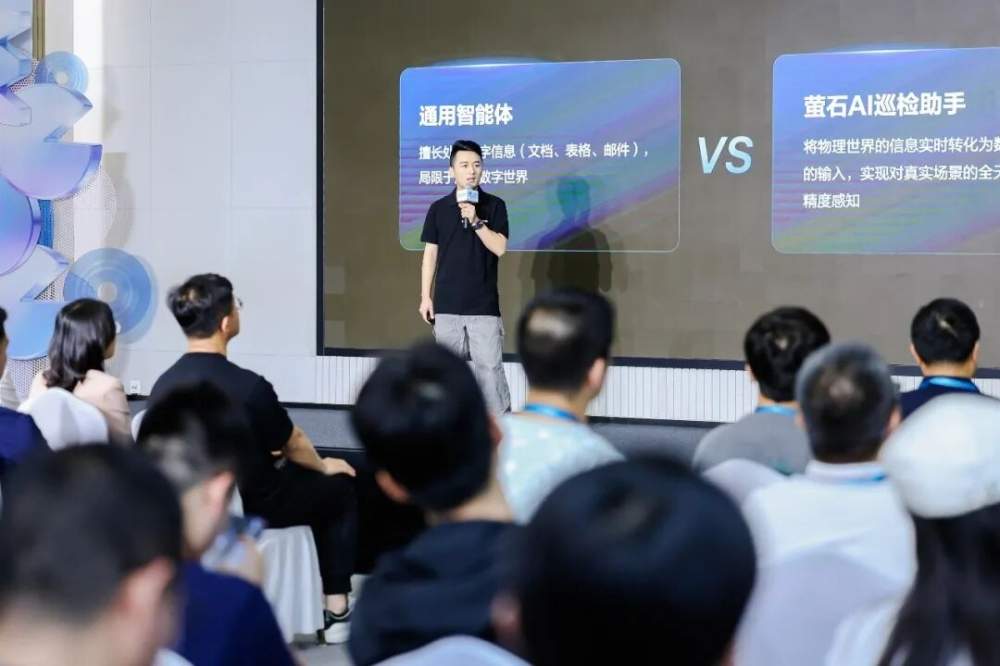
Addressing the five major challenges faced by open-source digital assistants like OpenClaw (known in the industry as "Little Lobster") when entering enterprise production environments — including cost pressure from single-instance standalone deployment, experience loss from tens of seconds of cold start, response delays caused by multi-round Agent Loops, security risks from default full permissions, and hallucination misoperations due to behavioral divergence — Ezviz has provided solutions through engineering transformation. Specific measures include using a multi-tenant shared base to reduce operating costs, optimizing Agent Loops to lower token consumption and interaction rounds, implementing a dual-gate mechanism to intercept divergence on the execution side and tighten permissions on the security side, achieving memory persistence, and establishing a unified operations and maintenance system. This transformation has advanced the proof-of-concept version to a producible, deliverable, and maintainable industrial-grade product, driving the business model from outputting PaaS APIs to providing monthly subscription-based digital assistant services and a two-way trading marketplace for supply and demand.
Facing the challenge that security review speed cannot keep up with the pace of AI releases after deep embedding of AI in R&D, Ezviz has proposed a strategy of using AI to assist in managing AI. On the development side, the platform has AI-ified the secure development lifecycle, deploying four intelligent agents for requirements review, code review, security testing, and intelligence monitoring. Based on 10 categories and 43 security check items integrated from national regulations, industry standards, and attack-defense experience, automated security reviews are conducted. For AI digital assistants, Ezviz has equipped them with governance mechanisms including independent role definition, tool invocation whitelists, key escrow and rotation, hallucination suppression, isolated runtime environment, and behavior logging and auditing, aiming to achieve "full-process protection" in security governance.
This article is compiled by Wedoany. All AI citations must indicate the source as "Wedoany". If there is any infringement or other issues, please notify us promptly, and we will modify or delete it accordingly. Email: news@wedoany.com