Singapore and Microsoft Sign AI Safety Agreement to Conduct Agent Governance Research
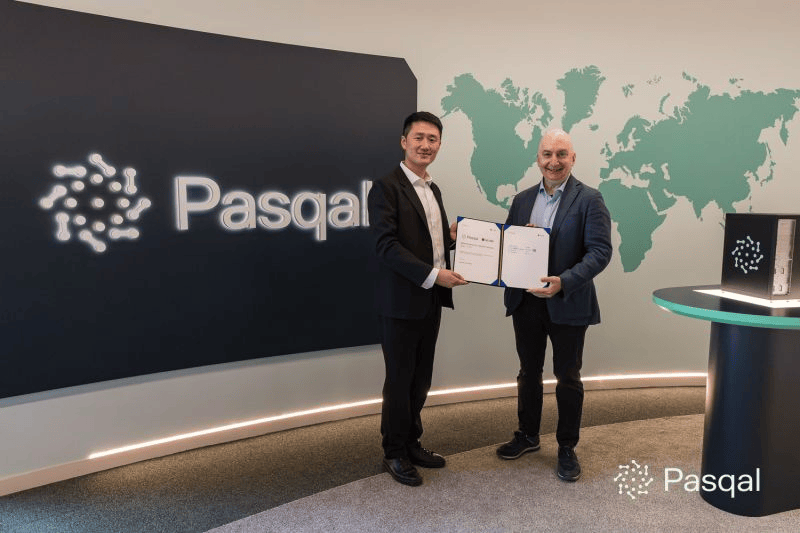
en.Wedoany.com Reported - On June 12, the Infocomm Media Development Authority of Singapore signed a Memorandum of Understanding on AI Safety and Assurance with Microsoft, focusing on collaboration in AI model evaluation, autonomous agent research, knowledge sharing, and access policies for frontier AI models. The Singapore AI Safety Institute will also participate in related efforts, with the agreement targeting safety testing, risk identification, and governance mechanism development as advanced AI systems enter practical applications.
This collaboration centers on autonomous agents, the most closely watched area in current AI development. Unlike traditional chatbots, autonomous agents can invoke tools, break down tasks, execute operations, and continuously complete goals within a certain scope. They offer stronger application potential but also more complex risk boundaries. When enterprises and public sectors adopt such systems, they need to confirm whether agents can overstep authority to access data, whether they can be continuously monitored, whether human accountability chains are preserved, and whether anomalous behavior can be promptly detected.
Singapore has previously prioritized agent governance in its AI policy. In January 2026, Singapore released an AI governance framework for autonomous agents, emphasizing that enterprises deploying agents should establish mechanisms for risk classification, personnel accountability, technical control, and operational monitoring. This collaboration with Microsoft effectively advances the governance framework to the levels of evaluation tools, testing methods, and policy implementation.
A key component of the agreement is the joint development of AI evaluation methods, tools, and benchmarks. When AI models are deployed in government, finance, healthcare, telecommunications, energy, and critical infrastructure scenarios, relying solely on self-testing by model publishers is insufficient to meet external review needs. The evaluation system must cover model capabilities, output reliability, bias and discrimination, cybersecurity, data breaches, unauthorized operations, and abuse risks. For AI systems with tool invocation capabilities, evaluation must extend to the execution chain, not just text output results.
Multilingual AI safety evaluation is also included in the collaboration scope. Singapore operates in a multilingual environment where English, Chinese, Malay, and Tamil are used in parallel, and AI systems may exhibit different safety performances across languages. A model that passes safety tests in English does not necessarily remain stable in other languages. Multilingual testing can help identify differences in prompt injection, sensitive content recognition, cross-lingual misunderstandings, and cultural context handling.
The collaboration also involves knowledge sharing. The Infocomm Media Development Authority of Singapore and Microsoft will exchange AI safety research findings, governance frameworks, and practical experiences, and share relevant methods with ecosystem partners where appropriate. For government agencies, technology companies possess frontline experience in model training, deployment, monitoring, and red team testing; for technology companies, the public sector focuses more on social risks, infrastructure security, and institutional enforceability. The alignment between the two sides can bring AI safety research closer to real-world deployment environments.
Trusted access policies for frontier AI models are a more practically significant topic in this agreement. Advanced models are typically controlled by a few enterprises, and external institutions need access to models for safety testing, but model access involves trade secrets, system security, and abuse risks. The Infocomm Media Development Authority of Singapore, the Singapore AI Safety Institute, Microsoft, and other government agencies will study relevant policy frameworks to explore how governments and infrastructure operators can access frontier models under controlled conditions for safety evaluation and risk verification.
Such policy research will influence future AI regulatory approaches. If governments cannot obtain sufficient testing permissions, external evaluations may remain at the level of public interfaces and limited samples; if access permissions are too open, the risk of model reverse engineering or abuse may increase. A trusted access framework needs to balance testing depth, permission controls, confidentiality mechanisms, responsibility allocation, and result usage.
In recent years, Singapore has consistently advanced AI governance in conjunction with digital economy policies. AI safety is no longer just a discussion of ethical principles but is entering the stages of evaluation science, testing benchmarks, and policy tools. Through collaboration with Microsoft, Singapore can leverage enterprise-grade models and cloud service experience to refine operational pathways for autonomous agents, multilingual evaluation, and frontier model access.
For Microsoft, participating in Singapore's AI safety collaboration also helps its responsible AI system take root in the Asian market. As enterprises and public sectors adopt AI services, they increasingly focus on model interpretability, system security, data protection, and compliance certification. Joint research on evaluation methods and governance frameworks can establish clearer trust conditions for the use of advanced AI systems in government, enterprise, and infrastructure scenarios.
This collaboration demonstrates that AI competition has expanded from model capabilities to safety evaluation and governance capabilities. As autonomous agents enter more business processes, evaluation tools, access rules, and cross-sector collaboration will become foundational elements of AI industry development. The agreement between Singapore and Microsoft will not directly produce a single product but will influence the methodological system for AI model testing, policy design, and trusted deployment.
This article is compiled by Wedoany. All AI citations must indicate the source as "Wedoany". If there is any infringement or other issues, please notify us promptly, and we will modify or delete it accordingly. Email: news@wedoany.com
Related Products
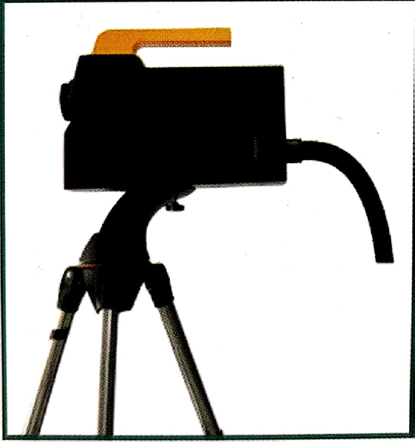

Automatic Aiming Laser Remote Obstacle Removal Robot
Pinggao Group Weihai High-Voltage Apparatus Co., Ltd.


G.652.D Wavelength-extended Non-dispersion Shifted Single-mode Optical Fiber
HONGAN GROUP CO., LTD.

Comprehensive Mining Automation Control System
Beijing Tianma Intelligent Control Technology Co., Ltd.
Flat Portable Satellite Terminal 0.35m Aperture Manual Portable Terminal
China Starwin Science & Technology Co., Ltd.
GYTA Type Non-Self-Supporting Aerial/Duct Optical Cable
TONGDING INTERCONNECTION INFORMATION CO., LTD.
TWP16 P-Band Tropospheric Wind Profile Radar
China Huayun Meteorological Technology Group Co., Ltd.