Huawei Launches HarmonyOS AI Development Products DevEco Code, Covering Full-Process Development
en.Wedoany.com Reported - On June 12, during the Huawei Developer Conference 2026, Huawei released two HarmonyOS AI-assisted development products, DevEco Code and DevEco CLI, providing AI tool support for the development process of HarmonyOS applications and atomic services. Gong Ti, President of Huawei's Consumer Business Group Software Division, introduced during the launch that DevEco Code is positioned as a programming agent, covering research and development stages such as requirements design, code generation, testing, and maintenance. DevEco CLI, on the other hand, opens up the full-process HarmonyOS tools and Skills to developers, making tasks like project creation, syntax checking, compilation and building, and running and debugging more suitable for Agent invocation.
The focus of this release is on improving HarmonyOS development efficiency. As the HarmonyOS application ecosystem expands, developers face multiple tasks including multi-device adaptation, code quality, testing and verification, fault location, and version maintenance. Traditional IDE tools primarily address writing, building, and debugging issues, while AI-assisted development products integrate requirements understanding, code generation, automated checks, and problem fixing into the same development pipeline, reducing developers' time spent on repetitive operations and switching between tools.
DevEco Code is described as a programming agent that "understands HarmonyOS." Built on Huawei's Bifang and OpenCode, it supports out-of-the-box use and custom models. It provides automation capabilities for key stages of HarmonyOS development, generating development ideas based on requirements design, assisting in code generation based on project context, and participating in problem localization, modification suggestions, and verification loops during testing and maintenance phases. For HarmonyOS developers, the value of such tools lies not only in code completion but also in their ability to understand ArkTS, ArkUI, multi-device adaptation, and HarmonyOS project structures.
Multi-device adaptation is a high-frequency scenario in the HarmonyOS ecosystem. Phones, tablets, foldable screens, in-vehicle systems, wearables, and smart screens have different requirements for interface layout, interaction methods, hardware invocation, and display ratios. After DevEco Code opens up relevant Skills, developers can issue commands related to "adaptation" tasks, allowing the tool to handle common issues such as foldable screen avoidance, rotation adaptation, and hardware invocation. With AI involvement, processes that were previously scattered across document consultation, project modification, and repeated debugging can potentially be compressed into more continuous development actions.
Problem localization is also a key scenario for AI-assisted development. Application crashes, freezes, memory leaks, build failures, and runtime anomalies often require developers to repeatedly investigate logs, code, dependencies, and device status. After DevEco Code integrates into the development process through its problem localization Skill, it can help developers narrow down the scope of investigation and connect root cause analysis, fix suggestions, and verification actions. For small and medium-sized teams and developers new to the HarmonyOS ecosystem, such capabilities help lower the tool barrier.
DevEco CLI is designed for command-line and Agent invocation scenarios, with a focus on engineering process automation. It opens up the toolchain capabilities within HarmonyOS development, enabling AI agents to invoke processes such as project creation, syntax checking, compilation and building, and running and debugging. Compared to manual operations via a graphical interface, CLI is better suited for integration into automation scripts, continuous integration systems, and agent workflows, and also facilitates enterprise development teams in incorporating HarmonyOS development tasks into a unified engineering system.
Huawei's launch of these two products at the developer conference reflects that competition in the operating system ecosystem is entering the AI toolchain stage. The number of developers, application quality, and adaptation efficiency all impact the expansion speed of the HarmonyOS ecosystem. DevEco Code and DevEco CLI provide AI-assisted capabilities for the development process, helping developers quickly understand HarmonyOS projects, generate usable code, locate anomalies, and complete adaptation verification in multi-device environments. As more Skills are opened up, HarmonyOS application development will shift from using individual tools to AI-participated full-process engineering collaboration.
For Huawei, AI-assisted development products are also a step towards improving the HarmonyOS ecosystem's infrastructure. An operating system ecosystem depends not only on the number of devices but also on development tools, application quality, documentation systems, and engineering efficiency. After DevEco Code and DevEco CLI enter the development pipeline, HarmonyOS developers can complete design, coding, testing, and maintenance in a more unified tool environment. Whether subsequent products can continuously improve code generation accuracy, complex problem-fixing capabilities, and multi-device adaptation efficiency will determine their actual depth of use among developers.
This article is compiled by Wedoany. All AI citations must indicate the source as "Wedoany". If there is any infringement or other issues, please notify us promptly, and we will modify or delete it accordingly. Email: news@wedoany.com
Related Products
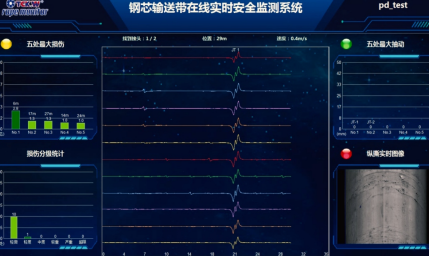

Conveyor Belt Intelligent Monitoring System
LUO YANG WIRE ROPE INSPECTION TECHNOLOGY CO., LTD.
Flat Portable Satellite Terminal 0.35m Aperture Manual Portable Terminal
China Starwin Science & Technology Co., Ltd.

Industrial and Commercial Point-Type Gas Detector
Jinan Benan Technology Development Co., Ltd.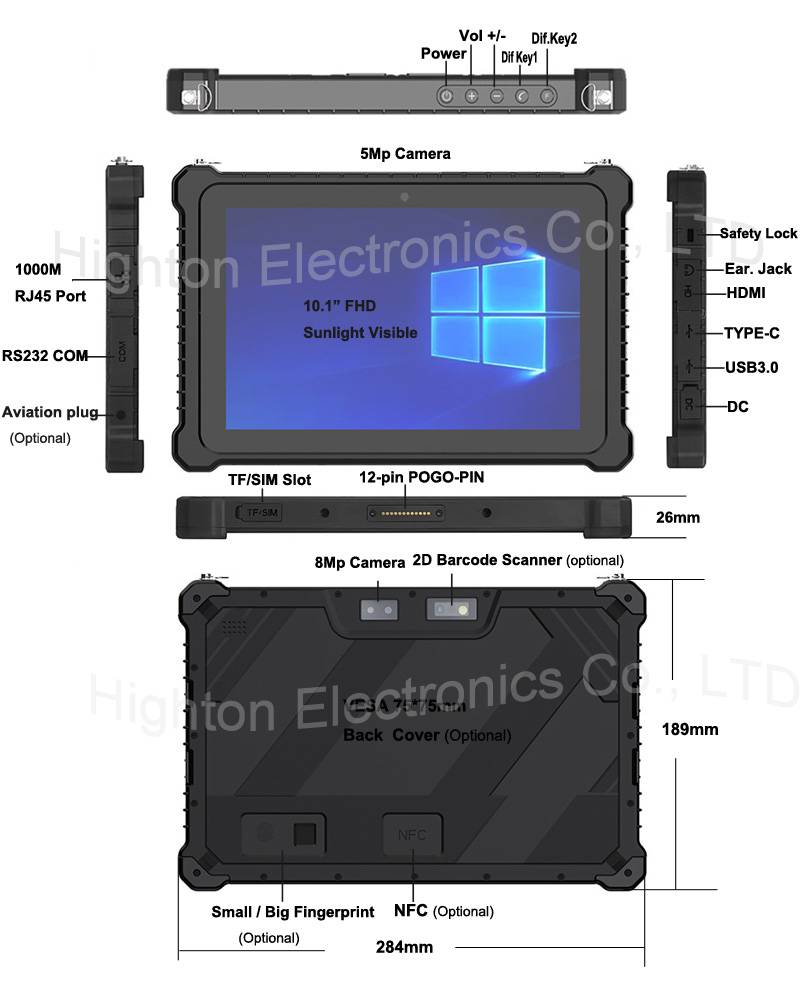
Hot Selling 10 Inch Intel N5100 I5 I7 FHD 8 +128GB 16+256GB Win10 Pro Win11 Pro 4G 5G Rugged Tablet PC Pad with NFC Barcode
Highton Electronics Co., Ltd.


G.652.D Wavelength-extended Non-dispersion Shifted Single-mode Optical Fiber
HONGAN GROUP CO., LTD.
Multi-function Marine Monitoring Low-altitude Detection Radar Sea-air Boundary Ocean Dynamic Environment Measurement
Chengdu Dixin Technology Co., Ltd.