Zhipingfang Open-Sources NeuroVLA Brain-Inspired Embodied Intelligence System to the Industry
en.Wedoany.com Reported - On June 13, Guo Yandong, Founder and CEO of Zhipingfang, unveiled the brain-inspired embodied intelligence system NeuroVLA at the 2026 Beijing Zhiyuan Conference Embodied Industry CEO Forum, announcing that the system has been launched on the AlphaBrain Platform and is open to the entire industry. Developed in collaboration with the Hong Kong University of Science and Technology (Guangzhou), NeuroVLA mimics the three-layer architecture of the human brain—"cortex, cerebellum, and spinal cord"—aiming to equip robots with reasoning and planning, motion stability, and rapid response capabilities simultaneously in complex tasks.
The technical focus of NeuroVLA lies in hierarchical control. When embodied intelligent robots enter real-world environments, they must contend with continuous changes in people, objects, spaces, and task states. A single model struggles to simultaneously handle high-level decision-making, motion details, and sudden reactions. In the brain-inspired architecture proposed by Zhipingfang, the cortex is responsible for deep reasoning and task planning, the cerebellum for dexterity and stability of movements, and the spinal cord for instinctive rapid responses. This design processes "thinking clearly about how to act," "executing stably," and "reacting immediately to changes" at different levels, aiming to enhance task continuity and motion safety in open scenarios.
This approach addresses a practical challenge in the embodied intelligence industry: while robot demonstration capabilities are rapidly improving, systems entering real-world industrial, commercial, and public service settings must handle low-latency control, complex paths, non-standard objects, human interference, and prolonged operation. The brain-inspired VLA model seeks to integrate vision, language, action, and reflex control into a framework closer to biological motor systems, reducing jitter, improving response speed, and maintaining more stable motion capabilities during environmental changes. According to related papers, NeuroVLA adopts a biomimetic neural system structure and has validated the brain-inspired VLA control framework on real robots.
The open-sourcing of the AlphaBrain Platform is another key move in this release. Zhipingfang has previously positioned this platform as a one-stop open-source community for embodied intelligence models, covering cutting-edge embodied technologies, model architectures, training, and evaluation. With NeuroVLA online, developers, research teams, and robotics companies can conduct model training, task validation, and secondary development around the brain-inspired VLA architecture. For the embodied intelligence industry, the value of an open-source platform lies in lowering R&D barriers, enabling more teams to reuse foundational capabilities on unified tools and evaluation systems, and reducing redundant development costs.
Zhipingfang is also advancing hardware delivery capabilities. The company has built a semi-automated robot production line with an annual capacity of over 2,000 units and plans to construct a new production line with a capacity of 20,000 to 30,000 units in the second half of this year. For embodied intelligence companies to deploy large models on real robots, they must go beyond model releases and lab validation to address issues such as hardware manufacturing, edge computing power, sensor adaptation, data feedback, and on-site services. After large models are deployed on the edge side of robots, whether the system can operate under limited computing power, low latency, and high reliability will directly impact the feasibility of large-scale product delivery.
This release indicates that competition in embodied intelligence is shifting from single-point model capabilities to the synergy of "models, platforms, hardware, production lines, and scenarios." For robots to become stable productivity tools, they need continuous access to real-world scenario data and must complete task loops in commercial settings. By open-sourcing NeuroVLA and simultaneously disclosing production capacity plans, Zhipingfang is advancing both its technical roadmap and industrialization pace within a unified framework.
As humanoid robots, general-purpose robots, and scenario-specific robots enter more intensive deployment phases, whether brain-inspired systems can enhance robot generalization and reaction capabilities in complex environments will become a focal point for the industry. The future value of NeuroVLA depends on its ability to operate stably in real-world scenarios such as automotive, semiconductor, biomanufacturing, new retail, and public services, while fostering a sustained developer ecosystem. If the open-source platform, edge deployment, and mass-produced robots form a closed loop, Zhipingfang's release could mark a critical milestone for China's embodied intelligence industry, transitioning from technical demonstrations to large-scale applications.
This article is compiled by Wedoany. All AI citations must indicate the source as "Wedoany". If there is any infringement or other issues, please notify us promptly, and we will modify or delete it accordingly. Email: news@wedoany.com
Related Products


TWP16 P-Band Tropospheric Wind Profile Radar
China Huayun Meteorological Technology Group Co., Ltd.
Mine Explosion-proof and Intrinsically Safe Industrial Ethernet Ring Network (10 Gigabit/Gigabit)
Chongqing Mas Sci&Tech Co., Ltd.


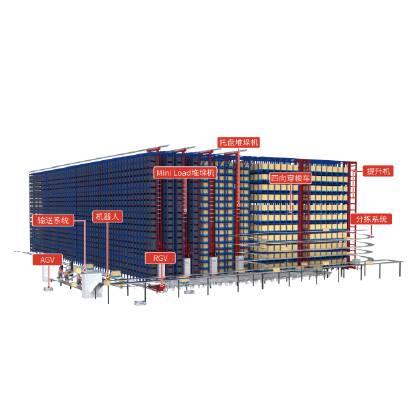

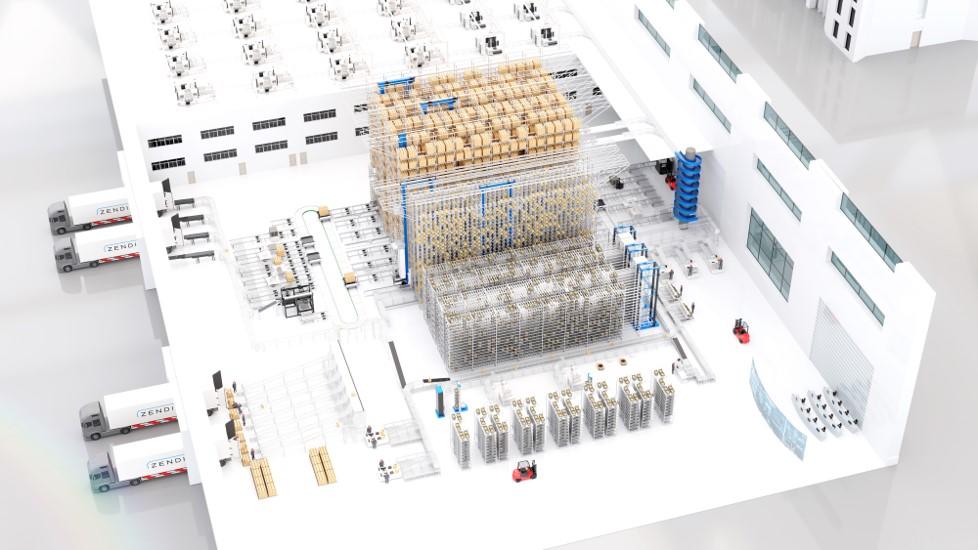
One-Stop Steward Service for the Entire Logistics System Integration Chain
Zhongding Intelligent (Wuxi) Technology Co., Ltd.