en.Wedoany.com Reported - Following a meeting between Paraguayan President Santiago Peña Palacios and U.S. Secretary of State Marco Rubio, the Paraguayan government announced that it is "imminent" to sign a significant agreement with Washington on cooperation in nuclear safety and power generation. A statement issued by the Paraguayan Presidential Office in Asunción noted that the two leaders reaffirmed the strategic alliance between Paraguay and the United States.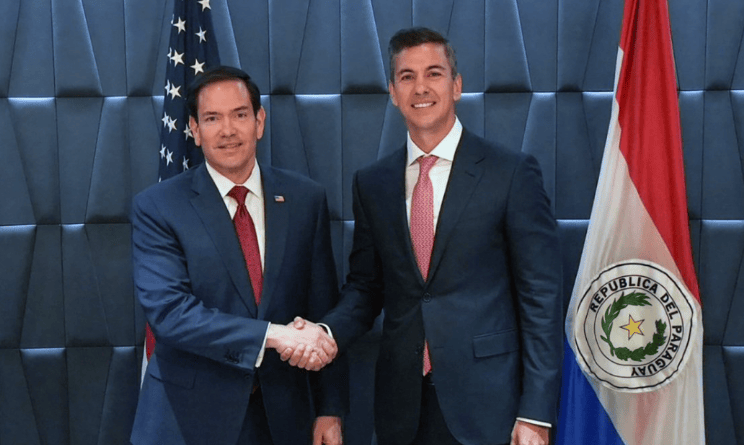
This meeting also signals Paraguay's further strengthening of ties with the United States. In addition to nuclear energy and security cooperation, the two sides discussed import quotas for Paraguayan beef entering the U.S. market, as well as arrangements to promote direct flights between the two countries. These topics indicate Paraguay's desire to expand external connections in trade, transportation, investment, and energy through cooperation with the United States.
Nuclear energy cooperation is particularly noteworthy. Paraguay's current electricity structure is dominated by renewable energy and heavily reliant on hydropower, primarily from the Itaipu Hydroelectric Dam co-managed with Brazil and the Yacyretá Hydroelectric Dam co-managed with Argentina. While this structure gives Paraguay a high proportion of clean energy, it also means its energy system is highly dependent on hydrological conditions and cross-border hydropower cooperation. Therefore, developing new energy options is seen as an important direction for enhancing energy security and improving supply resilience.
In April this year, Paraguay's National Electricity Administration signed a non-binding cooperation agreement with the International Atomic Energy Agency, focusing on studying the application possibilities of small modular reactor technology. This agreement aims to promote Paraguay's evaluation of nuclear energy as a potential strategic option in the process of diversifying its energy structure. Small modular reactors, due to their smaller construction scale and flexible deployment, are considered by some countries as an important supplement to future low-carbon electricity systems. However, issues such as safety regulation, financing costs, technological maturity, and public acceptance remain challenges that must be addressed before actual implementation.
Paraguay has also recently participated in the Critical Minerals supply chain cooperation promoted by the United States, signing relevant memoranda of understanding with 55 other countries. Critical minerals are an important foundation for clean technology and energy transition industries, which echoes Paraguay's exploration of nuclear energy and efforts to diversify its energy structure. For the United States, strengthening cooperation with Paraguay in energy, security, and supply chains also helps expand its strategic influence in South America.
This article is compiled by Wedoany. All AI citations must indicate the source as "Wedoany". If there is any infringement or other issues, please notify us promptly, and we will modify or delete it accordingly. Email: news@wedoany.com