en.Wedoany.com Reported - AI data centers are driving a new wave of capacity expansion for high-speed optical communication materials. On June 16, Japan's JX Advanced Metals announced plans to invest up to 120 billion yen over the next four years to significantly expand its production capacity for indium phosphide (InP) substrates. These materials are primarily used in optical communication transceivers, supporting high-speed, low-latency data transmission for AI training, real-time inference, and hyperscale data centers. JX Metals plans to establish additional production capacity in the Hitachinaka area of Ibaraki Prefecture, building on its existing Isohara Plant in Kitaibaraki City, with the goal of increasing InP substrate production capacity to approximately 7 to 10 times the current level.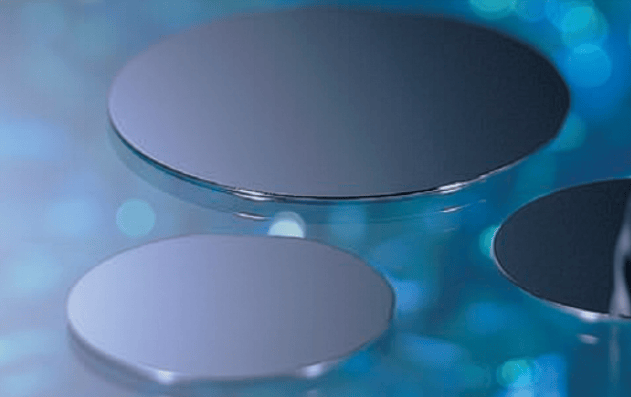
InP substrates are III-V compound semiconductor materials capable of converting electrical and optical signals. They are widely used in optical communication light-emitting devices, light-receiving devices, high-speed electronic components, and infrared detectors. As the scale of AI model training and inference tasks expands, data transmission volumes between servers, racks, and network equipment within data centers are growing rapidly. Traditional electrical connections face challenges in bandwidth, latency, and power consumption. Optical communication technology is beginning to move beyond external data center connections, further penetrating high-speed interconnection scenarios within servers and racks, thereby driving demand for InP substrates.
This investment by JX Metals represents the company's largest-ever capital allocation for InP substrate products. The company stated that it has been continuously pursuing capacity expansion investments for this product, including projects disclosed in July 2025, October 2025, and February 2026. When combined with this new 120 billion yen investment, the total investment scale reaches approximately 150 billion yen. This new investment will be used to support stable supply, respond to customer expansion demands, and cultivate InP substrates as a core profit pillar alongside semiconductor sputtering targets.
The direct background for this expansion is that demand for optical communication equipment driven by AI infrastructure has exceeded original expectations. Generative AI has already spurred the construction of large-scale training clusters. Agentic AI further increases demands for model invocation, task planning, and real-time inference. Physical AI embeds AI into robots, autonomous driving, and industrial equipment, driving higher-frequency data flow between the cloud, edge, and terminals. High-speed optical modules, optical transceivers, silicon photonics, and optoelectronic integration all require upstream compound semiconductor materials, making InP substrates a key material in the AI data center supply chain.
From a capacity layout perspective, JX Metals' dual-base expansion within Ibaraki Prefecture leverages the existing production foundation of the Isohara Plant while enhancing supply flexibility through new capacity in the Hitachinaka area. InP substrate production involves crystal growth, slicing, grinding, polishing, inspection, and quality control, requiring high standards for material purity, lattice defects, dimensional consistency, and surface quality. Capacity expansion is not merely about increasing equipment numbers; it also requires stable processes, yield rates, and customer certifications. JX Metals stated that detailed investment plans will be announced separately upon finalization, indicating that this announcement confirms the capital investment policy, with specific construction and equipment arrangements to be disclosed in phases.
For the optical communication industry chain, upstream expansion of InP substrate capacity will impact the supply of optical modules, lasers, detectors, and data center network equipment. The performance improvement of AI servers and GPU clusters increasingly relies on high-speed interconnection capabilities. If the supply of optical communication components falls short, downstream data center construction may face constraints related to material, component, and packaging delivery cycles. As one of the few global suppliers with long-term manufacturing experience in InP substrates, JX Metals' expansion plan will provide new capacity support for the optical communication needs of AI data centers.
This investment also reflects JX Metals' strategic shift towards semiconductors and advanced materials. The company has long been engaged in non-ferrous metals, electronic materials, and semiconductor materials, and has recently strengthened its material supply capabilities for semiconductors, communications, and high-performance computing. The InP substrate expansion aligns with the company's long-term vision of transitioning from traditional resources and smelting operations towards a technology-driven advanced materials enterprise. As demand for AI, optical communications, advanced packaging, and high-performance computing grows, the strategic position of material suppliers in the global semiconductor industry chain is rising.
However, the 120 billion yen expansion does not mean capacity will be immediately available. InP substrates are high-tech materials, and new capacity requires time for equipment installation, process debugging, customer qualification, and stable supply. JX Metals plans to advance capacity construction through investments over the next four years, targeting a 7 to 10-fold increase, but the specific pace depends on equipment procurement, process validation, customer orders, price adjustments, and market demand changes. The company also stated that it will proceed with price adjustment discussions with customers to establish a stable supply system.
Competition in AI data centers is extending to the optical communication materials sector. With the accelerated development of optical interconnects, optical modules, and optoelectronic integration technologies within data centers, upstream key materials like InP substrates will directly impact the pace of AI infrastructure expansion. In the coming years, suppliers capable of stably providing high-quality compound semiconductor substrates will occupy a more critical position in the AI optical communication supply chain.
This article is compiled by Wedoany. All AI citations must indicate the source as "Wedoany". If there is any infringement or other issues, please notify us promptly, and we will modify or delete it accordingly. Email: news@wedoany.com