en.Wedoany.com Reported - The Mumbai-Ahmedabad High-Speed Rail project has introduced tunnel portal buffer structures for the first time in the history of Bharat's railways. Designed specifically for mountain tunnels, this advanced system will reduce tunnel boom, enhance passenger comfort, minimize environmental noise, and adopt globally validated engineering practices to support safe high-speed train operations.
This technology is being implemented across the entire high-speed rail corridor, which traverses challenging terrain and includes seven mountain tunnels in Maharashtra and one mountain tunnel in Gujarat. Tunnel portal buffer structures are being installed at both ends of these tunnels to ensure smoother and safer operations when trains run at extremely high speeds.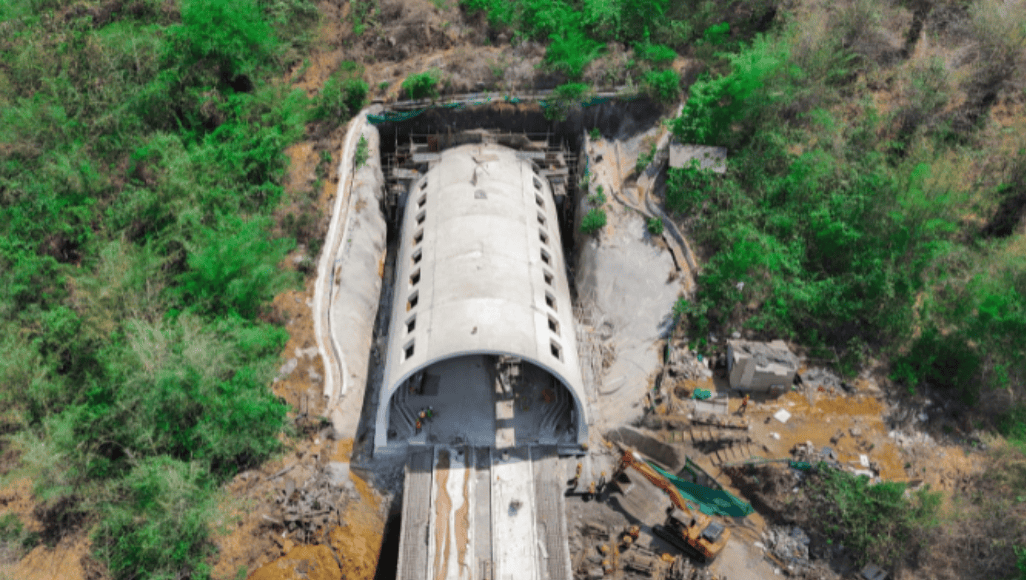
When a high-speed train enters a tunnel, it pushes a large volume of air ahead of it, generating powerful pressure waves inside the tunnel—a phenomenon often compared to a piston moving within a cylinder. As the train exits the tunnel, these pressure waves produce a loud roaring sound known as "tunnel boom." The tunnel portal buffer structure acts as a transition between the open atmosphere and the enclosed tunnel space, helping to regulate airflow and gradually manage pressure changes, reducing sudden compression and improving aerodynamic performance. The adoption of tunnel portal buffer structures is expected to significantly enhance passenger comfort while reducing noise impact on nearby communities.
The tunnel portal buffer structure system on the Mumbai-Ahmedabad High-Speed Rail corridor has been specially designed to deliver multiple operational and environmental benefits: reducing tunnel boom and noise during train movement; lowering disturbance to nearby residences and surrounding areas; improving aerodynamic efficiency for trains operating at speeds exceeding 300 km/h; enhancing passenger comfort for a smoother high-speed travel experience; and supporting safer and more efficient bullet train operations. In short, tunnel portal buffer structures allow the air inside the train and tunnel to adjust gradually rather than abruptly, resulting in a quieter and more comfortable journey.
One of the most innovative features in the design of tunnel portal buffer structures is the inclusion of pressure relief vents or windows. These specially designed openings allow compressed air to be gradually released into the atmosphere as the train enters the tunnel. This controlled release mitigates the intensity of pressure waves and minimizes the likelihood of generating a loud roar at the tunnel exit. The pressure relief system also helps maintain smoother airflow dynamics within the tunnel, contributing to operational stability and energy efficiency.
Buffer structures have been installed at all mountain tunnels along the route, with their length and number of pressure relief windows determined by the tunnel length. Details are as follows: MT-8 (Valsad) tunnel is 350 meters long, with 31-meter buffer structures and 20 windows on each side; MT-7 (Palghar) tunnel is 417 meters long, with 32-meter buffer structures and 20 windows on each side; MT-6 (Palghar) tunnel is 454 meters long, with 32-meter buffer structures and 20 windows on each side; MT-5 (Palghar) tunnel is 1.5 kilometers long, with 40-meter buffer structures and 24 windows on each side; MT-4 and MT-3 (Palghar) tunnels have a total length of 2.66 kilometers, with 45-meter buffer structures and 26 windows on each side; MT-2 (Palghar) tunnel is 228 meters long, with 30-meter buffer structures and 20 windows on each side; MT-1 (Palghar) tunnel is 820 meters long, with 35-meter buffer structures and 22 windows on each side.
The tunnel portal buffer structure system is widely used in countries operating modern bullet train networks, especially where train speeds exceed 300 km/h. Its inclusion in the Mumbai-Ahmedabad High-Speed Rail project reflects Bharat's commitment to adopting international best practices in high-speed rail technology. The project continues to showcase cutting-edge engineering solutions aimed at ensuring world-class standards in safety, sustainability, environmental performance, and passenger comfort.
This article is compiled by Wedoany. All AI citations must indicate the source as "Wedoany". If there is any infringement or other issues, please notify us promptly, and we will modify or delete it accordingly. Email: news@wedoany.com