Three Japanese Shipbuilders Join Forces to Resume LNG Carrier Construction
en.Wedoany.com Reported - Three Japanese shipbuilding companies—Imabari Shipbuilding, Kawasaki Heavy Industries, and Namura Shipbuilding—will jointly resume the construction of large liquefied natural gas (LNG) carriers around 2035, aiming to build three to five large LNG carriers annually.
According to reports, Japan relies on imports for approximately 98% of its domestic LNG demand, making the country heavily dependent on LNG maritime transportation. Since Japanese shipbuilders last built a large LNG carrier in 2019, rebuilding the LNG carrier supply chain will take considerable time. In December last year, Japan officially released its "Shipbuilding Revitalization Roadmap," targeting a doubling of shipbuilding output to 18 million gross tons by 2035. Japanese media previously reported that under the framework of this roadmap, Japan is accelerating discussions on resuming LNG carrier construction.
The Nikkei reported that the Japanese government will discuss formulating a "Public-Private Investment Roadmap" at the upcoming June Growth Strategy Conference, with plans to include the resumption of large LNG carrier construction. It is understood that the Japanese government has designated shipbuilding as one of its 17 key investment areas, and industry insiders believe that support for restarting LNG carrier construction will be a highlight of Japan's shipbuilding revitalization efforts.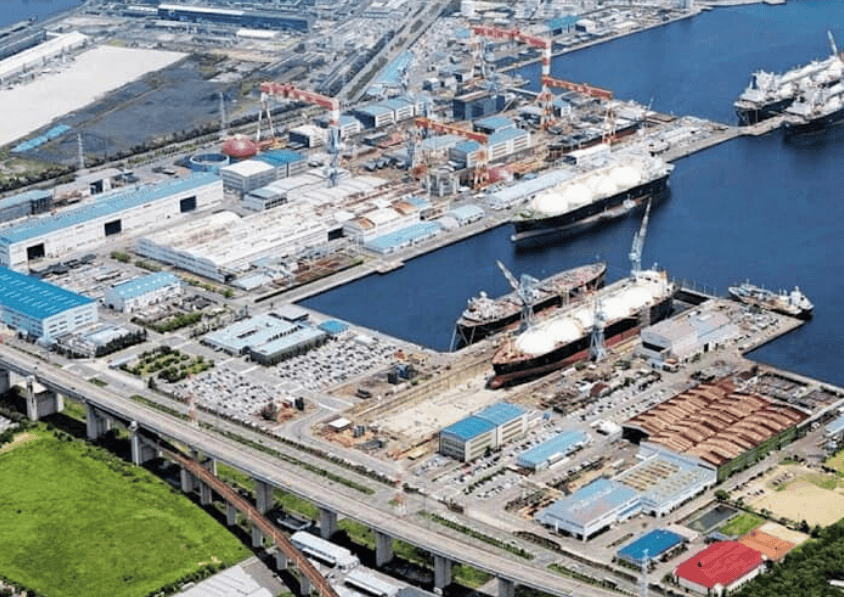
However, contrary to earlier Japanese media reports, Oshima Shipbuilding was not the first selected to resume large LNG carrier construction. The report states that Imabari Shipbuilding, Kawasaki Heavy Industries, and Namura Shipbuilding will share technologies related to LNG carrier design and construction, as well as welding human resources, to jointly advance LNG carrier construction. Currently, the parties may choose to use Kawasaki Heavy Industries' Sakaide Works as a production base, leveraging its large vessel construction capabilities. Other Japanese shipbuilders may also join this cooperation framework in the future.
Currently, approximately 100 LNG carriers are used to secure Japan's LNG supply. The Japanese industry estimates that, based on a 20-year renewal cycle, if Japan can build and deliver five large LNG carriers annually, the country could achieve full transportation autonomy for its LNG imports. However, given that large LNG carrier construction in Japan has been suspended for over five years and the supply chain for LNG carrier construction has "nearly collapsed," Japan's initial goal is to ensure the construction and delivery of three to five vessels per year.
Notably, due to Japan's lack of manufacturing experience in the membrane-type containment system technology that dominates the global LNG carrier market, the Japanese government and the three shipbuilders are seeking cooperation with South Korean and French companies. By mastering membrane-type containment system manufacturing technology, they aim to resume LNG carrier construction as soon as possible.
Additionally, the Japanese government is considering providing subsidies to shipowners to encourage them to order large LNG carriers from Japanese shipbuilders. The Japanese industry believes that LNG carriers are more complex and difficult to build than ordinary commercial vessels, and "relying solely on the efforts of private Japanese companies will not be enough to achieve industrial recovery and development." Public-private cooperation is deemed necessary to ensure energy security.
This article is compiled by Wedoany. All AI citations must indicate the source as "Wedoany". If there is any infringement or other issues, please notify us promptly, and we will modify or delete it accordingly. Email: news@wedoany.com
Related Products


Industrial and Commercial Point-Type Gas Detector
Jinan Benan Technology Development Co., Ltd.
Explosion-proof lithium battery dispatching monorail crane locomotive (permanent magnet frequency conversion integrated machine)
Xiangtan Hengxin Industrial Co., Ltd.
China - Alashankou/Khorgos - Europe Full Range Transportation (Mala/Hamburg/Duisburg/Budapest, etc.)
Shenzhen Neptune Logistics Co., Ltd.