Israel's Airengy and Hagag Europe to Build 5GWh Compressed Air Energy Storage Plant in Romania
en.Wedoany.com Reported - Israel's Airengy and Hagag Europe have announced an investment of approximately €55 million ($63.6 million) to develop a power station in Romania using compressed air energy storage technology.
The project will utilize Airengy's proprietary long-duration "AirBattery" technology to achieve compressed air energy storage (CAES) in salt caverns. The plant is planned to be developed in two phases, with a discharge capacity of 25 MW and an energy storage capacity of up to 5 GWh upon completion. Hagag Europe and Airengy will each hold a 40% stake in the project through a special purpose vehicle, with the remaining 20% held by an undisclosed third party. Airengy will be responsible for the project's planning, design, construction, operation, and the supply of the AirBattery system.
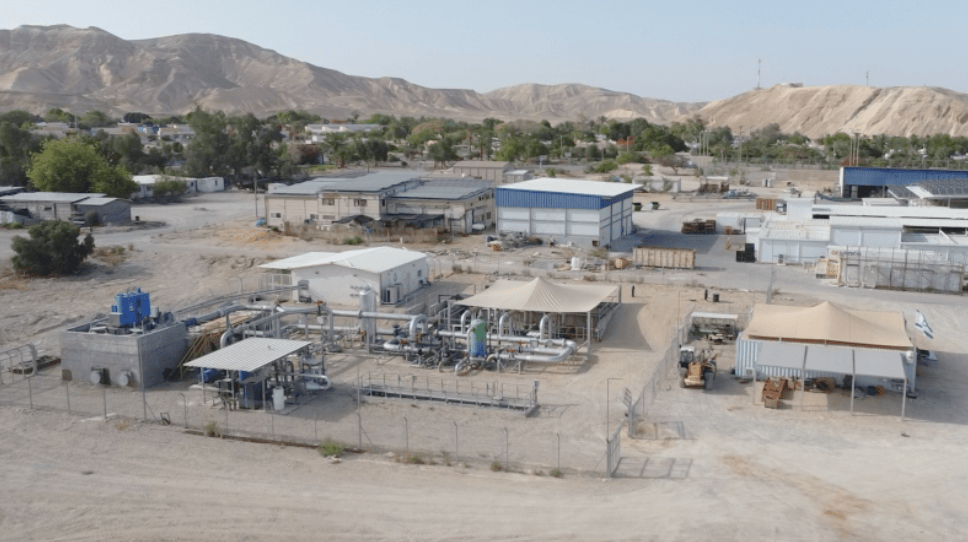
The first phase of the project will initially add approximately 200 MWh of energy storage capacity, with an estimated construction cost of €4.5 million. Joshua Tzvi, Vice President of Business Development Technology at Airengy, revealed that construction is scheduled to begin in 2027, with commercial operations expected in early 2028. The technology has already been validated on a smaller scale. Tzvi stated that the team started with a 10 kW pilot project in central Israel and is currently operating a 250 kW plant in southern Israel. Hagag Europe's investment in the Romanian project represents a significant vote of confidence in the commercialization of this technology, which Airengy developed to complement lithium-ion battery systems.
In terms of technical principles, during the charging phase, excess electricity is used to compress air, which is then injected into underground salt caverns for storage. During the discharge phase, the compressed air is released into a dedicated hydraulic system, where the expanding air pressurizes water, and the water flow drives turbines to generate electricity for the grid. Airengy claims that the process uses only water and air, contains no polluting materials or rare metals, and the equipment can operate for decades with low wear and minimal operational and maintenance costs, while being unaffected by climate conditions.
When discussing the reasons for choosing Romania, Tzvi pointed out the attractive local cost structure of the market. He stated that Airengy has always focused on markets with highly decarbonized grids, established salt cavern storage facilities, and complementary policy frameworks. Hagag Europe's involvement was a key factor in the project's realization in Romania, as the company will gain access to salt caverns as part of its entry into Romania's energy infrastructure market. In addition to the energy sector, Hagag Europe is also active in the real estate industry. Tzvi added that Hagag Europe discovered a large number of unused salt caverns in Romania, some of which already have grid connections and nearby industrial facilities, providing ideal conditions to accelerate the construction of this infrastructure. Furthermore, Airengy is also expanding its business in other European markets, including Germany and the UK, such as collaborating with UK-based Kistos Energy Storage and jointly evaluating a large-scale project site with German natural gas storage company SEFE.
This article is compiled by Wedoany. All AI citations must indicate the source as "Wedoany". If there is any infringement or other issues, please notify us promptly, and we will modify or delete it accordingly. Email: news@wedoany.com