en.Wedoany.com Reported - At the 26th Space Resources Roundtable held on the campus of the Colorado School of Mines, experts proposed that a dedicated set of building codes should be established on the Moon to ensure the safety and integrity of future lunar structures.
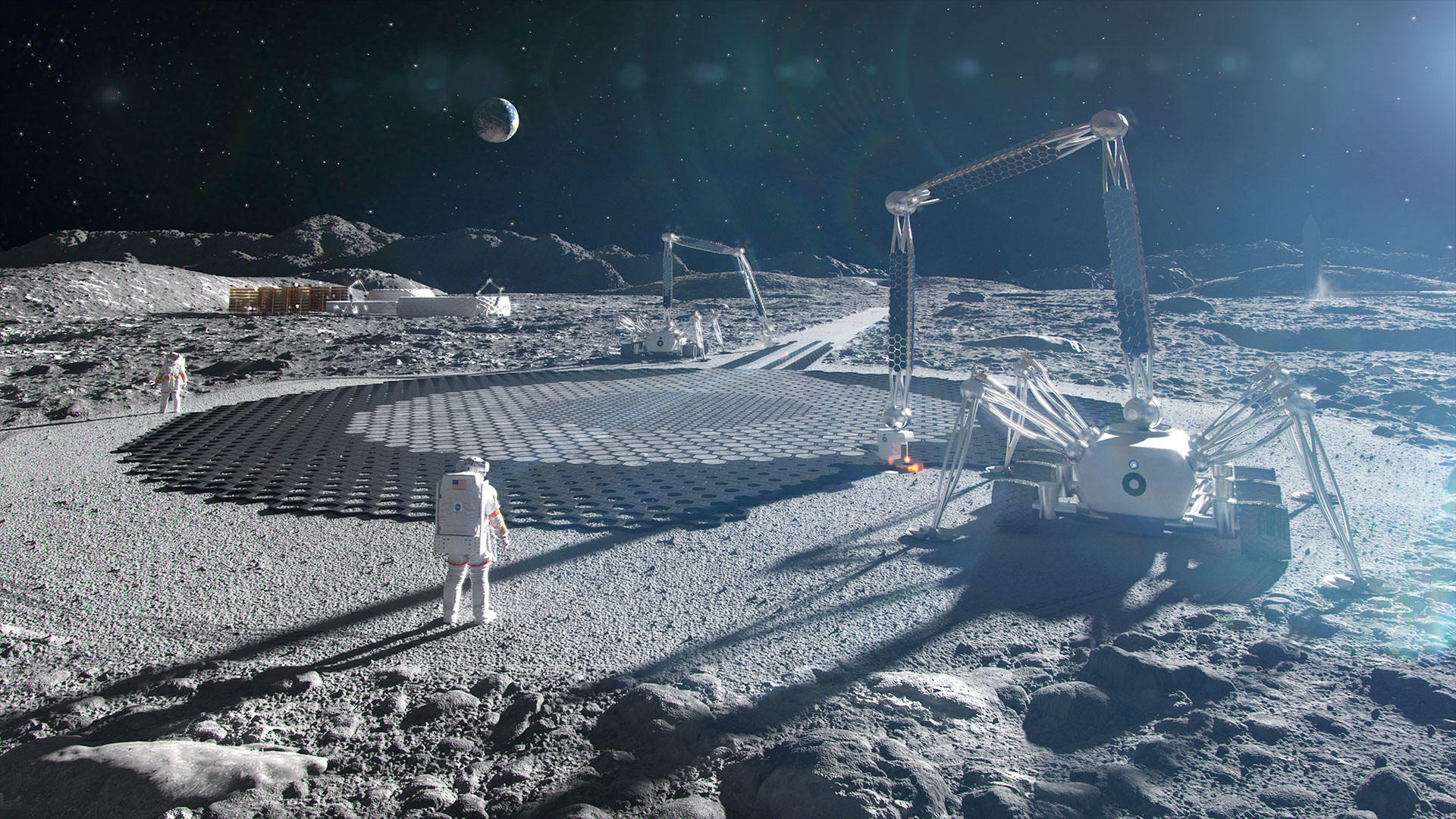
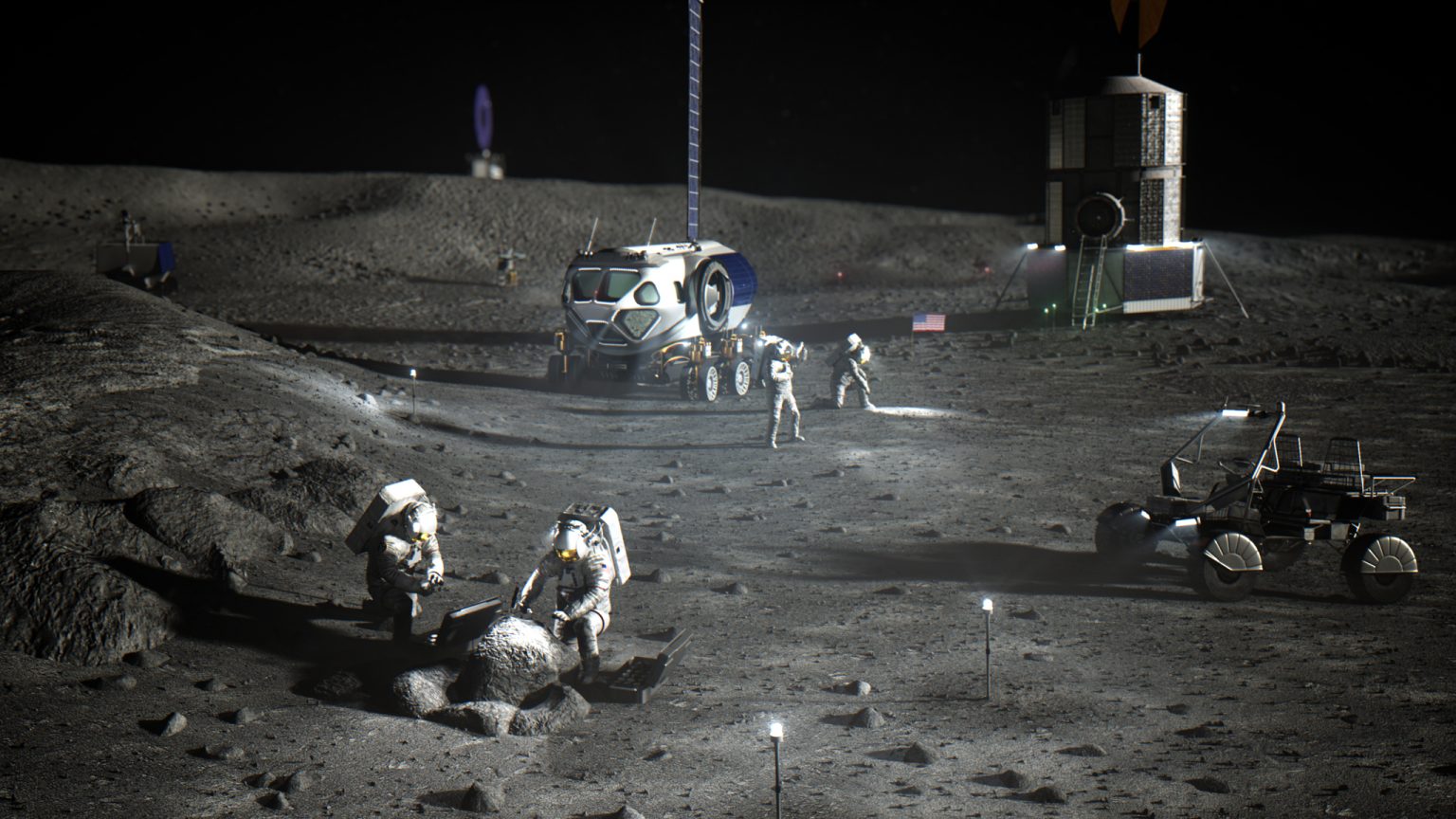
Nerma Caluk, an engineer at Skidmore, Owings & Merrill, noted at the conference that both NASA and Chinese space agencies plan to construct habitats, landing pads, equipment shelters, and towers on the Moon. However, these constructions may face instability in the initial stages, making it necessary to draw on terrestrial construction experience.
Caluk explained that structural systems on Earth rely on strong gravitational acceleration, resisting seismic lateral forces through foundation friction and overturning stability. On the Moon, where the gravitational field strength is only one-sixth of Earth's, seismic inertial forces are entirely controlled by structural mass, with lateral demands remaining active but gravitational restoring capacity significantly reduced. Low-rise surface structures risk translational sliding at the regolith interface, while taller vertical structures face overturning vulnerability due to insufficient gravitational restoring moments.
She further pointed out that the "inelastic energy dissipation" design method commonly used in terrestrial engineering is not applicable in crewed lunar environments. Structural deformations such as hatch warping or pressure seal misalignment could constitute critical mission failures, leading to catastrophic depressurization.
The Aerospace Division of the American Society of Civil Engineers (ASCE) has begun developing guidelines for lunar infrastructure construction. Its Space Engineering and Construction Technical Committee has formulated the "Lunar Infrastructure Engineering, Design, Analysis, and Construction (LIEDAC) Guidelines," aimed at addressing seismic issues caused by moonquakes. Caluk stated that the LIEDAC guidelines describe the Moon's unique hazard environment, classify operational consequences through a risk hierarchy, and establish target performance objectives to support safe commercial development on a defensible technical basis.
Caluk also introduced a "response spectrum analysis" funded by NASA's Small Business Technology Transfer program, which studied inherent uncertainties in the lunar subsurface. The analysis emphasized that, regardless of a structure's seismic design category, localized geotechnical site investigations must be conducted for all structures to identify and mitigate geohazards such as slope stability, total settlement, and differential settlement potentially triggered by moonquakes.
Caluk added that global lunar site conditions are not yet fully understood, and responsible design practices must account for this uncertainty through rigorous site investigations. She and her team also studied the maximum considered moonquake to verify collapse prevention capacity and overall structural integrity under extreme moonquake events. Caluk concluded that NASA's extensive knowledge in crewed spaceflight and mission safety provides a critical foundation for establishing structural performance standards for lunar infrastructure, while terrestrial engineering precedents offer validated design methods for evolving geotechnical and seismic data conditions.
This article is compiled by Wedoany. All AI citations must indicate the source as "Wedoany". If there is any infringement or other issues, please notify us promptly, and we will modify or delete it accordingly. Email: news@wedoany.com