AWS Launches AI Agent Knowledge Graph Service
en.Wedoany.com Reported - Amazon Web Services (AWS) has launched a new service called "AWS Context" that securely connects scattered data relationships, business rules, and domain knowledge within an organization to artificial intelligence (AI) agents. Officially launched on the 22nd, the service automatically maps relationships between existing enterprise data into a knowledge graph and provides agent-based search capabilities.

AWS Context connects scattered context from systems such as data lakes, data warehouses, lakehouse architectures, databases, and data streams for use by AI agents. Data administrators and curators can review derived relationships in the console and reflect them in the operational environment, or add domain knowledge such as business definitions and usage rules. The service essentially extends the Amazon Quick knowledge graph to the organizational level. The Amazon Quick knowledge graph was previously used to connect and manage datasets, dashboards, and metadata, and to improve user experience by learning usage patterns. After activating AWS Context, the Quick agent can go beyond the original personal-level knowledge graph to access an organizational-level enterprise knowledge graph that includes inter-system relationships, business rules, and various contexts managed at the organizational level.
AWS Glue Data Catalog, Amazon SageMaker Unified Studio, and AWS Lake Formation have also been integrated with the knowledge graph. Organizations can manage the knowledge graph based on business rules and permission policies, and add new context through AI-assisted features or manual curation. AWS Context learns which data sources provide accurate results and which connection paths are most frequently used during agent usage. Once an agent finds the correct path or resolves pattern ambiguity, other agents can directly use that path without additional manual operations.
AWS emphasized the open standard design of the service. AWS Context publishes core metadata of structured and unstructured data in Apache Iceberg format to Amazon S3 tables, making it queryable through Iceberg-compatible engines such as Amazon Athena, Amazon Redshift, and Apache Spark. Governance is implemented based on identity: each invocation applies the requester's AWS Identity and Access Management and AWS Lake Formation permissions, ensuring agents can only access allowed data and relationships.
AWS also previewed business context and semantic search capabilities for AWS Glue Data Catalog. Users can add business descriptions, glossary entries, and custom metadata to tables, views, and columns, and search data by business meaning through the new Glue search API. The skill asset preview of Glue Data Catalog is also publicly available: data producers can create new asset types pointing to files such as AI skills, guide Markdown files, team handbooks, etc., located in S3, Git repositories, wikis, and other locations, and associate them with data assets. Additionally, Amazon S3 Annotations is now generally available, allowing business context to be directly attached to S3 objects and stored in S3 Iceberg tables, with each object capable of holding up to 1GB of context.
AWS stated: "We define context as a data lake for AI agents. With this innovation, we will build the knowledge and intelligence foundation needed for AI agents to interact with data for organizations and enterprises of all sizes."
This article is compiled by Wedoany. All AI citations must indicate the source as "Wedoany". If there is any infringement or other issues, please notify us promptly, and we will modify or delete it accordingly. Email: news@wedoany.com
Related Products



Industrial and Commercial Point-Type Gas Detector
Jinan Benan Technology Development Co., Ltd.

Multi-function Marine Monitoring Low-altitude Detection Radar Sea-air Boundary Ocean Dynamic Environment Measurement
Chengdu Dixin Technology Co., Ltd.
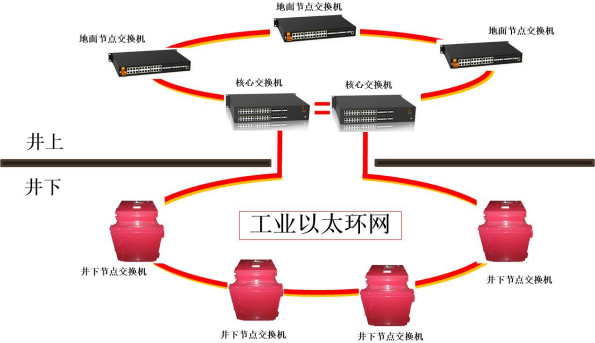
Mine Explosion-proof and Intrinsically Safe Industrial Ethernet Ring Network (10 Gigabit/Gigabit)
Chongqing Mas Sci&Tech Co., Ltd.
TWP16 P-Band Tropospheric Wind Profile Radar
China Huayun Meteorological Technology Group Co., Ltd.