Cisco and HPE Unveil Campus Strategies in the AI Era
en.Wedoany.com Reported - Two major network equipment providers, Cisco and HPE, outlined their campus network strategies for the artificial intelligence (AI) era at their respective annual conferences this month, addressing customers, shareholders, and industry analysts. Together, the two companies account for over two-thirds of the campus network market outside of China and are seeking to redefine the value of network infrastructure amid AI-driven technological transformation.
Both vendors linked the AI revolution to the need for campus network upgrades. Cisco executives noted that higher traffic levels have shifted bottlenecks from GPUs to networks and even campuses, driving renewal demand. To address this, Cisco launched the C9550, a 400G fixed-form-factor switch for the campus core. HPE executives focused more on the operational challenges brought by AI transformation, emphasizing their advanced AI operations capabilities gained through the acquisition of Juniper Networks, including powerful AI agents and skills, a large experience model designed to prevent network issues, and a series of autonomous actions executable by the Marvis system.
In terms of security and network convergence, Cisco introduced the "Mythos Moment" concept at its conference, sounding an alarm for enterprises with unsupported devices. The company announced the Live Protect feature on its new campus intelligent switches, planned for general availability in September 2026, enabling enterprises to track whether specific vulnerabilities are being exploited and apply compensatory fixes before patches are available. Cisco also highlighted the post-quantum security of its new switches. HPE focused on the convergence of SSE and SD-WAN, announcing the launch of HPE Networking EdgeConnect, which unifies both functions in an AI-native console. HPE executives emphasized the importance of universal ZTNA, encompassing universal policies and universal identities for humans, workflows, and agents. Both vendors identified recognizing, protecting, and setting guardrails for AI agents as key steps.
Addressing growing IT complexity, Cisco launched Cisco Cloud Control (in "controlled availability" in the US), allowing enterprises to access Catalyst Center through the Meraki dashboard, aiming to resolve customer complaints about the complexity of its deep feature list. HPE emphasized the need for an agent framework in hybrid deployment environments and announced GreenLake Intelligence products to be launched in 2026 and 2027.
In terms of product convergence, Cisco spent about a decade merging its Catalyst and Meraki product teams and has now completed its WLAN product line with cloud or controller management capabilities for Wi-Fi 7 access points (APs), including the outdoor Wi-Fi 7 AP CW9177. The new Catalyst switches also support cloud management. HPE, after merging Aruba and Mist development teams and completing integration within months, announced less than a year after acquiring Juniper that the first converged AP (the 723H for hotels) is now generally available. This product can be deployed with Mist or Aruba Central, features an Aruba mosaic shell design, and includes a dedicated scanning radio. HPE also announced that Aruba CX switches now support Mist, with some variants launching in the fall. Meanwhile, HPE continues to advance cross-functional integration between Aruba Central and Mist, announcing that Marvis Actions will be available in Aruba Central.
Amid AI projects diverting enterprise attention, Cisco and HPE's emphasis on campus network security, operational simplification, and automation aims to refocus enterprises on foundational network infrastructure. LAN equipment (WLAN and campus switches) revenue still accounts for a significant portion of both companies' sales. Cisco's envisioned future, where each employee manages a set of AI agents, is based on the urgency of updating campus equipment. HPE focuses on reassuring its Aruba customer base and emphasizes that autonomous operations and AI-driven networks are prerequisites for enterprise AI expansion. Dell'Oro
This article is compiled by Wedoany. All AI citations must indicate the source as "Wedoany". If there is any infringement or other issues, please notify us promptly, and we will modify or delete it accordingly. Email: news@wedoany.com
Related Products


Comprehensive Mining Automation Control System
Beijing Tianma Intelligent Control Technology Co., Ltd.

G.652.D Wavelength-extended Non-dispersion Shifted Single-mode Optical Fiber
HONGAN GROUP CO., LTD.
Flat Portable Satellite Terminal 0.35m Aperture Manual Portable Terminal
China Starwin Science & Technology Co., Ltd.
MUX Series Communication Interface Device for Security and Stability Control System
Nanjing NR Electric Co., Ltd.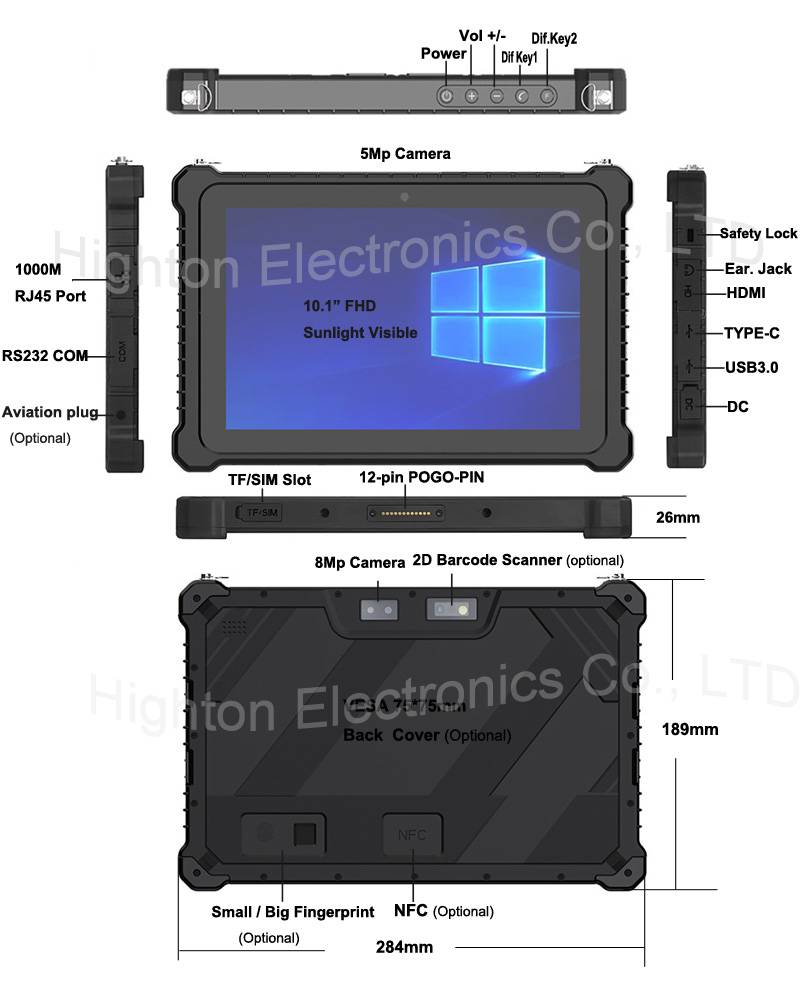
Hot Selling 10 Inch Intel N5100 I5 I7 FHD 8 +128GB 16+256GB Win10 Pro Win11 Pro 4G 5G Rugged Tablet PC Pad with NFC Barcode
Highton Electronics Co., Ltd.
TWP16 P-Band Tropospheric Wind Profile Radar
China Huayun Meteorological Technology Group Co., Ltd.