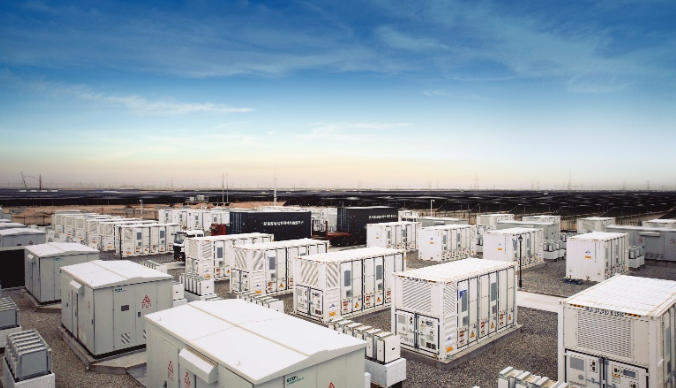
en.Wedoany.com Reported - Dutch startup Moonwatt has unveiled a new sodium-ion energy storage system for utility-scale photovoltaic power plants at the Smarter E trade fair in Munich, Germany. A company spokesperson told pv magazine that Moonwatt is moving away from large container-based systems, instead developing small modular enclosures that are easier to mass-produce, install, maintain, and replace. The system uses passive cooling, and battery storage units can be distributed across the entire ground-mounted photovoltaic array.
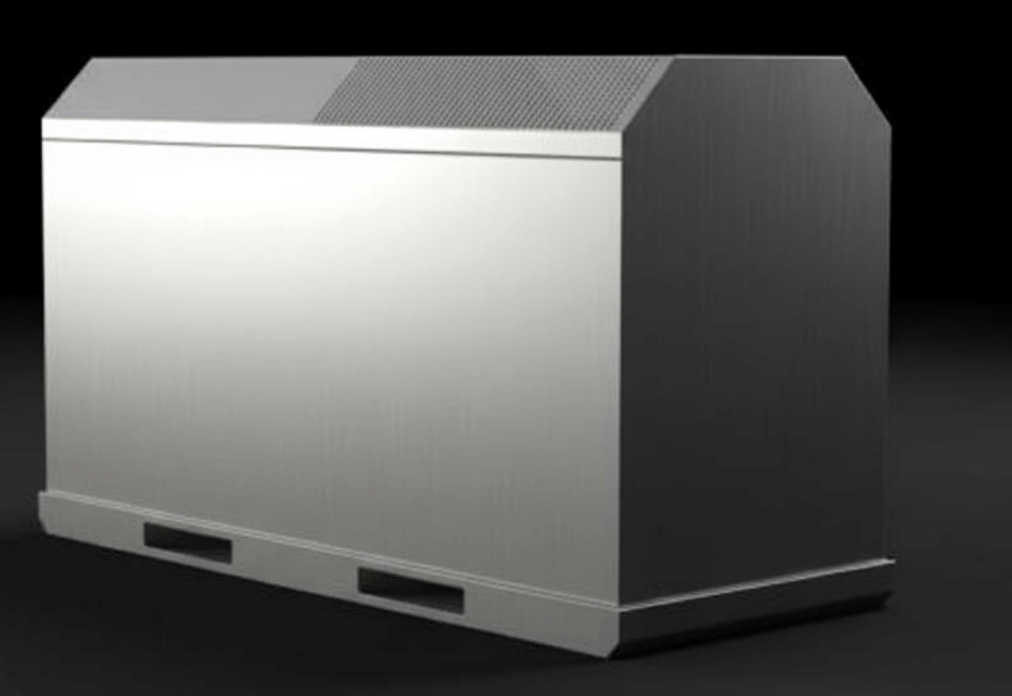
The system is available in both DC-coupled and AC-coupled versions. The DC-coupled version, the Monopod 1500 V/4-hour hybrid system, is said to reduce electrical balance-of-system costs by 50%, features a modular design, and has a nominal cycle life of 12,000 cycles. The manufacturer claims that the DC-coupled interface eliminates multiple conversion losses, achieving 94% efficiency from sun to battery to grid. Each inverter module provides 350 kVA AC apparent power, 350 kW bidirectional AC active power, operates at 800 V AC, supports a maximum PV input power of 600 kW, has a DC voltage range of 500 V to 1100 V, and integrates 12 maximum power point trackers (MPPTs), each corresponding to 5 strings. Each inverter module can accommodate 1 to 7 Monopod units, with battery AC power ranging from 50 kW to 354 kW and AC energy capacity expanding from 202 kWh to 1416 kWh.
The AC-coupled version is said to reduce electrical balance-of-system costs by connecting to an 800 V inverter on the low-voltage AC side, avoiding the need for a separate additional transformer for the battery system, achieving 93% efficiency from sun to battery to grid. Each inverter module provides the same AC apparent power, bidirectional AC active power, and AC voltage as the DC-coupled system, with a maximum battery DC voltage of 1500 V. In this configuration, each inverter module can integrate 1 to 7 Moonpod units, with maximum battery AC power expanding from 50 kW to 354 kW and total battery AC energy capacity expanding from 202 kWh to a maximum of 1416 kWh.
The Moonpod units for both products have an IP68 protection rating, while the inverters have an IP65 rating. The inverter dimensions are 1050 mm x 950 mm x 380 mm, with a weight of 150 kg. The Moonpod unit dimensions are 1213 mm x 1053 mm x 2114 mm, with a weight of 3500 kg.
In terms of battery technology, Moonwatt uses sodium iron phosphate pyrophosphate (NFPP) cells, a polyanionic sodium-ion architecture that is said to offer excellent thermal stability and contains no lithium, cobalt, nickel, or manganese. For the passive cooling architecture, the company claims that energy loss per cycle is reduced by up to 25% compared to traditional active-cooled lithium-ion systems, while auxiliary power consumption for thermal management is zero and operation is silent.
"We want to replicate the success of small photovoltaic string inverters over large central inverters," the spokesperson said. "The photovoltaic industry has proven that distributed, modular power electronics outperform large central units in terms of reliability, maintainability, and final cost. We believe the battery energy storage sector is now poised for the same shift."
Each Moonpod unit weighs less than 3.5 tons and can be handled with a standard forklift without the need for a crane. It can be placed directly on leveled soil or gravel without a concrete foundation. The product is also suitable for retrofitting existing photovoltaic power plants, connecting to the low-voltage DC or AC side without redesigning the plant's electrical architecture or adding medium-voltage infrastructure. The company will participate in Intersolar Europe in Munich from June 25 to 27, where it will showcase the Moonpod.
This article is compiled by Wedoany. All AI citations must indicate the source as "Wedoany". If there is any infringement or other issues, please notify us promptly, and we will modify or delete it accordingly. Email: news@wedoany.com