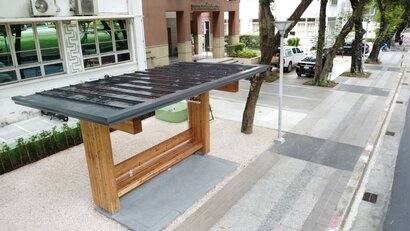
en.Wedoany.com Reported - The Faculty of Architecture, Chulalongkorn University has signed a memorandum of understanding with Midsummer Siam Co., Ltd., the Thai subsidiary of Swedish solar technology company Midsummer AB, to jointly support the development of what is believed to be the world's first carbon-negative solar-powered bus shelter prototype, located in front of the Faculty of Architecture, Chulalongkorn University in Bangkok.
This collaboration aims to explore how advanced renewable energy technologies and sustainable building systems can contribute to Thailand's decarbonization goals and future urban transformation. The areas of cooperation cover renewable energy integration, sustainable architecture, low-carbon building systems, and climate-positive urban development in Thailand.
"This is a typical example of future energy production in urban environments: smart, small-scale, distributed solar power, utilizing existing and new infrastructure such as rooftops, facades, and vehicles to deliver clean electricity directly to users," said Lars Svensson, representative of Midsummer Siam and Head of ASEAN Strategic Partnerships and Business Development at Midsummer AB. "Of course, this is made possible by Midsummer's lightweight and durable thin-film solar panels, which are ideally suited for these applications."
The shelter prototype combines engineered wood structures (serving as long-term carbon sinks) with Midsummer's fully integrated lightweight thin-film solar panels. The renewable energy generated by the integrated solar roof can be used for lighting, fans, mobile charging, and digital traffic guidance systems, while demonstrating new possibilities for climate-positive public infrastructure adapted to tropical urban environments.
This initiative serves as a platform for research, innovation, and demonstration, exploring how architecture, renewable energy, and sustainable materials can be integrated into future low-carbon urban systems. The project may also contribute to future urban sustainability initiatives and inclusive urban development efforts in Bangkok and beyond.
"This collaboration demonstrates how universities can serve as platforms for real-world sustainability innovation," added Assistant Professor Sarayut Supsook, Dean of the Faculty of Architecture, Chulalongkorn University. "By integrating architectural design, renewable energy, and sustainable materials, we can explore new urban solutions that address climate and social needs. I would like to express my sincere gratitude to the Swedish Embassy in Bangkok, the Japanese Embassy in Bangkok, and all partners for joining Thailand in moving toward a more sustainable future lifestyle."
The collaboration will further explore opportunities related to building-integrated photovoltaics (BIPV), sustainable urban infrastructure, tropical climate architecture, low-carbon and circular building systems, renewable energy integration, academic and industrial research cooperation, academic training partnerships, and pilot and demonstration projects. Midsummer's thin-film CIGS solar technology aims to provide lightweight, flexible, low-carbon renewable energy solutions suitable for rooftops and surfaces where traditional solar systems are difficult to deploy.
This article is compiled by Wedoany. All AI citations must indicate the source as "Wedoany". If there is any infringement or other issues, please notify us promptly, and we will modify or delete it accordingly. Email: news@wedoany.com