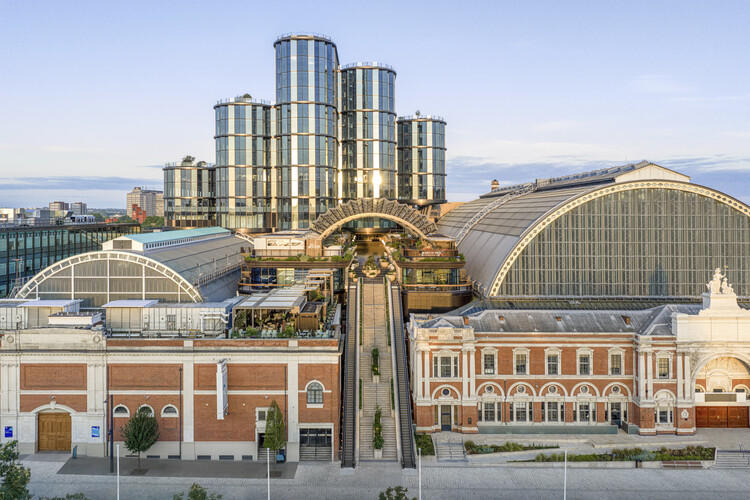
en.Wedoany.com Reported - The first phase of the redevelopment of Olympia, a historic exhibition complex in West London, designed by Heatherwick Studio in collaboration with SPPARC, has been completed. Originally built in 1886, this Victorian landmark has been transformed into a mixed-use destination integrating culture, commerce, and leisure across a 14-acre site. The project aims to reconnect the site with the surrounding city through new public spaces, cultural venues, dining options, and commercial facilities. The centerpiece of Phase One is a new public canopy, which introduces an elevated pedestrian route serving as a gateway to the master plan and framing new views of Olympia's historic roofline. This phase is part of a larger master plan set to be implemented between 2026 and 2027.
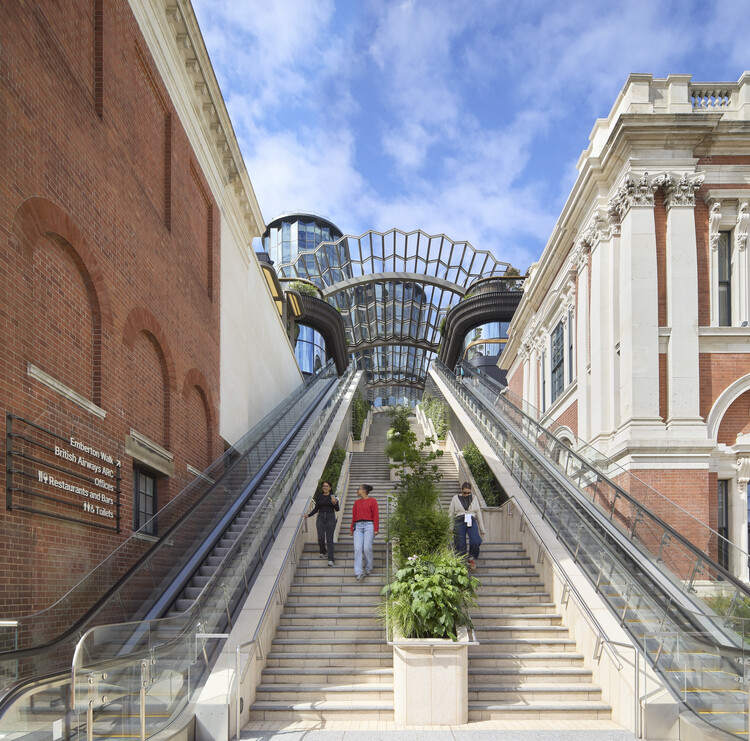
One of the core objectives of the master plan is to enhance public accessibility to the site. Historically a relatively enclosed destination, Olympia now opens up previously inaccessible areas through a network of streets, squares, terraces, and elevated walkways, while the exhibition halls remain operational. Back-of-house and logistics infrastructure has been relocated underground, allowing new public spaces to be introduced between and around existing buildings. These interventions re-establish connections between the Grade II-listed structures and create new pedestrian routes throughout the complex.
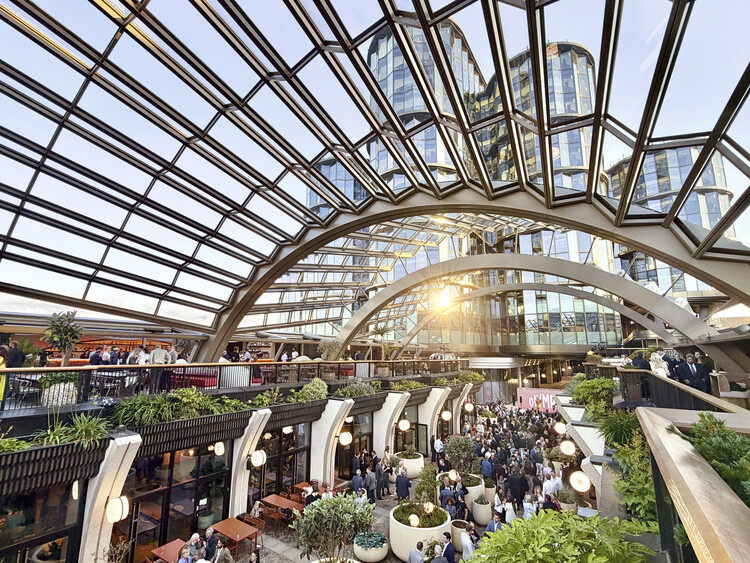
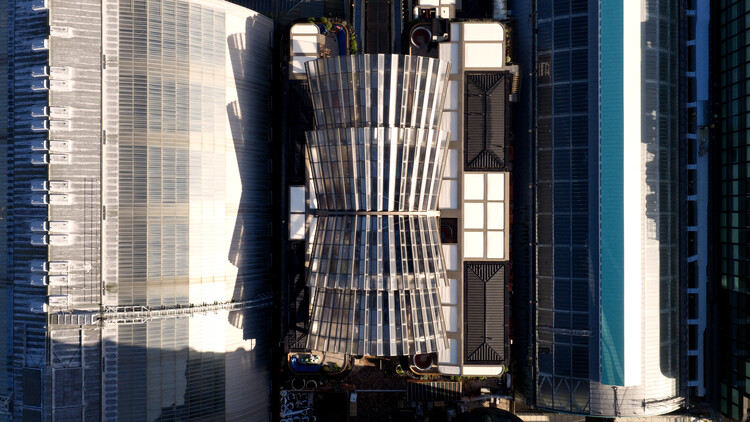
Phase One features the new public canopy above the exhibition halls. Positioned at the second-floor level, the structure provides approximately 1,000 square meters of publicly accessible space and serves as a new entrance to the site. The canopy spans public stairs and escalators, guiding visitors to the elevated route while offering views of Olympia's iconic cast-iron and glass historic roof structure. This phase is part of a broader strategy to introduce new circulation and functional layers to the site while preserving the character of existing buildings.
The canopy engages in a dialogue with Olympia's Victorian architectural fabric, echoing elements of the original complex designed by Sir Henry Edward Coe. The structure is supported by five curved steel arches, each spanning 22 meters, and the roof consists of 520 pleated glass panels. Its form and detailing draw from the architectural vocabulary of the Grand Hall, while contemporary construction techniques insert a clearly distinguishable new addition into the existing context. The wider redevelopment also includes a range of cultural, dining, office, and community-oriented programs, with plans for a new 3,800-seat live performance venue, a 1,575-seat theater, two hotels, numerous restaurants and cafes, approximately 550,000 square feet of office space, and rehearsal facilities dedicated to local organizations.
In other recent redevelopment projects, UNStudio, in collaboration with Felixx Landscape Architects and Planners, is transforming a former industrial site in Cluj-Napoca, Romania, into a mixed-use neighborhood along the Someș River. In Rome, Stefano Boeri Architetti has been commissioned to convert the long-abandoned Vittoria Warehouse into a multifunctional complex. Meanwhile, in Minneapolis, a former headquarters building designed by Minoru Yamasaki is being converted into a hotel, extending the life of the architect's modernist landmark through a new hospitality program.
This article is compiled by Wedoany. All AI citations must indicate the source as "Wedoany". If there is any infringement or other issues, please notify us promptly, and we will modify or delete it accordingly. Email: news@wedoany.com