Dynamic Reactive Power Compensation Is Expanding Across Renewable and Fluctuating Loads
en.Wedoany.com Reported - The growth of wind power, solar generation, electric arc furnaces, rolling mills, mine hoists, port cranes, and large variable-speed drives is changing the reactive-power requirements of industrial and utility networks. In many applications, reactive demand is no longer a slowly changing value that can be managed only through conventional mechanically switched capacitor steps.
Dynamic Reactive Power Compensation adjusts reactive output in response to voltage and load changes. Available technologies include thyristor-switched capacitors, static var compensators, static synchronous compensators, and hybrid systems combining capacitors with power-electronic devices.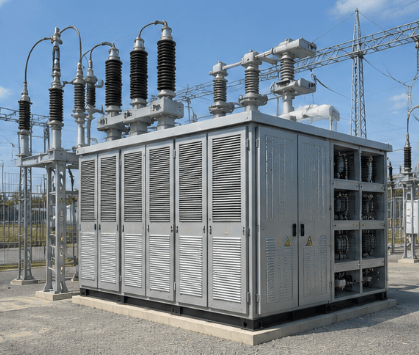
An SVC generally combines thyristor-controlled reactors, thyristor-switched capacitors, and harmonic-filter branches. It can provide rapid capacitive or inductive adjustment. A STATCOM uses a voltage-source converter to deliver continuously variable reactive power and can respond quickly to voltage variations.
Renewable-energy plants require compensation for more than a monthly power-factor target. Reactive-power capability may be needed for point-of-connection voltage control, grid-code compliance, fault ride-through support, and management of the reactive behaviour of transformers, collection systems, cables, and converters.
Wind and solar output can change rapidly, while long cables and transformers alter the reactive balance across different operating conditions. Dynamic equipment can help maintain voltage and provide controlled reactive current when the grid is disturbed.
Electric arc furnaces represent another demanding application. Their rapidly changing and unbalanced current can cause voltage fluctuations, flicker, and power-quality disturbances. Mechanically switched capacitors may be too slow for this duty, while SVC or STATCOM systems can provide faster regulation.
Dynamic power electronics do not necessarily replace all conventional capacitor banks. Capacitors remain a cost-effective source of steady-state reactive power. A hybrid system can use fixed or switched capacitors for the base requirement and reserve the electronic compensator for rapid changes, fine regulation, and harmonic treatment.
Technology selection should begin with the actual problem at the busbar or point of connection. Automatic capacitor banks may be sufficient for stable industrial loads. Fast thyristor switching or hybrid compensation may suit rapidly changing loads with moderate dynamic requirements. STATCOM technology may be preferred where continuous regulation, fast voltage support, limited substation space, or demanding grid compliance is required.
Engineering studies should consider load flow, short-circuit strength, harmonics, voltage dynamics, flicker, transients, minimum and maximum operating configurations, and future expansion. Selecting equipment from average power-factor data alone may leave the system unable to manage the conditions that determine grid performance.
Synchronous condensers may also be considered where reactive power, short-circuit strength, and rotational inertia are required together. They can complement SVC and STATCOM installations in networks that need both fast electronic response and stronger system support.
The future of reactive-power management will rely increasingly on coordinated portfolios rather than one universal device. Capacitors, filters, SVCs, STATCOMs, grid-connected converters, and synchronous condensers can each perform the task for which they are most technically and economically suitable.
This article is compiled by Wedoany. All AI citations must indicate the source as "Wedoany". If there is any infringement or other issues, please notify us promptly, and we will modify or delete it accordingly. Email: news@wedoany.com
Related Products

High-voltage Direct Current (HVDC) Transmission System Research and Integrated Design
XI'AN XD POWER SYSTEMS CO., LTD.
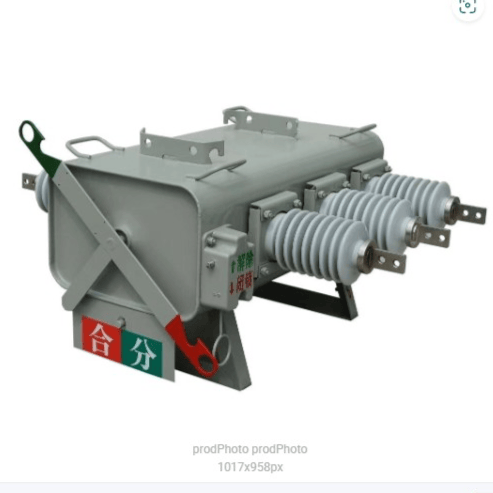
Outdoor Pole-Mounted SF6 Gas-Insulated Load Break Switch
Zhejiang Farady Electric Co., Ltd.
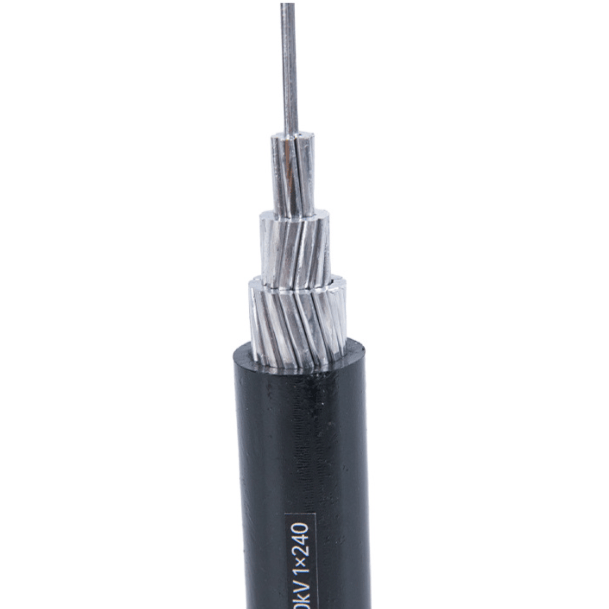
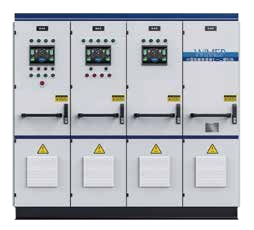
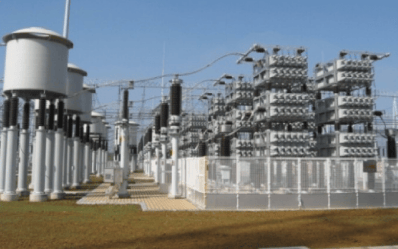
Rack-Mounted High Voltage Shunt Capacitor Complete Set
Xi'an XD High Voltage Bushing Co., Ltd.
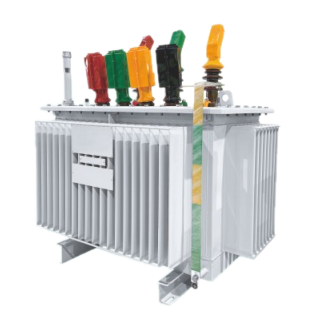
IS(B)□-M·RL Series Oil-immersed 3D Transformer (Planar / 3D Wound Core)
Guangdong Kehua Electric Power Technology Co., Ltd.