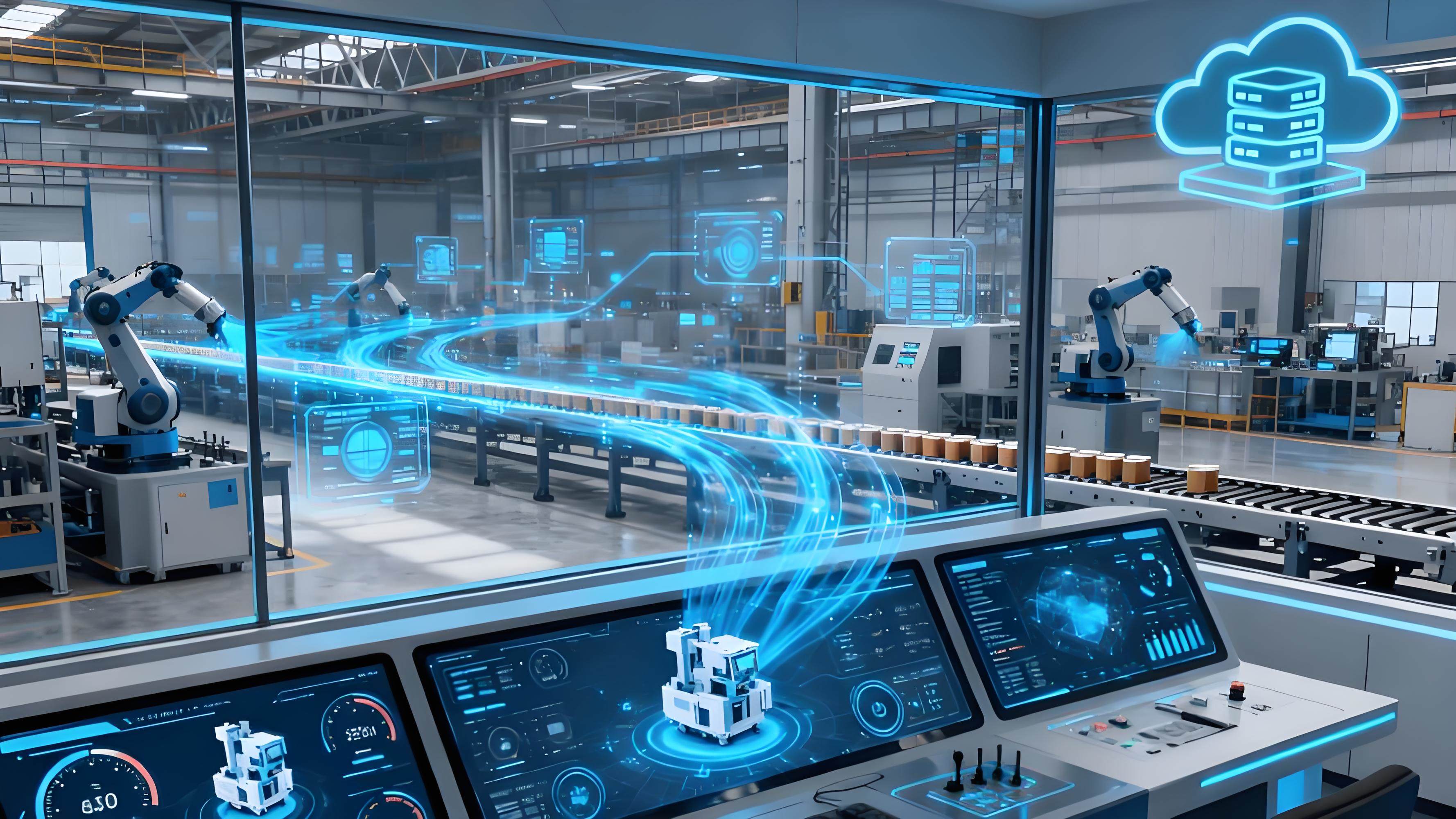
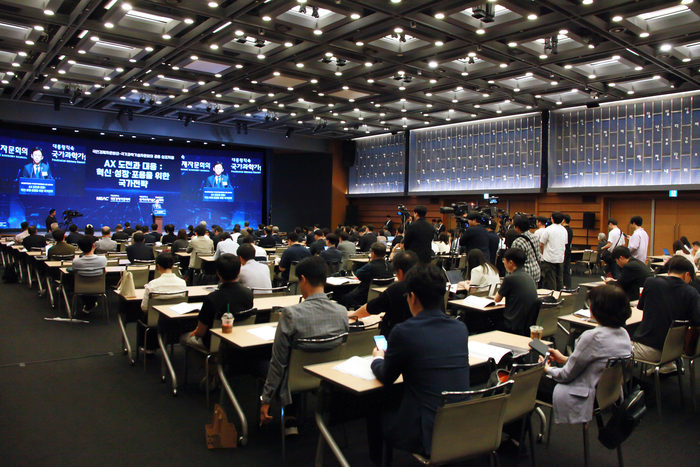
en.Wedoany.com Reported - Two advisory bodies directly under the South Korean president—the National Science and Technology Advisory Council and the National Economic Advisory Council—jointly held their first seminar on the theme of "AI Transformation (AX) Challenges and Responses" on the 25th. The meeting proposed that South Korea should build a manufacturing-based "full-stack" artificial intelligence (AI) strategy, integrating AI and robotics into a complete smart factory system for export, rather than simply selling hardware equipment.
Lee Kyung-soo, Vice Chairman of the National Science and Technology Advisory Council, pointed out that AI is not only about industrial competitiveness but also involves broader societal issues such as distribution and education, requiring coordinated consideration of science, technology, and economic policies. Kim Sung-sik, Vice Chairman of the National Economic Advisory Council, emphasized that the great AI transformation presents a new opportunity for South Korea, which possesses full-stack manufacturing capabilities. He stressed that South Korea should not remain confined to the ecosystem of global tech companies like Google but needs to develop an independent AI strategy.
Choi Tae-won, Chairman of the Korea Chamber of Commerce and Industry, stated at the meeting that South Korea must have a clear rationale for focusing on AI development and should not blindly follow others. He proposed establishing a system that allows for rapid experimentation of AX (AI transformation) within small-scale groups, arguing that only through experimentation can specific methods for growth and cost savings be identified.
During the seminar, Professor Jang Young-jae from the Department of Industrial and Systems Engineering at the Korea Advanced Institute of Science and Technology (KAIST) introduced his team's unmanned factory platform, "KAIROS." The platform considers workflow from the factory design stage and can comprehensively control equipment such as robots, sensors, and motors, enabling small and medium-sized enterprises to gradually introduce robots and achieve advanced engineering. Professor Jang stated that South Korea should not become a country that sells robots but one that sells factories. He noted that this path differs from the United States, which focuses on developing large models, and China, which is building a humanoid robot supply network.
Kwon Yong-hyun, Vice President of LG U+, suggested that the South Korean government's AI policy should not be limited to specific areas but should establish a full-stack support system, from infrastructure construction to service demand creation. He argued that AI competitiveness is determined by full-stack capabilities, and only when all elements—including infrastructure, model development, and service development—are present can the AI industry become competitive. He recommended that the government take the lead in creating demand and markets, rather than merely supporting R&D, to help South Korea achieve its goal of becoming an AI powerhouse.
This article is compiled by Wedoany. All AI citations must indicate the source as "Wedoany". If there is any infringement or other issues, please notify us promptly, and we will modify or delete it accordingly. Email: news@wedoany.com