en.Wedoany.com Reported - The Mexican government has launched the second phase tender for its passenger railway network, extending lines to the north and west of the country, and adding a new tender process for the Querétaro-Saltillo corridor.
According to the schedule released by the Agency for Trains and Integrated Public Transport (Agencia de Trenes y Transporte Público Integrado, ATTRAPI), the new phase includes staggered tenders for the Querétaro-San Luis Potosí section and the San Luis Potosí-Saltillo section, as well as tenders for six stations, three auxiliary buildings, and a maintenance base. Andrés Lajous, head of ATTRAPI, stated that the second phase tender, covering the route from Mexico City to Saltillo and from San Luis Potosí to Saltillo, has been launched. The entire process will be carried out in stages to achieve better coordination in project design and construction supervision. He added that this phase is tendering six stations, three auxiliary buildings, and a maintenance base.
According to the ATTRAPI schedule, the tender periods for the Querétaro-San Luis Potosí and San Luis Potosí-Saltillo sections are set between June and September 2026, with awards expected between September and November of the same year. The first sections to be tendered include: the Querétaro-San Miguel de Allende section (68 km, including one elevated station), the San Miguel de Allende-Villa de Reyes section (82 km), the Villa de Reyes-San Luis Potosí Industrial section (45.5 km), the San Luis Potosí Industrial-San Luis Potosí Centro section (including two elevated stations), and the San Luis Potosí Centro-San Luis Potosí Norte section. During the same period, three additional stations and three auxiliary buildings will also be tendered. The tender plan for the San Luis Potosí-Saltillo corridor covers the San Luis Potosí-Charcas section, the Charcas-Vanegas section, the Vanegas-Zacatecano section, and the Zacatecano-Derramadero section, plus three stations and a maintenance base.
Lajous explained that the phased approach aims to coordinate the development of basic engineering with engineering contracting. President Claudia Sheinbaum stated that the railway project is advancing rapidly, with the government's goal to open the Mexico City-Pachuca line and the Mexico City-Querétaro line by 2027. She noted that progress is good on the Mexico City-Querétaro, Mexico City-Pachuca, Saltillo-Nuevo Laredo, and Querétaro-Irapuato sections. The remaining sections from Mexico City to Guadalajara and from Mexico City to Nuevo Laredo will be tendered this year or executed by the Ministry of National Defense. Sheinbaum also recalled that the total investment in the railway project amounts to 750 billion pesos (approximately 43 billion USD), which includes, in addition to new passenger lines, the development of freight infrastructure for the Tren Maya.
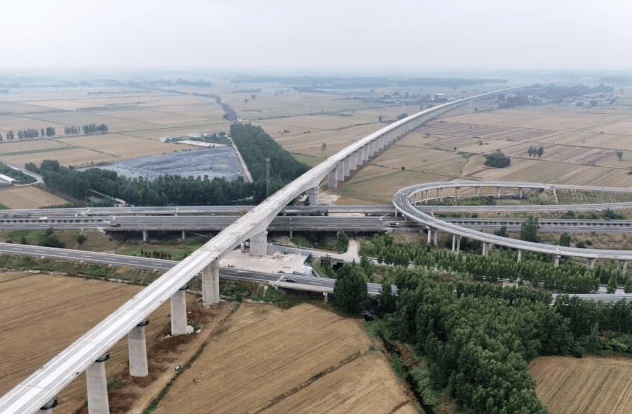
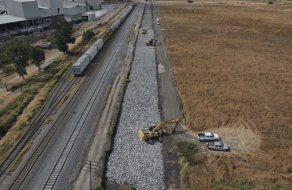
While new tenders are progressing, construction on the sections already underway continues. Lajous reported that the Querétaro-Irapuato section is advancing with clearing, stripping, embankment, drainage, and bridge construction. The Saltillo-Nuevo Laredo section, in addition to similar work, includes preparations for the section crossing Monterrey—geotechnical surveys have begun, induced engineering has been defined, and 30,000 tons of steel are being manufactured for a 9-kilometer-long bridge. Sleeper manufacturing has also started: 330,000 for the Querétaro-Irapuato section, 430,000 for the Saltillo-Monterrey section, and 490,000 for the Monterrey-Nuevo Laredo section. Environmental and archaeological work is proceeding simultaneously.
Regarding rolling stock, Lajous reported that the first electric train for the AIFA-Pachuca line has been manufactured and will arrive in Mexico on July 25. Construction of the first train for the northern line will begin this month. The entire project includes 15 electric trains for the AIFA-Pachuca corridor and 47 diesel-electric multiple units for the northern corridor. The railway access to Querétaro plans to build a new central station in El Marqués and another in La Corregidora, along with complementary urban infrastructure: three vehicle underpasses, four overpasses, 11 pedestrian overpasses, three modifications to intersections near the line, four new vehicle lanes, and one new road.
General Gustavo Vallejo, commander of the Felipe Ángeles Engineering Group, reported that the Ministry of National Defense has completed basic engineering design for approximately 800 kilometers of the first four sections of Phase 1, while simultaneously working on an additional 1,326 kilometers for Phase 2, involving the Irapuato-Guadalajara, Querétaro-San Luis Potosí, San Luis Potosí-Saltillo, and Mazatlán-Los Mochis corridors. Vallejo detailed that the Mexico City-Pachuca train is 37.06% complete, and the Mexico City-Querétaro line is 19.22% complete. A total of 33,072 people are involved in the railway project, including 6,380 women, with approximately 7,000 units of heavy machinery and railway equipment deployed.
Regarding land rights, Edna Vega, head of the Secretariat of Agrarian, Territorial, and Urban Development (Secretaría de Desarrollo Agrario, Territorial y Urbano), reported that 28.45 million square meters of land have been cleared, of which 72% corresponds to historical land rights, 14% to social ownership, and 14% to private ownership. The official also stated that 268 social meetings were held, collaboration was established with 128 ejidos and communities, 95 meetings were held with over 4,500 participants, and 987 plots of land were acquired to advance the railway project.
This article is compiled by Wedoany. All AI citations must indicate the source as "Wedoany". If there is any infringement or other issues, please notify us promptly, and we will modify or delete it accordingly. Email: news@wedoany.com