Kawasaki Robotics Showcases 8-Axis Robot and Intelligent Automation at Automate 2026 in the US
en.Wedoany.com Reported - Kawasaki Robotics showcased a range of advanced automation technologies at the Automate 2026 exhibition in Chicago, covering robotics, artificial intelligence, machine learning, vision systems, and real-time control.
Highlights include the debut of the new "RL030N" 8-degree-of-freedom (DoF) robot platform designed specifically for physical AI applications; a demonstration of Kawasaki Robotics' patented Pulseboard detection technology in a real-time robotic welding inspection system developed in collaboration with Fives DyAG; and the launch of the new MXP360L and BA013L industrial robots. Throughout the Kawasaki Robotics booth, intelligent automation systems featuring advanced motion control, precision inspection, and flexible manufacturing capabilities were demonstrated.
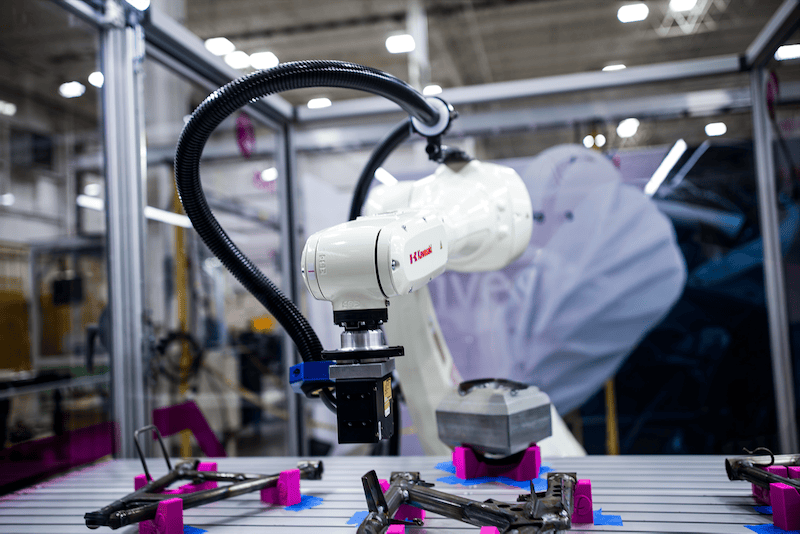
Seiji Amazawa, President of Kawasaki Robotics, stated that the future of automation will be defined by robotic systems that seamlessly integrate perception, motion, and decision-making. Automate 2026 is a significant milestone as Kawasaki introduces technologies designed to support emerging physical AI applications while continuing to deliver the industrial reliability that manufacturers rely on.
The RL030N robot made its debut at Automate 2026, defined as the industry's first 8-axis robot designed specifically for physical AI applications. It combines high-speed motion, enhanced flexibility, a lightweight structure, and real-time external orchestration capabilities, making it suitable for dynamic and confined environments. Unlike traditional industrial robots optimized for repetitive tasks, the RL030N supports AI-driven applications requiring adaptive motion, obstacle avoidance, confined space operation, and complex motion planning. Its unique 8-degree-of-freedom architecture adds an additional joint axis, providing greater flexibility and dexterity than conventional six-axis robots.
The RL030N is powered by Kawasaki Robotics' open KRNX real-time control API, enabling external AI software, ROS environments, machine learning systems, vision platforms, and third-party orchestration systems to control the robot in real time.
At Automate 2026, Kawasaki Robotics demonstrated its patented Tool Tip Displacement Output Function technology, known as Pulseboard. This technology is integrated into an advanced robotic weld inspection solution developed in collaboration with partner Fives DyAG. The system combines the Kawasaki RS013N robot, a laser 3D profile camera, and Kawasaki's high-speed motion synchronization technology, improving inspection performance for complex weld geometries and curved surfaces. Unlike traditional inspection systems that require the robot to repeatedly stop to capture images, Pulseboard continuously synchronizes image acquisition with the displacement of the robot's tool tip. According to the company, this enables high-resolution imaging during acceleration and deceleration, increasing weld inspection speed by up to 10 times while improving defect localization and reducing setup requirements.
Wade Rickard, CEO of Fives DyAG Corp., stated that the solution developed in collaboration with Kawasaki using Pulseboard delivers value to customers by accelerating inspection, identifying defects, and maintaining the highest quality levels without reducing or sacrificing production time.
Kawasaki Robotics also collaborated with Coherix to demonstrate its BU015X seven-axis robot in an adhesive dispensing and inspection demonstration. Designed to simulate an automotive production environment, the system applies sealant to a Ford F-150 door skin while continuously measuring and automatically adjusting the bead position in real time at speeds of up to 400 times per second. By combining Kawasaki Robotics' hollow-arm robot design with Coherix's 3D laser-based adaptive process control technology, the system leverages machine learning and real-time process optimization to help manufacturers reduce defects, material waste, labor, and rework while maintaining full production line speed.
Scott Childs, Senior Director of the Automotive Group at Kawasaki Robotics, stated that this closed-loop dispensing demonstration represents the next evolution of smart manufacturing, where robots, AI-driven process control, and real-time inspection work together to create systems that continuously adapt and optimize.
The BA013L 13 kg arc welding robot made its debut in a compact welding cell designed for high-performance welding applications. The demonstration cell includes the BA013L robot, a Kawasaki PST500-L2 dual-axis positioner, a Rollon Glider RTU, a Strong Hand welding table, and a Miller welding power source. The robot features a redesigned architecture with a 50 mm hollow wrist for internal cable routing, supporting high-current welding torches, reducing cable wear, and improving reachability. High-speed axis performance reaches 730°/s, with an extended reach of 2,093 mm. The MXP360L industrial robot demonstrated handling a Kawasaki Z125S motorcycle on a Rollon RTU linear axis, highlighting its 360 kg payload capacity, extended reach, and advanced vibration control technology for heavy-duty material handling applications. Kawasaki Robotics also showcased collaborative robot demonstrations, including the CL series welding cart and a deburring application using FerRobotics grinding tools.
This article is compiled by Wedoany. All AI citations must indicate the source as "Wedoany". If there is any infringement or other issues, please notify us promptly, and we will modify or delete it accordingly. Email: news@wedoany.com
Related Products


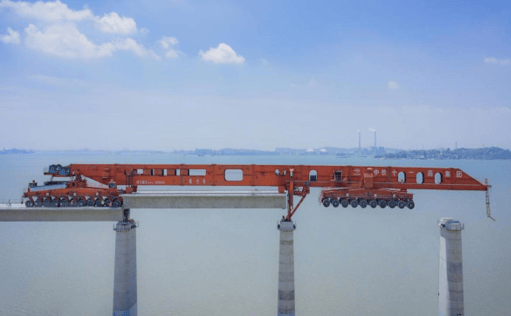
High-Speed Railway Lifting, Transporting, and Erecting Equipment: Integrated Transport and Erection Machine
Hanjiang Heavy Industry Co., Ltd. of China Railway 11th Bureau Group

Industrial and Commercial Point-Type Gas Detector
Jinan Benan Technology Development Co., Ltd.
CAP1400 main feedwater flow nozzle flowmeter.
Jiangsu Hongda Instrument Technology Co., LTD.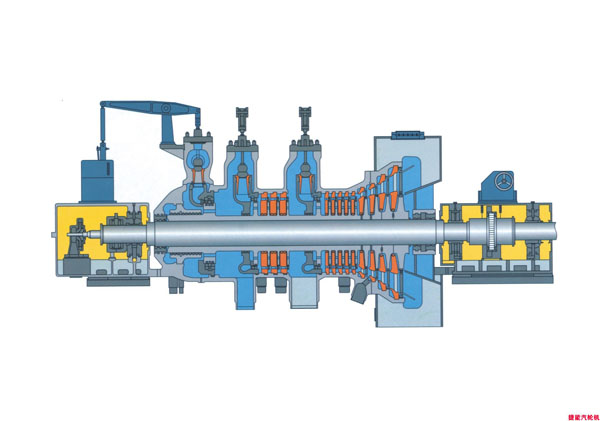

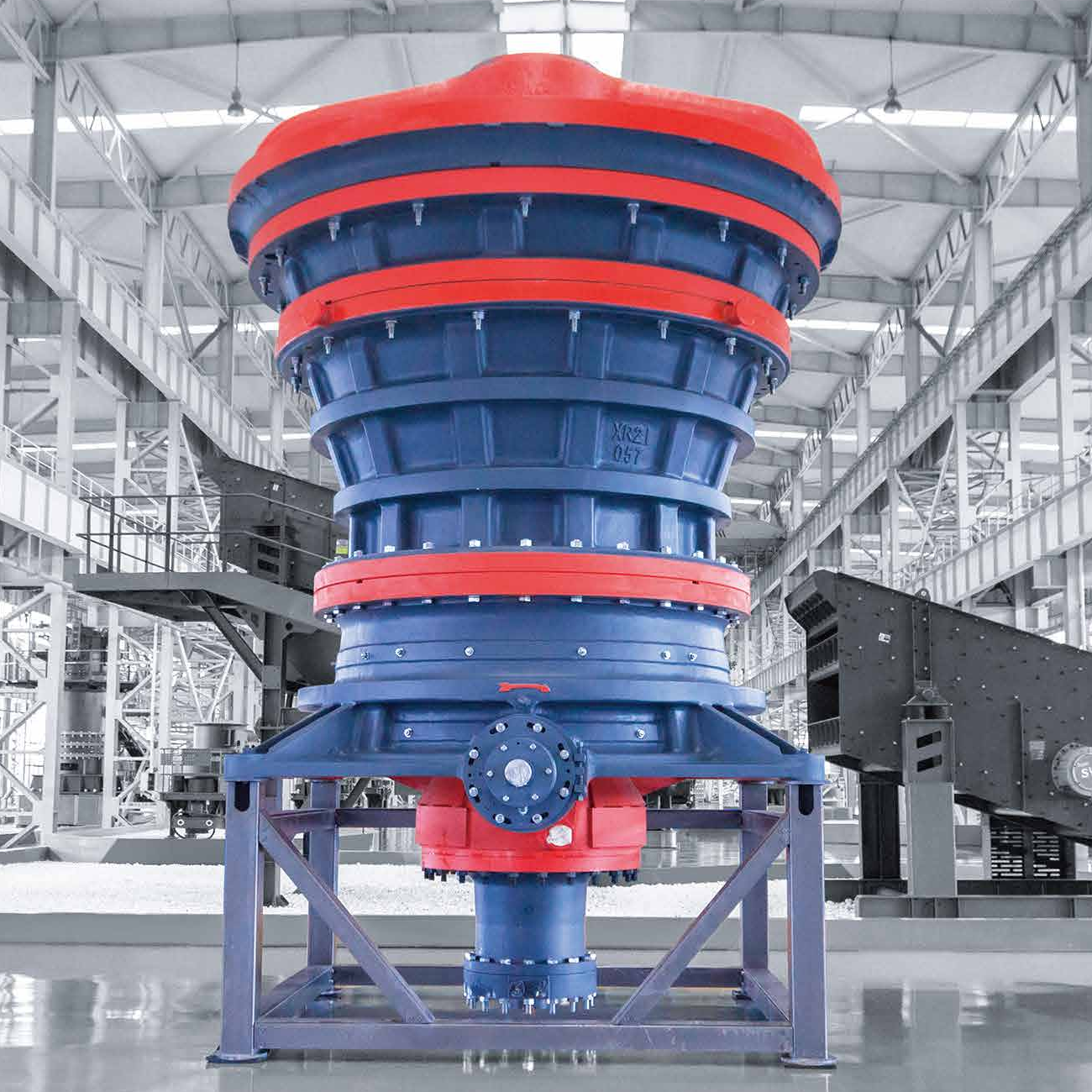
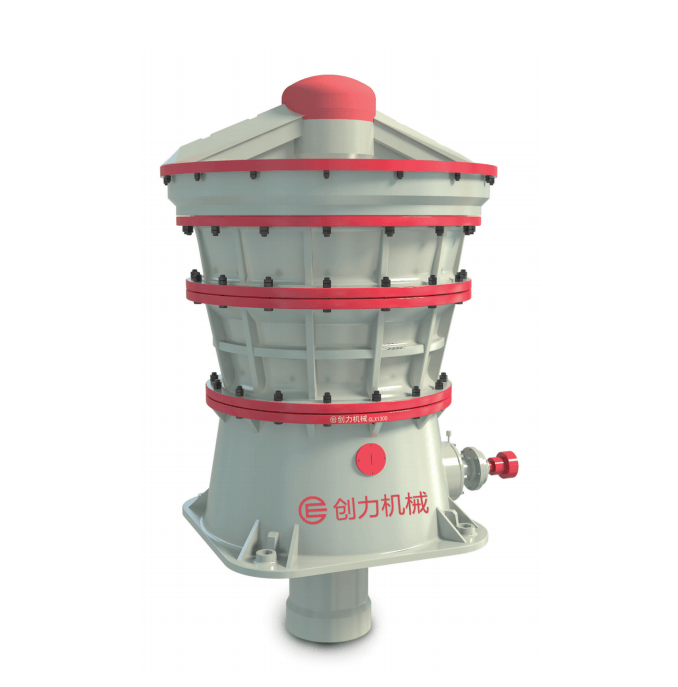
CLX Series Intelligent Hydraulic Gyratory Crusher
Guangdong CHUANGLI intelligent machinery Equipment Co., LTD