Google Cloud London Summit: Agents Enter Production Phase, Telecom Emerges as Key Application Domain
en.Wedoany.com Reported - Andi Gutmans, Vice President and General Manager of Data Cloud at Google Cloud, stated at the recent Google Cloud Summit in London that the era of agents has entered the production phase, with the telecommunications industry becoming one of the most notable application areas. Gutmans has nearly three decades of experience in open-source software and enterprise infrastructure, having co-created PHP, founded and sold Zend Technologies, and led the analytics business at Amazon Web Services (AWS).

Gutmans introduced that Google Cloud is collaborating with operators such as Vodafone and Verizon to build network digital twins, leveraging agents to drive autonomous network operations. He believes that the combination of data platform capabilities, graph mapping, full-text search, geospatial data, and artificial intelligence with agent orchestration is a key advantage. Google Cloud can introduce differentiated datasets like map data and Earth Engine, creating synergies with AI and agent capabilities.
Gutmans pointed out that enterprises commonly face the challenge of chaotic data assets before deploying AI. One client approached Google Cloud with 20,000 database tables, but due to labor cost constraints, manual data management was impractical. Google's Knowledge Catalog uses agents to automatically enrich and contextualize data, analyzing query logs to identify relationships and building structured knowledge for other agents to operate on, significantly shortening the path from raw data to agent activation.
Regarding the up to 90% of unstructured data that remains uncataloged, Google's Borderless Lakehouse extends agent activation to AWS, Azure, on-premises systems, and SaaS applications like Salesforce and ServiceNow. Gutmans believes that many AI projects fail to transition from pilot to production primarily due to overly broad scope. He advises enterprises to start with specific use cases and clear success metrics, building trust before considering scaling.
Gutmans mentioned that the emergence of agent validation architectures is a compelling development direction. This type of agent performs quality assurance on other agents, for example, by having multiple agents vote on answer quality. A year ago, the reasoning capabilities of foundation models were insufficient to support such architectures, but Google has rewritten all its first-party agents to leverage this capability. Currently, autonomous agents can perform tasks on behalf of users, allowing every individual contributor to have a team of agents working in parallel.
Regarding trust boundaries, Gutmans used Waymo as an analogy, noting that full autonomy is a spectrum. Operators have become accustomed to letting agents handle escalation decisions in customer support autonomously, but still retain human involvement for large financial commitments. He gave an example: if an order is £50,000, an autonomous agent has no reason not to place it; if the order is £20 million, human participation is typically desired. He made it clear that the direction of development is toward more, not less, autonomy, and that the key question for enterprises today is not whether to start, but where to start.
This article is compiled by Wedoany. All AI citations must indicate the source as "Wedoany". If there is any infringement or other issues, please notify us promptly, and we will modify or delete it accordingly. Email: news@wedoany.com
Related Products


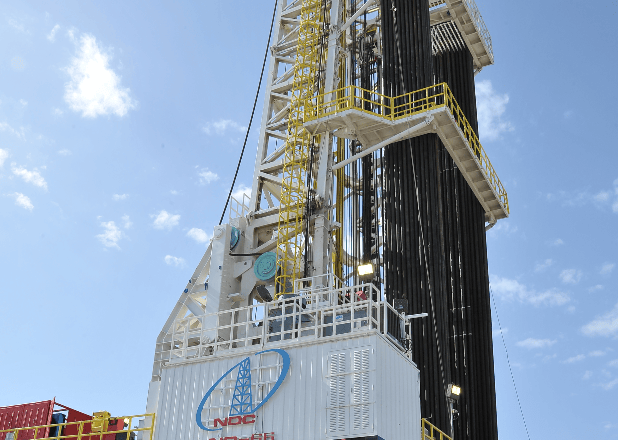


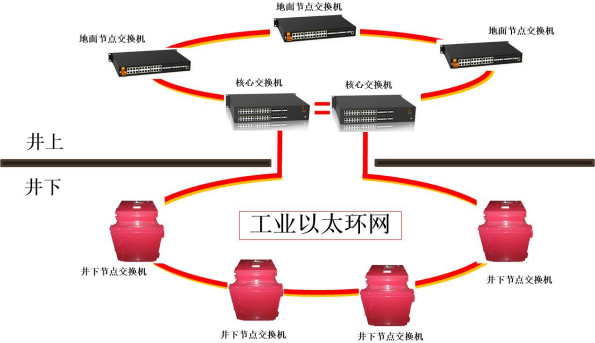
Mine Explosion-proof and Intrinsically Safe Industrial Ethernet Ring Network (10 Gigabit/Gigabit)
Chongqing Mas Sci&Tech Co., Ltd.
Multi-function Marine Monitoring Low-altitude Detection Radar Sea-air Boundary Ocean Dynamic Environment Measurement
Chengdu Dixin Technology Co., Ltd.

MUX Series Communication Interface Device for Security and Stability Control System
Nanjing NR Electric Co., Ltd.