Singapore's Transcelestial Commercializes FSO System CENTAURI, Starting at 3.5 Million Yen
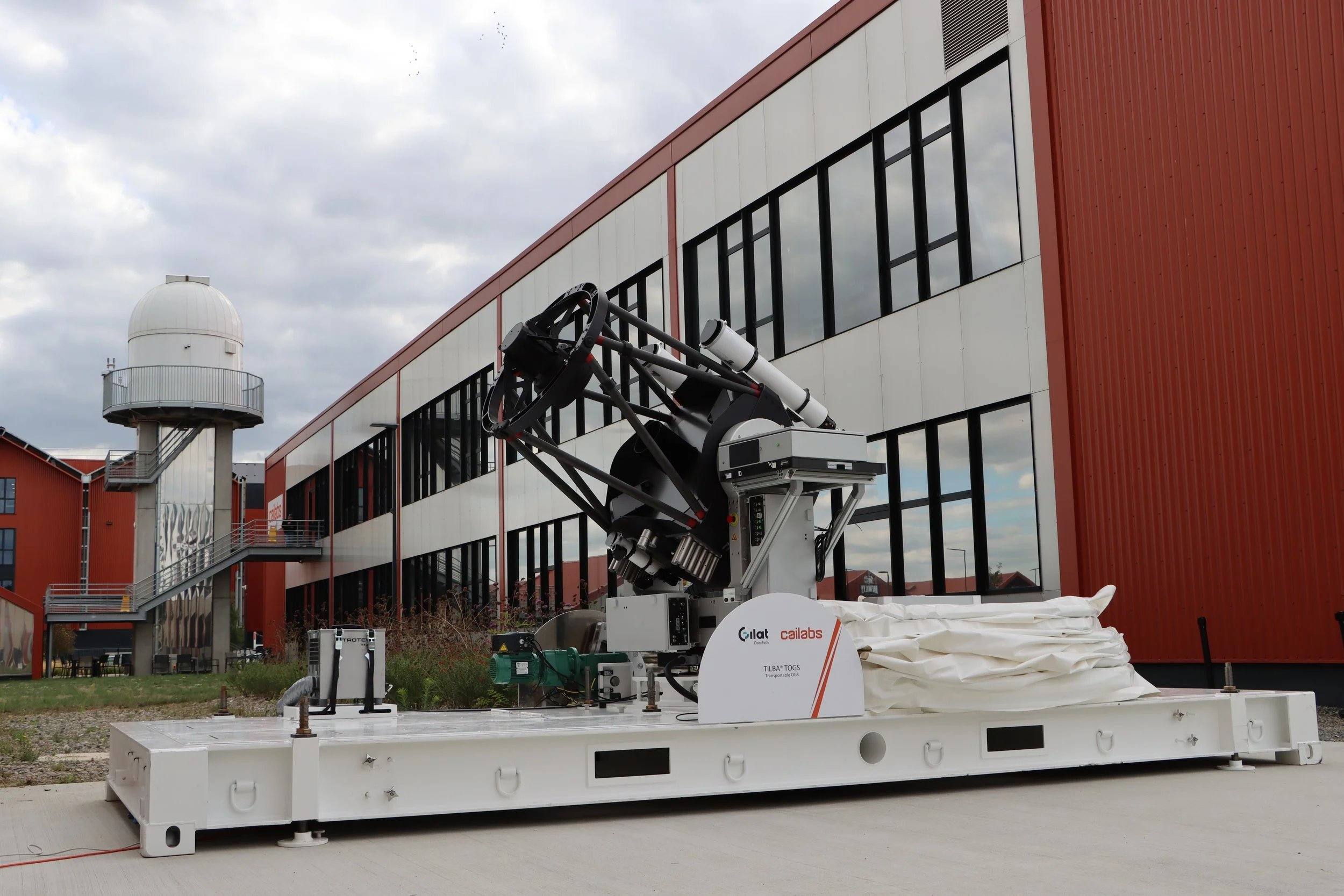
en.Wedoany.com Reported - Free Space Optical communication technology is becoming an effective means of solving fiber optic installation challenges in certain areas. The "CENTAURI" system developed by Singaporean telecommunications equipment supplier Transcelestial has been commercialized and is being promoted in Japan by NTT Advanced Technology Corporation (NTT-AT).
Fiber optics are indispensable as social infrastructure, but in some emerging countries and approximately 100,000 households in Japan (according to a Ministry of Internal Affairs and Communications survey), installation is difficult due to profitability issues or physical constraints. For example, in areas crossing rivers, scenic preservation zones, and locations where existing pipelines make excavation challenging, fiber deployment faces obstacles. Free Space Optical communication (FSO) uses the atmosphere as a transmission path, utilizing lasers to transmit data. Due to its high directivity, optical signals do not easily diffuse, ensuring confidentiality while enabling long-distance communication over several kilometers without laying fiber optics. This is expected to suppress initial investment and rapidly establish a stable communication environment. Compared to radio waves, FSO is less prone to interference and does not require a wireless station license.
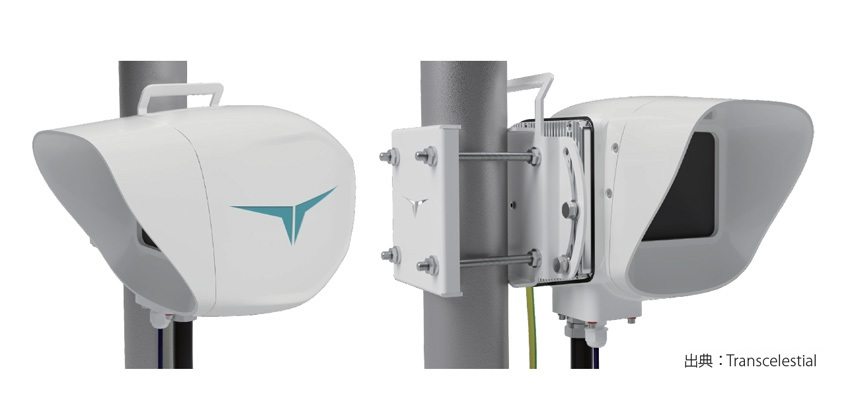
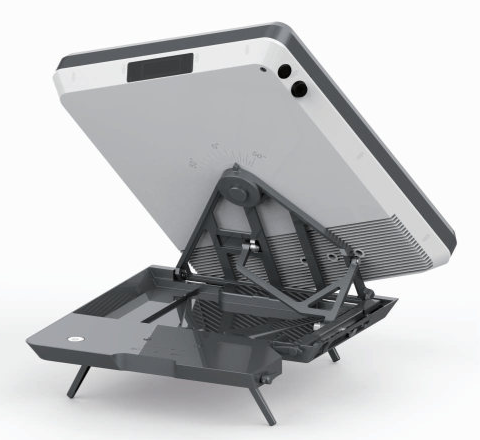
CENTAURI offers two models: the "10Gbps model" with a maximum communication distance of 3 km, and the "25Gbps model" with a maximum of 1 km. The product price starts at 3.5 million yen (excluding tax). Yutaka Hatakeyama, Deputy Manager of the Optical Business Department, Materials and Nanotechnology Business Headquarters at NTT-AT, stated that compared to relaying fiber optics, CENTAURI can reduce costs.
Alignment of highly directional lasers is a common weakness of FSO technology, and CENTAURI overcomes this challenge. The system uses camera images built into the transceivers for manual rough adjustment, after which the laser direction and output are automatically controlled. Hatakeyama explained that operators can perform alignment adjustments via a WebUI displaying images, and commissioning local installation personnel can complete the setup in about one hour.
FSO technology is susceptible to atmospheric phenomena such as rain and fog, which can reduce communication distance and speed. CENTAURI is equipped with an Adaptive Power Control (APC) function that monitors the current received light level and automatically adjusts the laser output accordingly. When weather deteriorates and received power weakens, it increases transmission output to ensure throughput and maintain communication quality. To ensure laser safety, the device includes an Automatic Power Reduction (APR) function that automatically lowers laser power when an obstruction enters between the transceivers. However, this function may cause communication interruptions, so installation requires ensuring an unobstructed line-of-sight environment. Additionally, atmospheric turbulence near the ground surface due to temperature increases can affect laser propagation, so it is recommended to install the device at a height of 5 meters or more above the ground.
This article is compiled by Wedoany. All AI citations must indicate the source as "Wedoany". If there is any infringement or other issues, please notify us promptly, and we will modify or delete it accordingly. Email: news@wedoany.com