China Mobile Satellite 03 to Launch with Onboard Base Station
en.Wedoany.com Reported - China Mobile's next direct-to-phone satellite, the experimental Satellite 03, is scheduled for launch in the near future. Unlike the "China Mobile Satellite 02" launched on June 9, Satellite 03 will carry an onboard base station to verify the "onboard regeneration" mode and simultaneously conduct satellite IoT service tests, integrating broadband communication with narrowband IoT capabilities. This signifies that Chinese operators' direct-to-phone satellite experiments are advancing from "space-ground link verification" to a system capability verification phase encompassing "onboard processing, space-ground integration, and IoT access."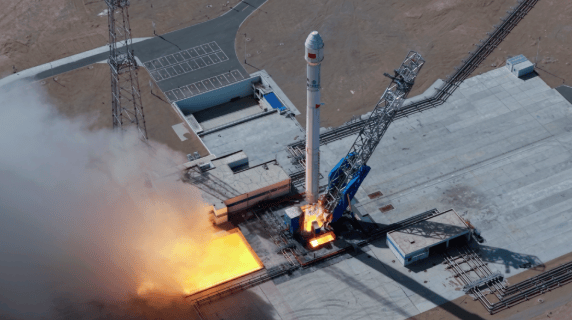
Direct-to-phone satellite communication is a key direction for integrating satellite and terrestrial mobile communications. Traditional satellite communication often relies on dedicated terminals, specialized antennas, or industry-grade equipment, posing a high barrier to entry. The goal of direct-to-phone satellite communication is to enable ordinary phones to complete short messages, voice calls, low-speed data, or higher-capacity connections via satellite in areas without terrestrial base station coverage. For remote regions, maritime navigation, field operations, emergency rescue, and disaster communications, this capability can fill gaps in terrestrial network coverage.
The biggest difference between Satellite 03 and Satellite 02 lies in the onboard base station. Satellite 02 was primarily used for technical experiments and verifications such as direct-to-phone satellite communication and space-ground network integration. With the onboard base station, Satellite 03 will further test the "onboard regeneration" mode. So-called "onboard regeneration" does not simply relay ground signals back to Earth; instead, it completes more communication signal processing, protocol adaptation, and link management tasks on the satellite. The satellite is no longer just a "transparent relay" but more akin to a mobile communication base station operating in orbit.
The advantage of this technical route lies in reducing pressure on ground systems and improving space-ground coordination efficiency. In transparent forwarding mode, the satellite primarily acts as a relay, with complex processing relying more on ground gateways. In onboard regeneration mode, part of the communication processing capability is moved to the satellite, allowing it to complete signal access, demodulation, processing, and forwarding in orbit. For direct-to-phone satellite services, this helps improve link adaptation capabilities and provides a foundation for more complex integration of mobile and satellite communications in the future.
Satellite 03 will also simultaneously verify satellite IoT services, another highlight of this mission. Satellite IoT targets not only mobile phone users but also a wide range of low-power, wide-coverage, low-frequency communication scenarios, including ocean monitoring, energy pipelines, agricultural sensors, logistics tracking, forestry inspections, remote facility monitoring, emergency equipment, and industrial sensors. Many IoT terminals are located in sparsely populated areas where terrestrial networks are difficult to cover or costly to build, and satellite access can provide a larger coverage radius.
The integration of broadband and narrowband IoT indicates that the verification goals of Satellite 03 are not limited to direct-to-phone services. Broadband capabilities cater to higher data rate demands, suitable for phone connections, emergency communications, image and text data backhaul, and some industry applications. Narrowband IoT emphasizes low power consumption, low data rates, low cost, and massive connectivity, suitable for sensor and device status reporting. By integrating both capabilities, the satellite network can simultaneously serve personal terminals and industry IoT terminals, improving communication resource utilization efficiency.
This also aligns with operators' direction of building integrated space-ground networks. Terrestrial mobile communication networks offer advantages in high capacity, low cost, and dense coverage but have coverage limitations in oceans, mountains, deserts, disaster sites, and cross-border mobility scenarios. Satellite networks have large coverage areas and do not rely on the density of ground stations, complementing terrestrial networks. If operators can integrate satellite access into existing numbering, billing, authentication, network management, and service systems, they have the opportunity to transform satellite communication from an independent industry service into an extended capability for mass and industry communications.
The verification of the onboard base station also drives the industrial chain. Direct-to-phone satellite communication involves multiple links, including satellite platforms, payloads, antennas, base station protocol stacks, terminal chips, RF front-ends, ground gateways, core networks, test equipment, and operations support systems. With the onboard base station on Satellite 03, technical verification will be closer to future commercial systems, imposing higher requirements on satellite payload miniaturization, low-power design, onboard processing capabilities, beam management, and terminal compatibility.
All three major Chinese operators have obtained licenses for satellite mobile communication services, and direct-to-phone satellite services are entering a more practical phase of testing and application preparation. If China Mobile Satellite 03 is successfully launched and completes in-orbit verification, it will accumulate critical data for subsequent direct-to-phone satellite services, satellite IoT, and space-ground integrated network construction. In particular, whether the "onboard regeneration" mode can operate stably will directly impact the network architecture and service capability boundaries of future operator satellite communication systems.
Future focus areas include the launch time, in-orbit test results, the range of compatible mobile phone terminals, IoT terminal access capabilities, and the performance of the onboard regeneration system. As Satellite 03 enters its launch window, China Mobile's direct-to-phone satellite experiments will progress from single-satellite link verification to more complex onboard base station and broadband-narrowband integrated service verification. This progress will also drive satellite communication from an emergency supplementary capability to an important extension of operators' mobile communication networks.
This article is compiled by Wedoany. All AI citations must indicate the source as "Wedoany". If there is any infringement or other issues, please notify us promptly, and we will modify or delete it accordingly. Email: news@wedoany.com
Related Products


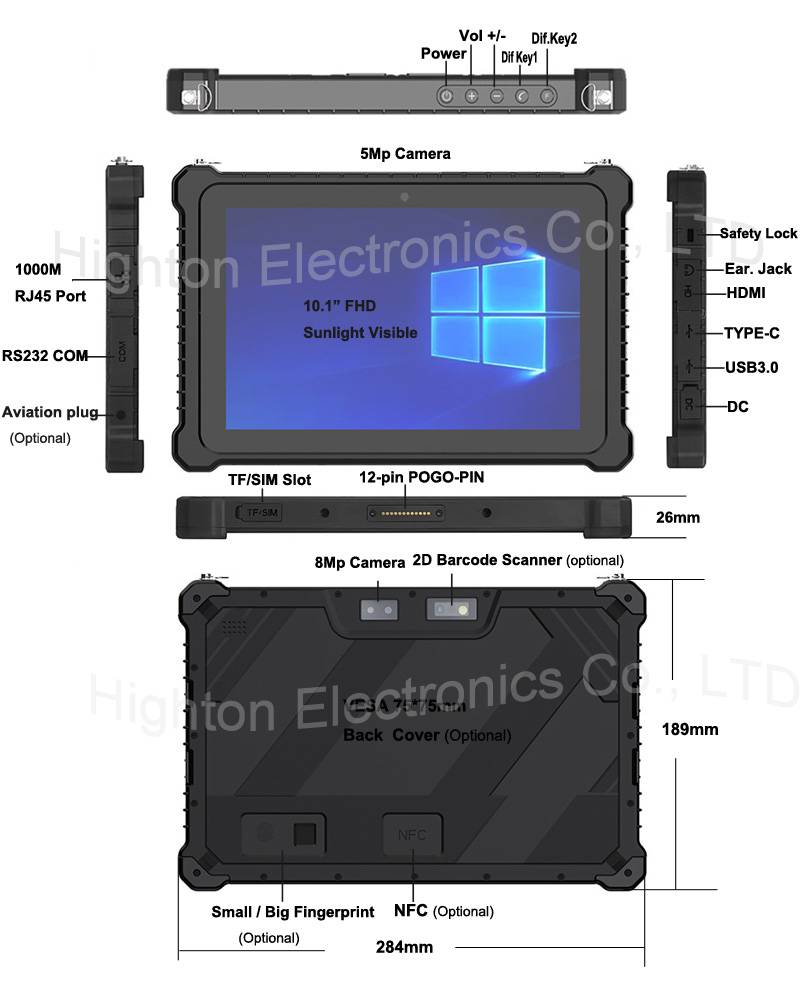
Hot Selling 10 Inch Intel N5100 I5 I7 FHD 8 +128GB 16+256GB Win10 Pro Win11 Pro 4G 5G Rugged Tablet PC Pad with NFC Barcode
Highton Electronics Co., Ltd.
Conveyor Belt Intelligent Monitoring System
LUO YANG WIRE ROPE INSPECTION TECHNOLOGY CO., LTD.
Automatic Aiming Laser Remote Obstacle Removal Robot
Pinggao Group Weihai High-Voltage Apparatus Co., Ltd.


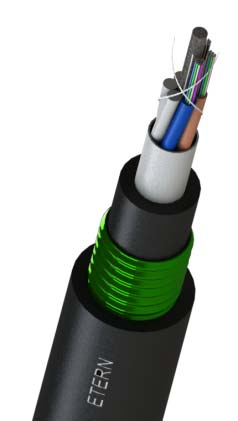

Mine Explosion-proof and Intrinsically Safe Industrial Ethernet Ring Network (10 Gigabit/Gigabit)
Chongqing Mas Sci&Tech Co., Ltd.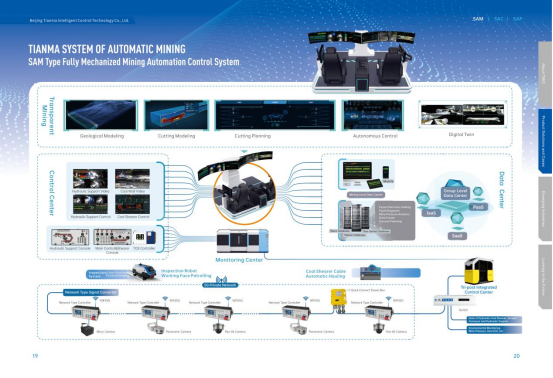
Comprehensive Mining Automation Control System
Beijing Tianma Intelligent Control Technology Co., Ltd.

Industrial and Commercial Point-Type Gas Detector
Jinan Benan Technology Development Co., Ltd.