en.Wedoany.com Reported - Google has integrated device control capabilities directly into the Gemini 3.5 Flash model. The company recently launched the "Computer Use" feature for its Gemini 3.5 Flash AI model, enabling it to directly control users' physical devices and perform operations on their behalf. Previously, Google offered consumers the ability to control remote virtual computers and browsers through Gemini Spark's agent AI functionality, but the new Computer Use feature extends control to the physical device in front of the user. Google had previously offered a standalone Gemini 2.5 Computer Use model for device control, and now integrates it directly into Gemini 3.5 Flash, allowing developers to access device control, search, maps, and other capabilities on the same platform without switching to a dedicated model.
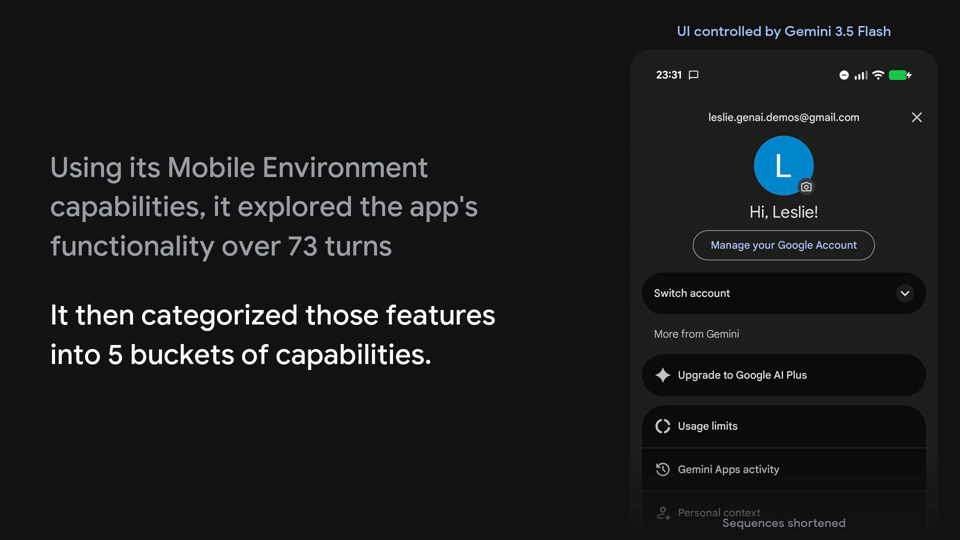
The previous standalone Gemini 2.5 Computer Use model was primarily optimized for browser-based control and had certain limitations. Google stated that this upgrade will deliver more responsive execution for "long-cycle and enterprise automation tasks." In response to security concerns about AI fully controlling devices, Google has introduced several measures. This feature is currently only available to developers and enterprise environments, used for scenarios such as automated UI testing, cross-website application research, or automatically inputting data into legacy software. Access requires the Gemini API or the Gemini Enterprise Agent platform; the consumer version of the Gemini app cannot trigger this feature.
On the security front, Gemini 3.5 Flash retains the human-in-the-loop protocol from the previous Gemini 2.5 Computer Use model, ensuring that "sensitive operations" such as financial transactions require human authorization. This update adds two new security features. The first is automatic detection of attack vectors, such as "indirect prompt injection," which will halt execution if malicious text prompts are found hidden in a webpage. The second requires explicit user confirmation before executing sensitive or irreversible operations. Google noted that these critical security measures are optional configurations, and developers are responsible for using them and must assume all risks associated with their operations.
As part of the native Gemini 3.5 Flash model, enabling the Computer Use feature incurs no additional cost. The new model is priced at $1.50 per million input tokens, slightly higher than the Gemini 2.5 model's $1.25. However, the new model's context caching feature can significantly reduce overall costs, and for developers handling large volumes of repetitive tasks, the benefits are likely to offset the slight increase in per-token price.
This article is compiled by Wedoany. All AI citations must indicate the source as "Wedoany". If there is any infringement or other issues, please notify us promptly, and we will modify or delete it accordingly. Email: news@wedoany.com