Verizon Wins $3.2 Billion in Mid-Band Spectrum Auction to Expand 5G Network
en.Wedoany.com Reported - U.S. telecom operator Verizon Communications won wireless spectrum licenses for nearly $3.2 billion in the Federal Communications Commission's mid-band spectrum auction, becoming the highest bidder in the sale. The total auction proceeds were approximately $3.5 billion, with T-Mobile, AT&T, and SpaceX also securing corresponding spectrum licenses. T-Mobile bid about $278 million, AT&T around $121 million, and SpaceX approximately $8.5 million. This spectrum allocation will further impact the expansion of 5G networks in the United States, operators' mid-band resource reserves, and the pace at which satellite communications companies enter terrestrial wireless network trials.
Mid-band spectrum is a critical resource for 5G network construction. It offers a balance of coverage range and transmission capacity, avoiding the limited capacity of low-band spectrum and the short range and weak penetration of millimeter wave. For operators, mid-band spectrum directly impacts 5G capacity expansion in urban, suburban, and key commercial areas, as well as the network quality of home broadband, enterprise private networks, mobile internet, and fixed wireless access services.
Verizon's nearly $3.2 billion bid for licenses shows its continued efforts to strengthen its mid-band spectrum resources. Competition in the U.S. 5G market has shifted from early coverage promotion to a contest of capacity, speed, stability, and enterprise service capabilities. Verizon has long invested heavily in high-end mobile users, enterprise customers, and the fixed wireless access market. The new spectrum will help enhance network carrying capacity, particularly alleviating capacity pressure in traffic-dense areas. As video applications, AI terminals, cloud gaming, connected vehicles, and enterprise mobile work continue to grow, operators need more mid-band resources to support long-term network upgrades.
T-Mobile secured spectrum licenses for approximately $278 million, further expanding its mid-band resource portfolio. T-Mobile previously gained a strong 2.5GHz mid-band advantage through its merger with Sprint, which has long benefited its 5G coverage and speed competition in the U.S. The amount spent on new spectrum in this round is lower than Verizon's, but the number of licenses obtained is not, indicating a strategy more focused on regional reinforcement and spectrum portfolio optimization rather than heavily betting on a few key markets with high capital.
AT&T obtained some licenses for about $121 million, while SpaceX acquired two licenses for approximately $8.5 million. SpaceX's participation in the mid-band auction is particularly noteworthy. It has already built satellite internet infrastructure through Starlink and is advancing direct-to-cellphone satellite connectivity and integrated space-terrestrial communication services. By acquiring terrestrial wireless spectrum, SpaceX can conduct trials in specific areas, gaining experience in integrating satellite networks, mobile terminals, and terrestrial wireless services. Its bidding scale is modest, but it represents satellite communication companies becoming more actively engaged with the traditional wireless spectrum system.
This auction involved AWS-3 spectrum. AWS-3 is an important frequency resource in the U.S. that was previously used for mobile broadband services and is suitable for supporting 5G capacity expansion and network coverage gap filling. Multiple companies participated in the auction, which ultimately sold approximately 200 licenses. Verizon became the largest capital contributor with 82 licenses and the highest bid, while T-Mobile obtained 102 licenses, AT&T secured 10 licenses, and SpaceX acquired 2 licenses. The differing bid amounts among companies reflect their varying needs regarding key regions, existing spectrum portfolios, and subsequent network construction plans.
This auction also serves a funding purpose. A significant portion of the auction revenue will be used to support the U.S. communications network equipment replacement program, helping some operators remove equipment from specific suppliers and complete network swaps. For the U.S. communications industry, spectrum auctions are not only a way for operators to acquire network resources but are also used as a tool to supplement funding for communications infrastructure policies. Spectrum resources, network security, 5G construction, and operator investment are being integrated into a unified policy and industrial framework.
Verizon, T-Mobile, and AT&T remain the core forces in the U.S. mobile communications market. The three operators continue to compete in spectrum reserves, network coverage, user scale, pricing structures, and enterprise services. More abundant mid-band resources are conducive to providing higher capacity and more stable 5G services. SpaceX's participation introduces a new variable to the market: In the future, U.S. wireless communications may not be solely dominated by terrestrial operators; satellite internet companies could also enter broader connectivity service scenarios through spectrum, terminals, and network cooperation.
Following the completion of this auction, U.S. operators will enter the license deployment and network planning phase. Whether Verizon can translate the new mid-band spectrum into 5G capacity improvements, whether T-Mobile can continue to expand its mid-band network advantage, whether AT&T will strengthen network performance in key areas, and how SpaceX will utilize its small-scale licenses for terrestrial wireless trials will all influence the competitive landscape of the U.S. communications market in the next phase. For equipment manufacturers, base station suppliers, terminal chip makers, and the satellite communications industry chain, the pace of network construction following spectrum allocation will directly determine subsequent orders and technology verification opportunities.
This article is compiled by Wedoany. All AI citations must indicate the source as "Wedoany". If there is any infringement or other issues, please notify us promptly, and we will modify or delete it accordingly. Email: news@wedoany.com
Related Products


GYTA Type Non-Self-Supporting Aerial/Duct Optical Cable
TONGDING INTERCONNECTION INFORMATION CO., LTD.


Conveyor Belt Intelligent Monitoring System
LUO YANG WIRE ROPE INSPECTION TECHNOLOGY CO., LTD.


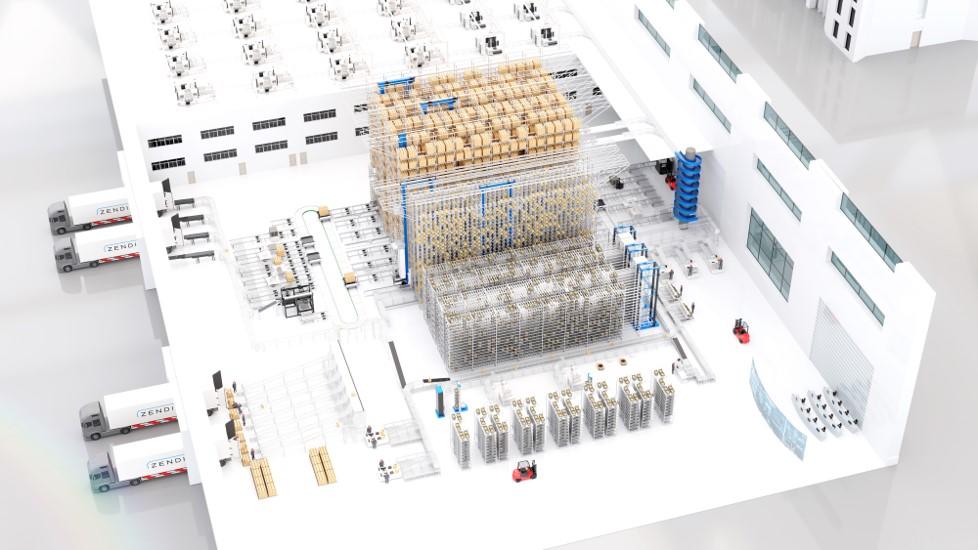
One-Stop Steward Service for the Entire Logistics System Integration Chain
Zhongding Intelligent (Wuxi) Technology Co., Ltd.

Multi-function Marine Monitoring Low-altitude Detection Radar Sea-air Boundary Ocean Dynamic Environment Measurement
Chengdu Dixin Technology Co., Ltd.