en.Wedoany.com Reported - The French Hydrographic and Oceanographic Office, Shom, recently announced that it has automated the production of paper charts using Esri's Custom Chart Builder. After a year-long evaluation, it confirmed that the paper charts generated by this fully automated workflow meet the safety and quality standards required for defense applications without human intervention.
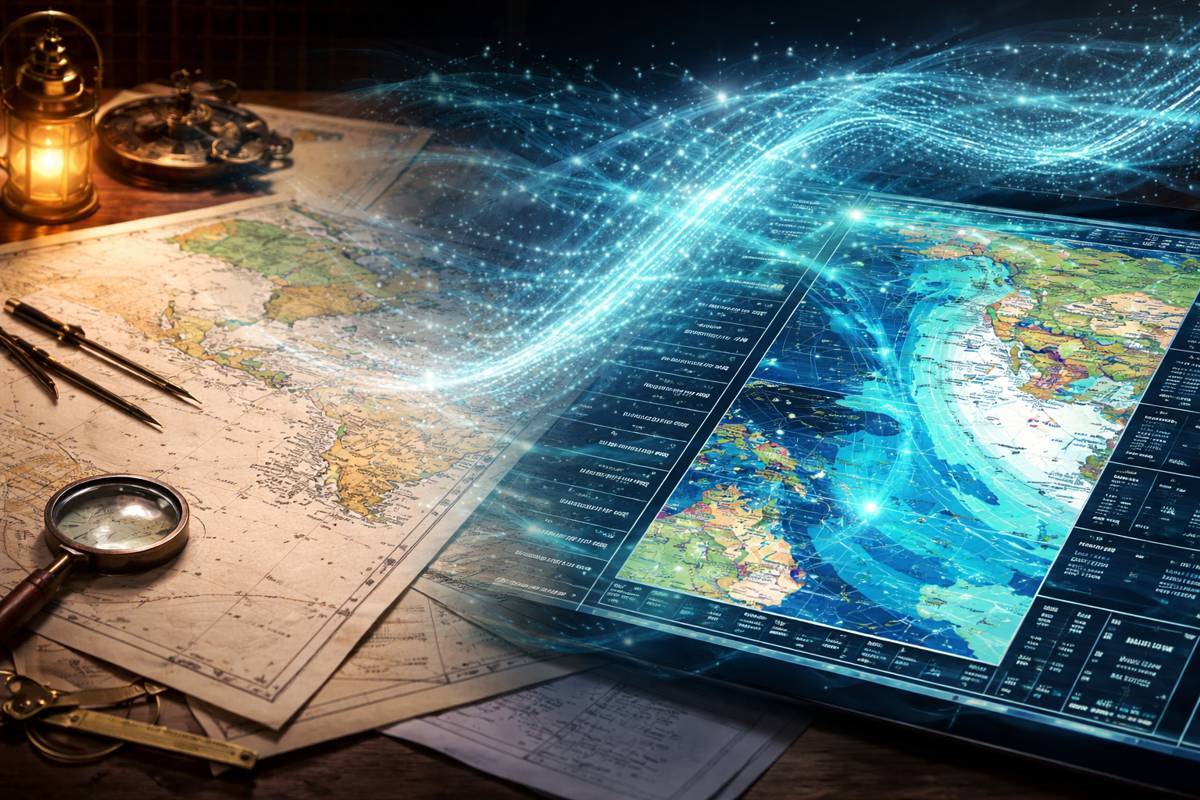
While the digital transformation of chart production may not often make headlines, it underpins a vast array of maritime activities, including naval readiness, port construction, offshore energy, and global trade. When a nation's hydrographic office decides to change how official charts are produced, the impact extends far beyond cartography. Shom's shift marks a fundamental change in how safety-critical information is created, validated, and delivered.
For decades, even as digital navigation systems have become prevalent on bridges and in fleet operations centers, paper charts have remained the regulatory cornerstone of maritime navigation. The core challenge of automation lies not in technical capability, but in trust, compliance, and repeatability within the context of defense and international security. Shom's practice demonstrates that fully automated chart production can meet the stringent standards of major naval institutions, setting a globally relevant precedent for ports, coastal infrastructure planners, defense organizations, and maritime regulatory authorities.
Charts are fundamental to infrastructure planning, offshore construction, dredging, submarine cable installation, and the safe operation of maritime transport corridors. Every dock, wind turbine foundation, and shipping channel relies on authoritative hydrographic data, which was previously transformed into paper charts through labor-intensive manual processes. Automation breaks this highly labor-dependent model, compressing production cycles, reducing human error rates, and enabling faster updates of underlying datasets to flow into operational products. For infrastructure developers and port authorities, this means faster access to the latest seabed information and navigational restrictions. For defense and coast guard agencies, it ensures consistency across fleets and reduces reliance on traditional craftsmanship.
Shom is responsible for providing authoritative maritime data to both civilian and military users, and its charts must meet the most stringent safety and quality standards of the French Navy and the international community. During the one-year evaluation, Shom confirmed that charts generated via Custom Chart Builder meet these standards without human intervention. Rafael Ponce, Esri's Chief Maritime Advisor, noted that this adoption means compliant paper charts can be produced without human intervention, significantly reducing production time and costs. Nicolas David, Head of the Cartography Department at Shom, also stated that Shom has modernized its chart production workflow without compromising safety, and that the CPENC provided shows no significant difference compared to traditional charts.
While improving efficiency, automation also brings strategic implications. Reduced production time lowers operational costs, allowing hydrographic offices to redeploy skilled personnel to higher-value tasks, such as accelerating the development of next-generation digital products aligned with the International Hydrographic Organization's S-100 framework. As maritime infrastructure projects grow in complexity and scale, automated chart production can support a more responsive information supply chain, ensuring that changes in seabed conditions, port layouts, or navigational hazards are quickly reflected in both digital and paper formats. For investors and policymakers, this capability enhances the resilience of maritime infrastructure systems, reduces bottlenecks in regulatory processes, and contributes to safer, more predictable project delivery in coastal and offshore environments.
Despite the rapid adoption of digital navigation tools, paper charts remain mandatory in many jurisdictions and operational contexts. Custom Chart Builder sits at the intersection of digital and traditional—automating paper chart production while freeing up capacity for digital services. This balance is particularly critical as agencies prepare for broader adoption of S-100-based products.
Esri recognized the Shom project with a GIS Special Achievement Award at its 2025 User Conference, highlighting its value beyond national borders. Discussions are underway to integrate the Shom configuration into future versions of Custom Chart Builder so that other hydrographic offices can also benefit. Shom also plans to share its FME-based developments and expertise, fostering collaborative sharing in the digital transformation of the maritime sector.
More broadly, coastal infrastructure planning, offshore wind, subsea construction, and environmental protection all rely on authoritative hydrographic data. The automation of chart production strengthens the information foundation of the blue economy. For construction and infrastructure professionals, faster access to certified paper charts reduces uncertainty during planning and execution phases. For policymakers, it supports evidence-based coastal management, climate adaptation, and marine spatial planning. For defense and security stakeholders, automation enhances confidence in the integrity of mission-critical navigation tools.
Change in the infrastructure sector often advances through careful validation, institutional trust, and gradual adoption. Shom's move to automate paper charts demonstrates that automation can meet the highest levels of safety and regulatory standards, and signals a future where hydrographic offices can operate more flexibly, focus on innovation, and better support the complex demands of modern maritime infrastructure.
This article is compiled by Wedoany. All AI citations must indicate the source as "Wedoany". If there is any infringement or other issues, please notify us promptly, and we will modify or delete it accordingly. Email: news@wedoany.com