Why Ternary Lithium Batteries Remain Important for Long-Range Electric Vehicles
en.Wedoany.com Reported - Electric-vehicle batteries must balance driving range, weight, volume, fast charging, low-temperature operation, lifecycle, safety, and cost. Nickel-based ternary chemistry remains relevant where energy density and vehicle packaging are especially important.
A Ternary Lithium Battery can store a relatively large amount of energy within a limited mass and volume. This can help vehicle manufacturers reduce battery weight for a given range or provide longer range within a fixed installation space.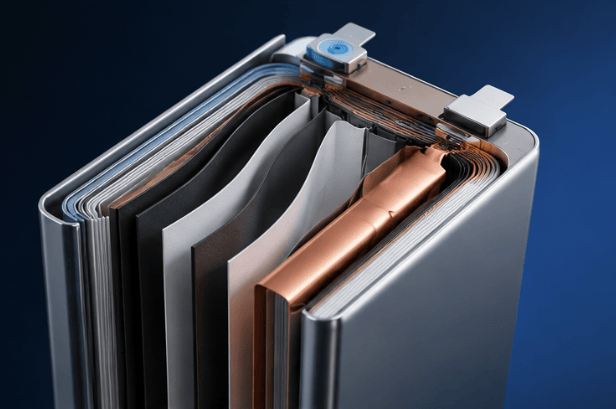
Battery mass affects energy consumption, handling, braking, chassis design, and payload. The value of higher cell energy density is therefore broader than the nominal capacity printed on the battery specification.
Vehicle range, however, depends on the complete system. Pack efficiency, usable state-of-charge window, thermal management, aerodynamics, motor efficiency, climate control, and software all influence actual performance.
Fast charging is also a system-level capability. Electrode chemistry, coating thickness, porosity, electrolyte transport, temperature, and charging strategy determine how quickly the battery can accept energy.
Simply increasing current can create lithium-plating risk at low temperature or high state of charge. Battery preheating and adaptive charging control are therefore important parts of fast-charge performance.
Ternary batteries can provide favourable low-temperature capability, but winter range is still affected by increased internal resistance, cabin heating, and battery temperature. Thermal conditioning improves performance while consuming part of the stored energy.
Pack temperature uniformity is essential. Cells operating at different temperatures age at different rates, and the weakest cell can limit the usable capacity of the complete battery pack.
Liquid cooling, thermal interface materials, sensors, and control software should maintain both safe temperature and consistent temperature distribution.
As lower-cost battery chemistries expand, ternary batteries are becoming more application-specific. Their strongest position is likely to remain in vehicles where range, performance, low weight, and limited packaging space justify the additional material and thermal-control requirements.
The future value of ternary chemistry will come from carrying more usable energy with less vehicle mass. That advantage must be supported by stable materials, controlled fast charging, effective thermal management, and verified pack safety.
This article is compiled by Wedoany. All AI citations must indicate the source as "Wedoany". If there is any infringement or other issues, please notify us promptly, and we will modify or delete it accordingly. Email: news@wedoany.com
Related Products


High-voltage Direct Current (HVDC) Transmission System Research and Integrated Design
XI'AN XD POWER SYSTEMS CO., LTD.

Mineral-insulated Compact Busway (Fire-resistant Busduct)
Zhuhai Guangle Electric Busway Co., Ltd.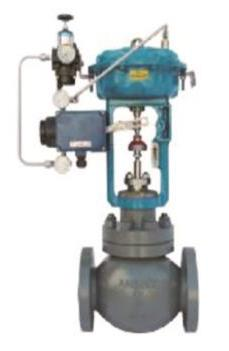
Quick-Change Single-Seat Control Valve / Quick-Change High-Pressure Single-Seat Control Valve
Beijing Consen Automation Technology Co., Ltd.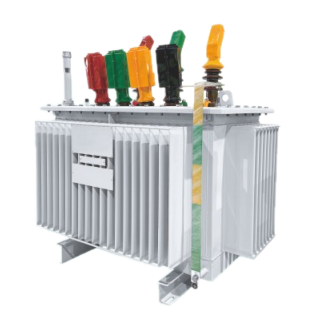
IS(B)□-M·RL Series Oil-immersed 3D Transformer (Planar / 3D Wound Core)
Guangdong Kehua Electric Power Technology Co., Ltd.