China's SpinQ Completes 1 Billion Yuan Series D Funding for Fault-Tolerant Universal Quantum Computer
en.Wedoany.com Reported - On June 30, SpinQ, a domestic quantum computing company, announced the completion of a 1 billion yuan Series D funding round, bringing its total financing over the past six months to 2 billion yuan. According to investment news reports, new investors in this round include CICC Capital, Shanghai Semiconductor Industry Investment, AVIC Honghua, Shanghai Dianke, Guozhong Capital, Sichuan Xingchuan, Jinpu Investment, Hengxu Capital, Shangqi Capital, Hongtai Fund, Luhua Investment, Xingzheng Investment, Shenzhen Press Group, Zero2IPO Holdings, and Bojia Capital. Existing shareholders such as Toudong Donghai, Jingkai Capital, Qingdao Hanrui, and Hainan Fengkaixiang also increased their stakes, while industrial investors Lyu Dalong and Lan Kun participated in this round.
The use of funds from this financing has been clearly defined: all proceeds will be invested in the full-chain research and development of fault-tolerant universal quantum computers, core process iteration, and global industrial ecosystem expansion. SpinQ's cumulative financing of 2 billion yuan in six months indicates that capital investment is shifting from early-stage quantum computing concept validation toward system capabilities closer to engineering, industrialization, and global delivery. Sina Tech also reported that SpinQ's Series D funding will primarily be used for full-chain R&D of universal quantum computers and core process iteration.
Founded in 2018 and headquartered in Shenzhen, SpinQ's business covers superconducting quantum computing, nuclear magnetic resonance quantum computing, quantum computing cloud platforms, and software services. According to the company's official website, its industrial-grade superconducting quantum products and services include QPUs, quantum chip EDA, quantum measurement and control systems, algorithms, and software, offering customers modular units, integrated systems, and complete solutions. Its educational-grade nuclear magnetic resonance quantum computers have launched experimental, desktop, and portable models for quantum computing research and teaching.
The fault-tolerant universal quantum computer is the most critical technical focus of this funding round. As quantum computing systems scale up, qubits are affected by noise, control errors, material defects, and environmental disturbances, making computational processes prone to errors. The fault-tolerant approach requires coordination across quantum error correction, chip processes, measurement and control systems, cryogenic systems, software stacks, and algorithms to keep the instability of individual qubits within usable limits. The investment in "full-chain R&D" means SpinQ will advance not just single-point chip upgrades but also continuous efforts spanning quantum chip design, manufacturing, packaging, testing, measurement and control, complete systems, cloud platforms, and application ecosystems.
The investor list also reflects the industrial nature of this funding round. New investors cover national-level guidance funds, central enterprise industrial capital, local state-owned capital platforms, semiconductor industry funds, market-oriented investment institutions, and media industry capital, with existing shareholders continuing to follow. Quantum computing has long R&D cycles, high hardware system costs, and unstable short-term commercial returns, making it difficult for financial investment alone to sustain long-term engineering efforts. With the entry of diverse industrial capital, SpinQ has the opportunity to gain more resource support in chip processes, equipment supply chains, industrial customers, local platforms, and overseas ecosystems.
SpinQ has previously secured consecutive financing rounds. In April 2026, the company announced the completion of a 600 million yuan Series C+ round, bringing total Series C financing to nearly 1 billion yuan. The Quantum Insider reported that those funds were used for high-qubit superconducting quantum chip R&D and the expansion of standardized hardware platform production lines. Less than three months later, SpinQ completed its 1 billion yuan Series D round, raising cumulative six-month financing to 2 billion yuan, significantly accelerating its funding pace.
Product delivery capability is a key backdrop to SpinQ's consecutive financing. Public information shows that SpinQ's products and services have covered over 40 countries and regions across five continents, serving more than 200 universities, research institutions, and industrial clients. The product portfolio listed on its official website includes industrial-grade superconducting quantum products, educational-grade nuclear magnetic quantum products, quantum cloud platforms, and software, with applications spanning quantum education, financial technology, biomedicine, and artificial intelligence. For a quantum computing company, the ability to deliver complex hardware systems to customers and ensure continued usage demonstrates engineering capability more than a single experimental benchmark.
Following the completion of this 1 billion yuan Series D round, SpinQ's next focus will be on fault-tolerant universal quantum computer R&D, core process iteration, and global industrial ecosystem expansion. Quantum computing still faces technical barriers before large-scale general commercial applications, including chip consistency, quantum error correction efficiency, system stability, software ecosystems, and cost control, all of which will affect future progress. Whether SpinQ can translate this substantial funding into verifiable hardware metrics, stable deliveries, and international customer growth will become a key milestone for observing China's quantum computing industrialization process.
Related Products


MUX Series Communication Interface Device for Security and Stability Control System
Nanjing NR Electric Co., Ltd.
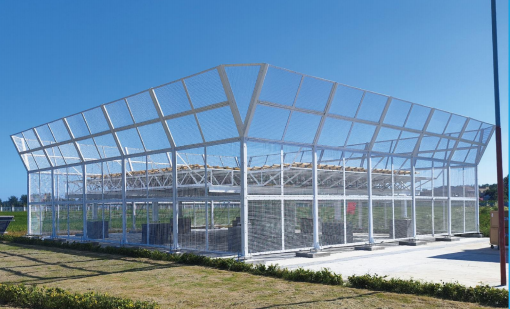
TWP16 P-Band Tropospheric Wind Profile Radar
China Huayun Meteorological Technology Group Co., Ltd.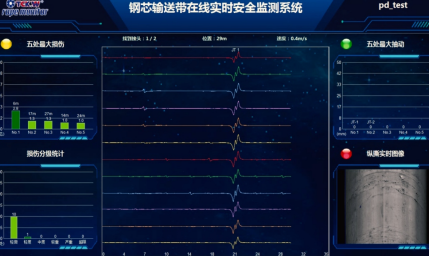
Conveyor Belt Intelligent Monitoring System
LUO YANG WIRE ROPE INSPECTION TECHNOLOGY CO., LTD.

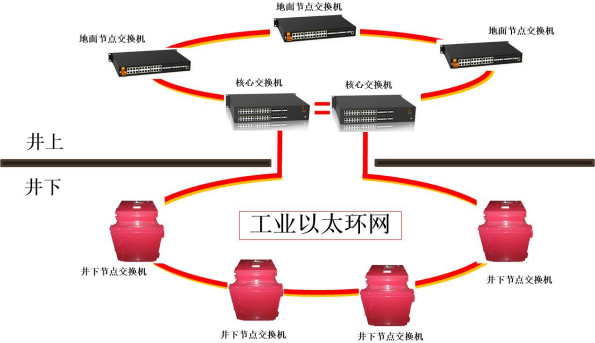
Mine Explosion-proof and Intrinsically Safe Industrial Ethernet Ring Network (10 Gigabit/Gigabit)
Chongqing Mas Sci&Tech Co., Ltd.

Multi-function Marine Monitoring Low-altitude Detection Radar Sea-air Boundary Ocean Dynamic Environment Measurement
Chengdu Dixin Technology Co., Ltd.