Brazil and European Companies Showcase Industrial Data Space Demonstrator
en.Wedoany.com Reported - The Open Industry Committee (Comitê Open Industry) of the Brazilian Association of the Internet of Things (ABINC), together with the Brazilian Agency for Industrial Development (ABDI), presented the "Federated Industrial Data Space Demonstrator (Demonstrador Federado de Espaço de Dados Industriais)" at the 2026 Hannover Messe, aiming to validate secure and sovereign data sharing use cases between Brazilian and European companies. Previously, Néstor Ayala, Co-Director of the Organizational Engineering Center at the Federal University of Rio Grande do Sul (NEO-UFRGS), pointed out in a webinar organized by the Open Industry Committee (Comitê Open Industry) of ABINC that approximately 98% of industrial data remains unexploited.
According to Ayala, a study conducted by NEO-UFRGS in partnership with ABDI, at the request of the Ministry of Development, Industry, Commerce, and Services (MDIC), surveyed over 200 companies and identified four types of data sharing maturity: organizations that already leverage this information to generate value but use proprietary solutions; companies that recognize the potential but are concerned about sharing data; firms that see opportunities but lack the technical or financial capacity to deploy platforms; and enterprises that still require training initiatives to understand the economic value of data.
Maurício Finotti, Head of the Open Industry Committee (Comitê Open Industry) of ABINC and CEO of I-SENSI, explained that a Data Space operates as a secure and sovereign digital ecosystem, where each company maintains control over its data, defining which information will be shared, with whom, and for how long. Sharing occurs through connectors that extract only authorized data and verify contracts and usage policies before each transaction, without the need for centralized data storage.
The demonstrator brought together Brazilian and European companies, collaborating around a machining center, collecting machining data, energy consumption, downtime metrics, and derived information from Manufacturing Execution Systems (MES), using the OPC Unified Architecture (OPC UA) standard and complying with the Brazilian General Data Protection Law (LGPD) and the European Union's Data Act.
Use cases demonstrated included secure industrial data sharing and asset utilization analysis, showing an average utilization rate of 85% and an idle rate of 42%. Additionally, the identification of main downtime causes and the use of data as a qualified source for training artificial intelligence models were presented. Finotti also highlighted that a single industrial press can generate approximately 1.84 GB of data per year, a volume that grows rapidly in factories with dozens or hundreds of machines.
Johannes Klingberg from the German Agency for International Cooperation (GIZ), while presenting the European experience, stated that interoperability and data sharing infrastructure have become strategic factors for national competitiveness in the field of artificial intelligence. Europe views data as an economic resource, reduces regulatory barriers, and shifts efforts toward scaling industrial applications. Klingberg and Finotti also noted that data spaces can meet Digital Product Passport (DPP) requirements, organizing the governance of traceable information across the entire production value chain, distinguishing between public, regulatory, and restricted data, without compromising companies' sovereignty over their information.
Flávio Maeda, Vice President of ABINC, stated that the data economy is a natural evolution of the Internet of Things (IoT), a new economy based on the strategic use of information. The Open Industry Committee (Comitê Open Industry) works on technical, regulatory, and business model aspects to lay the foundation for a data sharing ecosystem tailored to the reality of Brazilian industry.
Finotti also presented the initiative's roadmap, divided into two phases: validating the demonstrator at the Hannover Messe and permanently expanding the initiative in Brazil, aligned with Line 4 of the Mover Program (Programa Mover). The goal is to broaden the adoption of industrial data spaces across new production chains, based on a collaborative model of secure and sovereign data sharing.
Related Products


Industrial and Commercial Point-Type Gas Detector
Jinan Benan Technology Development Co., Ltd.




CAP1400 main feedwater flow nozzle flowmeter.
Jiangsu Hongda Instrument Technology Co., LTD.

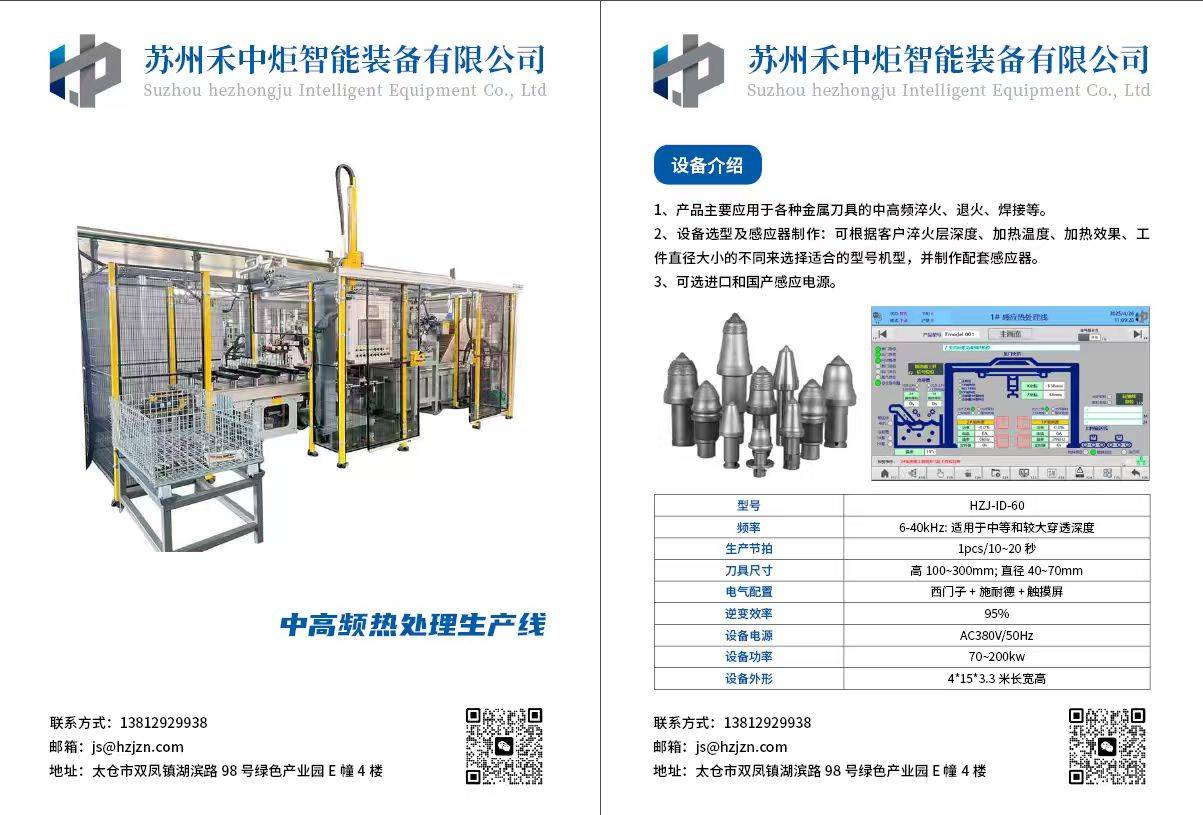
Excavator Bucket Teeth Heat Treatment Production Line
Suzhou Hezhongju Intelligent Equipment Co., Ltd.