South Korean Government Unveils Manufacturing AI 2030 Strategy to Drive Intelligent Transformation of Semiconductor and Other Industries
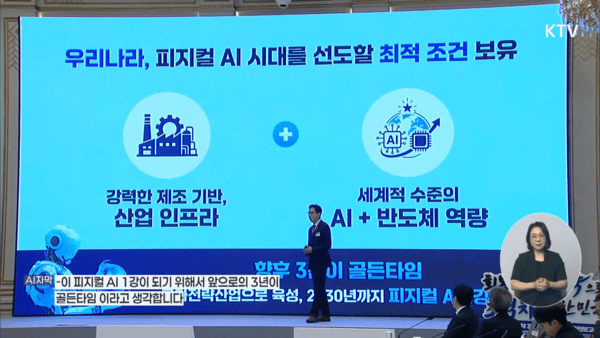
en.Wedoany.com Reported - The Ministry of Trade, Industry and Energy, the Ministry of Science and ICT, and the Ministry of SMEs and Startups jointly announced the "Manufacturing AI 2030 Strategy" on the 29th during the "National Report on the Three Major Mega Projects for the Great Leap of the Republic of Korea." The strategy aims to combine the competitiveness of key industries such as semiconductors, shipbuilding, and automobiles with the expertise and know-how of skilled workers, leveraging Manufacturing AX to re-establish the manufacturing sector as a core growth engine. The strategy outlines three core tasks: building a national-level manufacturing data library, developing a manufacturing AI foundation model, and promoting regional manufacturing AI. Implementation will proceed in four phases: foundation, upgrade, diffusion, and ecosystem creation. The foundation phase will involve collecting high-quality manufacturing data and launching large-scale projects to convert the "tacit knowledge" of master craftsmen into data. The upgrade phase will focus on developing a "large-scale AI agent" for the entire process from factory design to operation and logistics control, as well as manufacturing-specific humanoid robots and original manufacturing physical AI technologies. The diffusion phase plans to transform industrial complexes, which account for two-thirds of South Korea's manufacturing production and exports and half of its employment, into "M.AX Clusters." This will involve building public infrastructure such as demonstration testbeds and edge computing centers for each complex, and disseminating Manufacturing AX methodologies to SMEs through win-win AI smart factory projects. The ecosystem creation phase will be driven by investment linkages through a 150 trillion won national growth fund, the introduction of a "Manufacturing AX Certification" system, training of master's and doctoral students and incumbent workers, and improvement of the legal foundation. Deputy Prime Minister Bae Kyung-hoon stated that manufacturing AI should evolve to the stage where AI understands the physical phenomena and process flows of manufacturing sites, and autonomously judges and controls equipment and robots.
Hancom announced on the 29th that it has applied Hancom Assistant to WeepyBot, a generative AI chatbot of Korea Western Power, establishing a company-wide intelligent document creation environment. This project marks the first case within the power group where proprietary generative AI is combined with a commercial AI document creation solution for company-wide operations. Korea Western Power conducted technical verification with Hancom from October 2024, and after approximately one year and three months of validation, decided to introduce the system this year. Hancom Assistant is linked to approximately 720,000 internal knowledge documents owned by Korea Western Power, including company regulations, laws and regulations, business manuals, and safety materials, enabling employees to utilize relevant regulations and business information in real-time while writing reports.
MRO (엠로) announced on the 29th that it will build a next-generation procurement portal system for Kolon Industries, aimed at addressing changes in the internal and external environment, including increased procurement business complexity, supply chain risks and regulatory expansion, and heightened market uncertainty. The core of this project is to build a new system for Kolon Industries that comprehensively supports the entire procurement process from strategic sourcing, development procurement, procurement execution, to supplier management. The goal is to strengthen strategic procurement capabilities, structurally innovate procurement processes, while ensuring cost competitiveness and supply stability. Key operations such as procurement execution and supplier management will be automated based on Agentic AI, with AI collecting and sharing news related to supplier risks in real-time to proactively address supply chain risks.
Diply (디플리) announced on the 29th that it has been selected as one of the final 10 teams for the "Future Industry Challenge 2026" hosted by SKF Magnetic Mechatronics (S2M), a subsidiary of global bearing manufacturer SKF. A total of 108 global startups participated this year, with 18 passing the first round of evaluation, and 10 companies including Diply (디플리) selected in the final round. During the final pitch competition, Diply (디플리) showcased its Listen AI technology, an acoustic AI solution that automates quality inspection of industrial drive components such as actuators, bearings, and gears. Based on over 10 million manufacturing process event data points and more than 2.1 million hours of factory noise data accumulated over eight years, the solution is equipped with a foundation model specialized for manufacturing processes.
EastAid (이스트에이드) announced on the 29th that it has fully applied its proprietary AI foundation model, K-EXAONE, to the AI search function of the portal Zoom. Starting today, the core AI models for Zoom's "AI Instant Summary" and "AI Hot Trends" have been replaced with K-EXAONE. K-EXAONE offers advantages in understanding Korean language context, demonstrating superior performance in Korean benchmark evaluations such as KMMLU-Pro, accurately comprehending Korean context and generating natural sentences. This introduction has improved Zoom's contextual adaptability in terms of writing style and tone for Korean, while also reducing operational costs by approximately half compared to existing global models.
ThinkforBL (씽크포비엘) announced that applications for the AI Trustworthiness Hackathon Triton (트라이톤) are open until August 21. Regardless of major, university students and graduate students interested in AI trustworthiness and responsibility can participate for free. Sponsored by the National Information Society Agency (NIA) and the Korea Testing Laboratory (KTL), the event launched in October last year, with the first competition completed in January this year. Unlike general AI hackathons that focus on performance competition or problem identification, Triton (트라이톤) challenges participants in designing and verifying trustworthiness during the AI development phase. Applicants must form teams of at least three members, with each member taking on one of the roles: AI planner, data scientist, or AI engineer. The competition will begin with an orientation in early September, followed by a preliminary round (until October 16), a main round (until November 20), and an awards ceremony scheduled for late November or early December.
Related Products

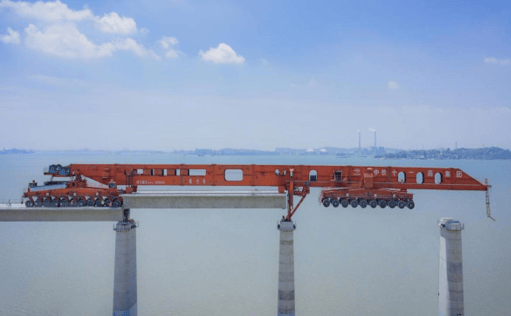
High-Speed Railway Lifting, Transporting, and Erecting Equipment: Integrated Transport and Erection Machine
Hanjiang Heavy Industry Co., Ltd. of China Railway 11th Bureau Group
Pneumatic high-pressure wear-resistant ball valve
Zhejiang Deca Control Valve Meter Co., Ltd.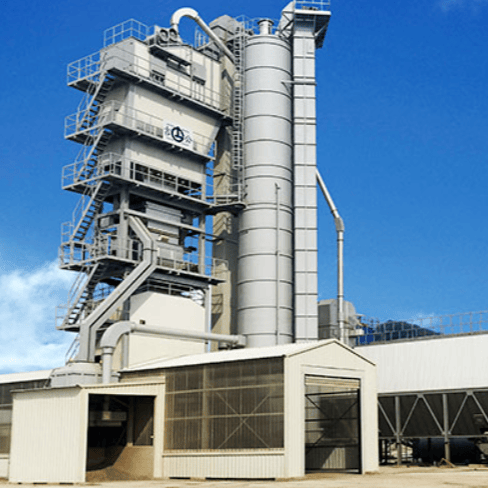
LBH4000 Batch Environmental Protection Asphalt Mixing Plant | Asphalt Batching Plant | Asphalt Mixing Plant
Jilin Province Road Construction Machinery Co., Ltd.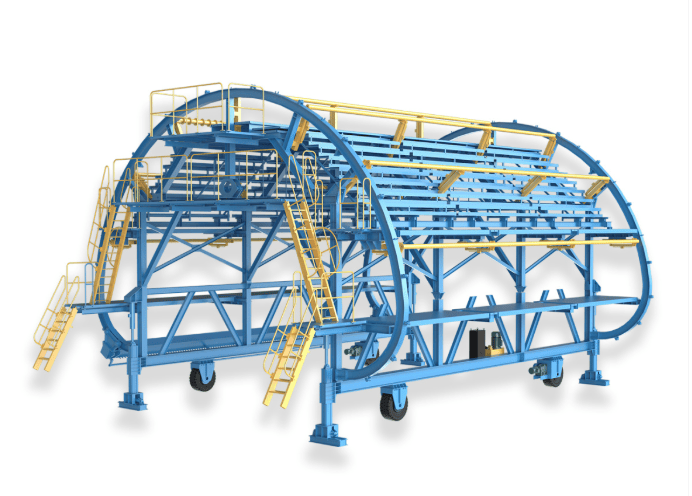
QLZNGJ Intelligent Steel Reinforcement Trolley
Luoyang China Railway Qiangli Machinery Co., Ltd.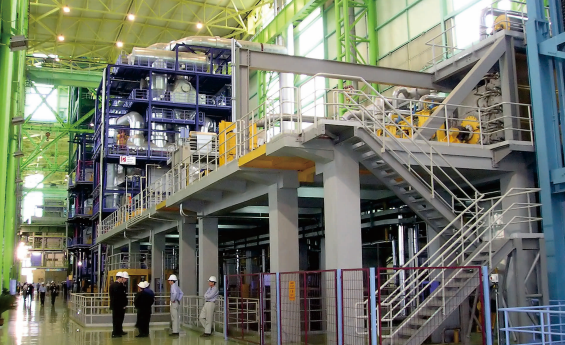
Strip Coating and Plating Production Line Equipment
MCC-SFRE HEAVY INDUSTRY EQUIPMENT CO., LTD.
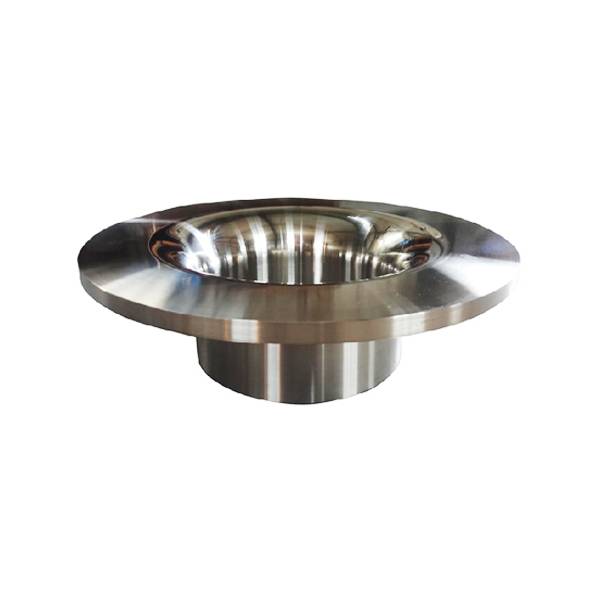
Standard Nozzle Flowmeter
Jinggong Automatic Control Instrument Complete Technology Development Company