Meta Plans to Deploy MTIA 450 Self-Developed AI Chip in the First Half of 2027
en.Wedoany.com Reported - On September 15, Meta confirmed plans to begin deploying a new generation of self-developed AI chips in its data centers in the first half of 2027. The product currently being tested is the MTIA 450, codenamed Arke, which is primarily aimed at generative AI inference tasks. Meta stated that its self-developed chips will improve computing performance per unit of power and per unit of cost for specific AI workloads, in order to reduce the computing cost and energy consumption of running AI models in data centers.
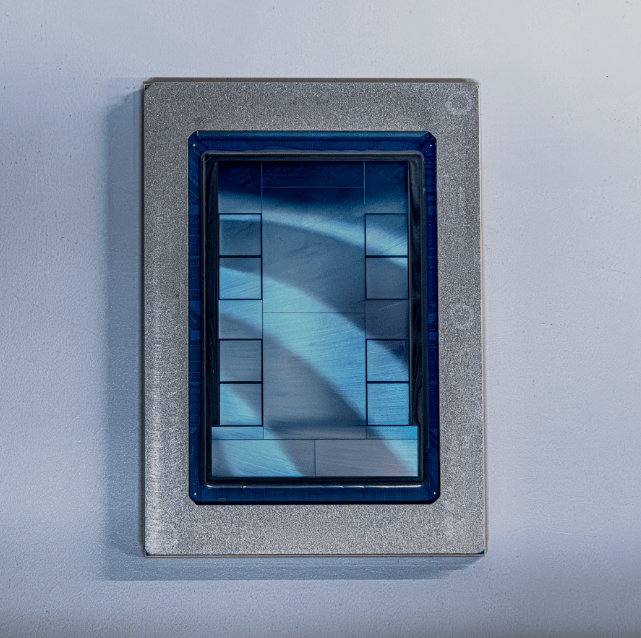
MTIA is Meta's self-developed Meta Training and Inference Accelerator series. Meta's new roadmap announced in March this year includes four generations of chips: MTIA 300, 400, 450, and 500. Among them, the MTIA 300 is mainly used for ranking and recommendation training, while the MTIA 400, 450, and 500 gradually expand to generative AI inference and other AI workloads. At that time, Meta officially pointed to early 2027 for the large-scale deployment of the MTIA 450.
The MTIA 450 is designed first and foremost to optimize for generative AI inference, while also supporting ranking, recommendation, and some training tasks. Meta's published roadmap shows that from the MTIA 300 to the MTIA 500, high-bandwidth memory bandwidth increases by about 4.5 times, and computing performance improves by about 25 times under the corresponding low-precision specifications; the MTIA 450 occupies the third-generation position in this generational upgrade chain and will take on larger-scale inference production tasks in 2027.
Meta has already deployed hundreds of thousands of previous-generation MTIA chips in its data centers for inference workloads such as advertising, content ranking, and recommendation. The company advances subsequent products through high-frequency iteration, compressing the development cycle of a new generation of chips to about one generation every six months. Through modular design and compatibility solutions with existing server racks, new chips can enter existing data center infrastructure more quickly.
After the MTIA 450, Meta is developing the next-generation MTIA 500, codenamed Astrid. The related design work is expected to be completed in about one month, with plans to enter data centers by the end of 2027. Meta previously disclosed officially that the MTIA 500 will continue to focus on optimizing generative AI inference, with its HBM bandwidth increasing by about another 50% compared with the MTIA 450, while continuing to increase low-precision computing capability.
Yee Jiun Song, Meta's Vice President of Engineering responsible for custom chip projects, said the company plans to improve the performance/power and performance/cost of its chips generation by generation. According to the current deployment plan, Meta has committed to configuring more than 1 gigawatt of self-developed chip computing power within 12 months, and subsequently plans to continue expanding the deployment scale.
MTIA chips are developed by Meta in collaboration with Broadcom. Meta confirmed in March this year that the MTIA series will continue to serve as a core self-developed computing platform in its AI infrastructure, while the company will still purchase computing chips from external suppliers such as Nvidia and AMD to match different chips to different training and inference workloads.
Related Products



Conveyor Belt Intelligent Monitoring System
LUO YANG WIRE ROPE INSPECTION TECHNOLOGY CO., LTD.

TWP16 P-Band Tropospheric Wind Profile Radar
China Huayun Meteorological Technology Group Co., Ltd.
Hot Selling 10 Inch Intel N5100 I5 I7 FHD 8 +128GB 16+256GB Win10 Pro Win11 Pro 4G 5G Rugged Tablet PC Pad with NFC Barcode
Highton Electronics Co., Ltd.
20 Inch 1600*900 Full HD 60Hz TFT LED Monitor with VGA and DP Interfaces for Desktop Computers-Business Use
Guangzhou Zanying Optoelectronics Technology Co., Ltd.



Multi-function Marine Monitoring Low-altitude Detection Radar Sea-air Boundary Ocean Dynamic Environment Measurement
Chengdu Dixin Technology Co., Ltd.