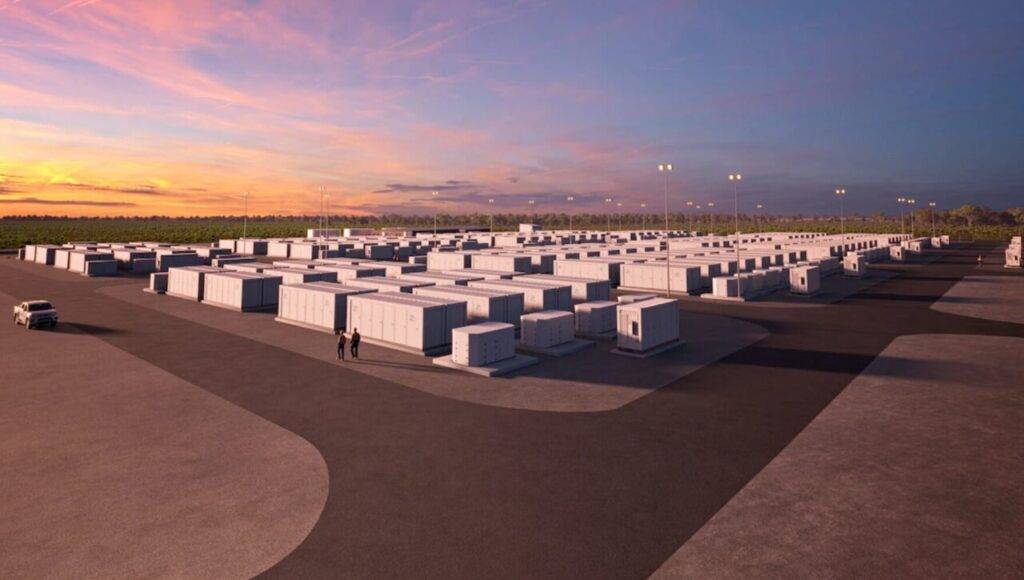
en.Wedoany.com Reported - Guangzhou Zhiguang Energy Storage Technology Co., Ltd. has recently completed a 36-hour uninterrupted stability test for the 35kV grid-forming cascaded high-voltage direct-connected energy storage project built for Inner Mongolia Chuangyuan Metal. The test involved a black start of seven grid-forming energy storage units, which then drove 20 wind turbines to operate stably, achieving simultaneous grid integration of energy storage, wind power, and coal-fired power generation.
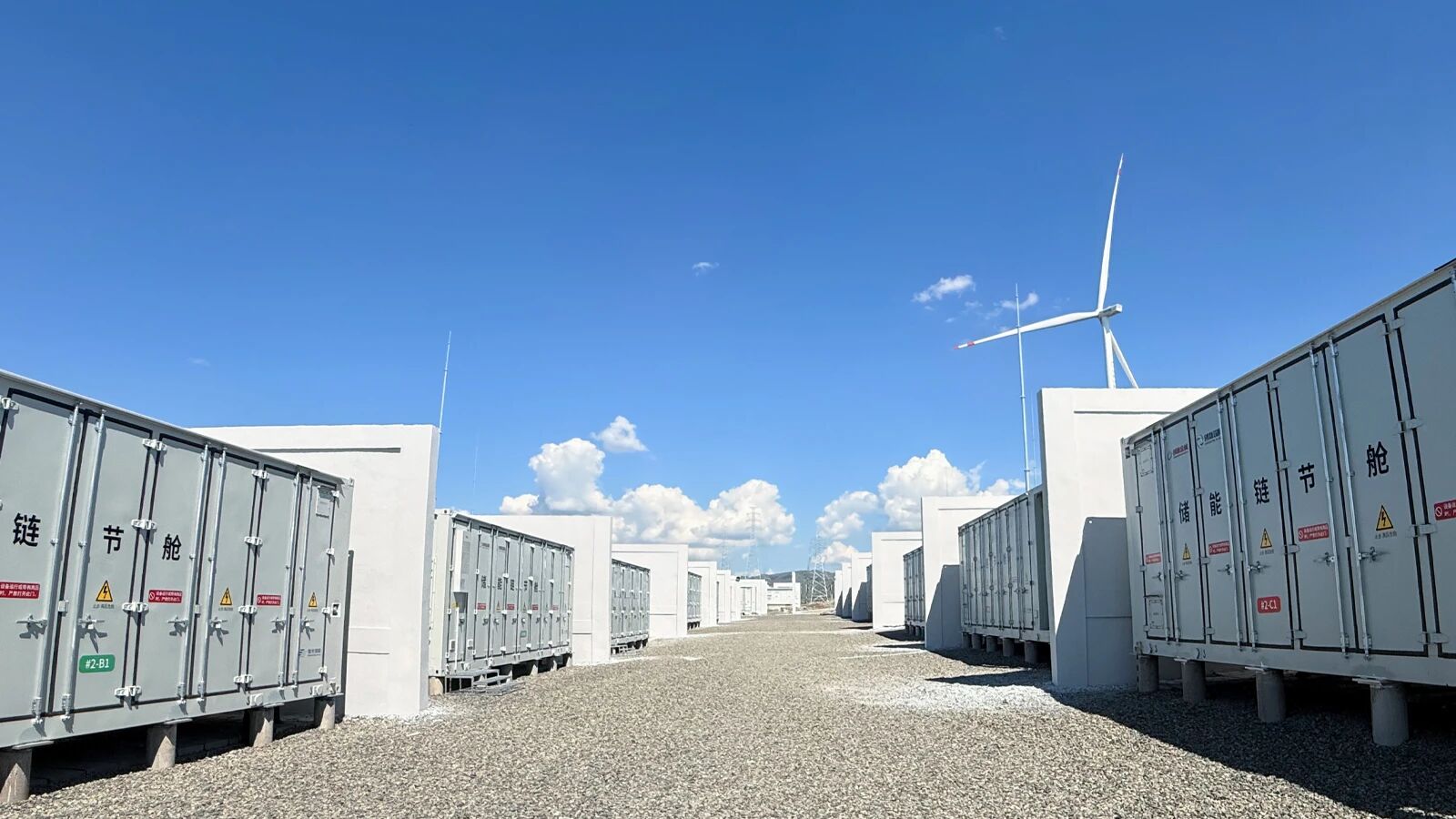
When the entire power grid lost power, all wind turbines and coal-fired units lost voltage support. Zhiguang's grid-forming energy storage system, employing voltage source VSG (Virtual Synchronous Generator) technology, does not rely on external grid support, becoming the sole power source in an islanded scenario. After the test initiation, seven 35kV/25MW cascaded high-voltage direct-connected energy storage systems operated in parallel to establish a stable standard voltage, completing a zero-voltage start-up and voltage ramp-up for three 250MVA large-capacity main transformers.
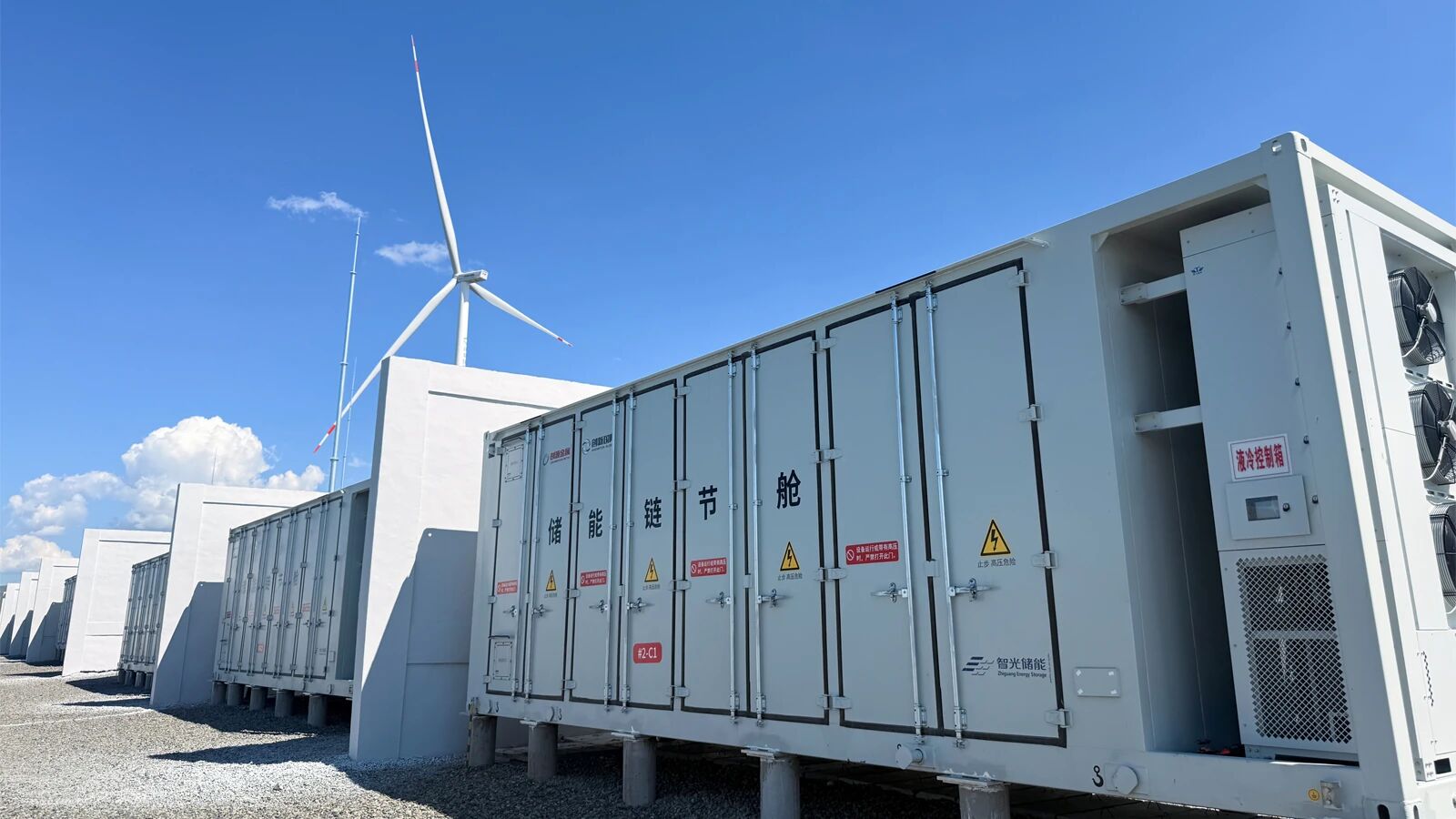
The energy storage output, after being stepped up through multiple main transformers, drove a total of 20 10MVA wind turbines across four feeder lines. Despite the inrush current impact from the direct switching of wind turbine transformers, the system maintained a stable 220kV bus voltage throughout, with a total harmonic distortion (THD) of ≤0.8%. During the islanded operation phase, the maximum wind power generation reached 40MW, with surplus wind energy absorbed by the energy storage system, whose state of charge (SOC) smoothly increased from 15% to 85%.
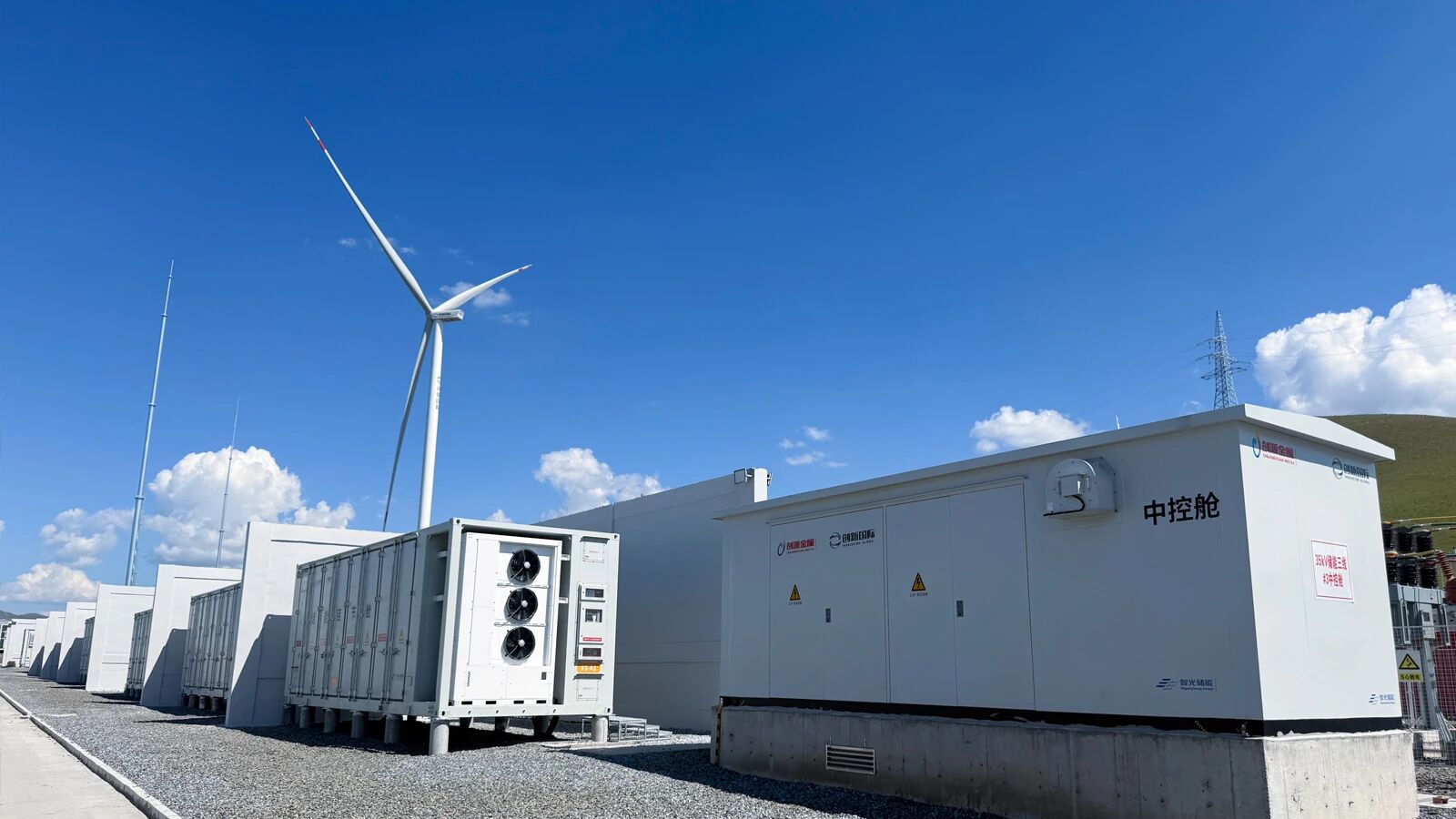
The entire islanded system operated continuously for 36 hours, during which the energy storage system successfully synchronized and paralleled with the wind turbines and coal-fired units, achieving long-term combined grid operation of the three power sources with zero faults and no disturbances.
This test scenario covered multiple technical validations: withstanding the zero-voltage start-up and voltage ramp-up of ultra-large capacity main transformers, demonstrating the grid-forming system's capability for robust voltage establishment and adaptation to impact loads; successfully suppressing the inrush current generated by the direct switching of 20 10MVA wind turbine transformers; dynamically smoothing the intermittent output fluctuations of wind power; the grid-forming energy storage acting as a reference voltage source to flexibly match the voltage, frequency, and phase of thermal power units, enabling seamless synchronization of different power source types; long-term coordinated operation of three differentiated power sources, with energy storage providing inertia support and voltage backup; and the system's ability to perform disturbance-free switching between independent grid-forming islanded mode and grid-following grid-connected mode.
This test addressed the challenge of emergency power restoration for high-energy-consumption industrial microgrids. Traditional diesel generators have shortcomings such as short-term load capacity and weak impact resistance, whereas grid-forming energy storage, through long-term load capacity and multi-source coordination, provides an emergency power outage solution for high-energy-consumption plants like metal smelters. On June 25, the National Development and Reform Commission and the National Energy Administration officially issued the "15th Five-Year Plan for the Construction of a New Energy System," which clearly promotes the vigorous development of new energy storage, expands the large-scale application of energy storage in scenarios such as power source coordination, grid stabilization, and smart microgrids, and supports the demonstration and application of grid-forming energy storage technology.
The plan sets a target for the national installed capacity of new energy storage to reach 300 million kW by 2030, improving the overall regulation capability of source-storage by 40%. It aims to significantly expand the deployment of new energy storage in microgrids, multi-source coordination, and user-side supply assurance scenarios, accelerating the construction of smart microgrids and zero-carbon industrial parks. The National Energy Administration also pointed out that priority should be given to configuring grid-forming support capabilities for self-owned grids in areas rich in renewable energy and industrial parks.
All three phases of the Inner Mongolia Chuangyuan Metal energy storage project utilize Zhiguang Energy Storage's self-developed 35kV grid-forming cascaded high-voltage direct-connected energy storage solution, with a total installed capacity exceeding 1GWh. Zhiguang Energy Storage stated that it will continue to iterate its cascaded high-voltage direct-connected energy storage system, balancing plant power safety with low-carbon and cost-reduction needs, to help achieve the 2030 new energy storage installation target.