China's Moonshot AI Kimi Valuation Rises to $31.5 Billion, ARR Exceeds $300 Million
en.Wedoany.com Reported - On June 30, a new round of financing for China's Moonshot AI's Kimi has been launched, with its pre-investment valuation rising to $31.5 billion. The previous round of financing, conducted at a $20 billion valuation, has recently been completed. During the financing discussions for this round, Kimi disclosed that its mid-June ARR (Annual Recurring Revenue) had exceeded $300 million, with revenue growth primarily driven by increased developer calls and API revenue from model iteration.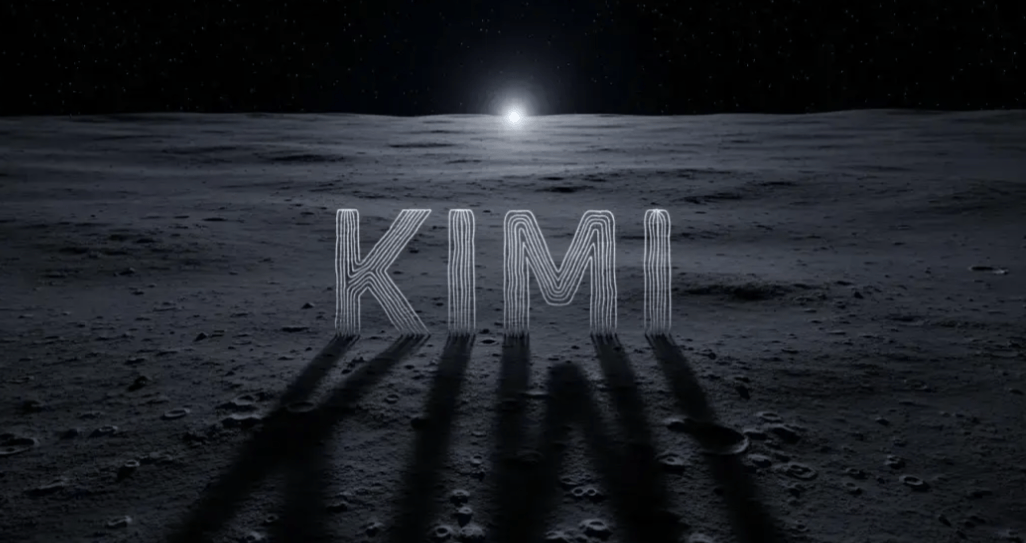
The most significant change in Kimi's data this round is the shift in revenue structure towards the API side. Currently, API revenue accounts for over 70% of total revenue and continues to rise. For large model companies, an increase in the proportion of API revenue indicates that model capabilities are transitioning from chat product traffic to sustained calls by developers, enterprise clients, and third-party applications. Compared to relying solely on C-end subscriptions, API calls are closer to the core commercialization path of foundational model companies and more accurately reflect the actual usage frequency of models in code generation, knowledge processing, agents, office automation, and industry applications.
Kimi's revenue curve is believed to be exhibiting characteristics similar to Anthropic's early commercialization stage, primarily reflected in the surge in developer calls, increased API share, growth in overseas paying users, and an upward shift in the pricing system driven by model capability iteration. The valuation logic for large model companies is shifting from parameter scale, leaderboard rankings, and user popularity to ARR, API consumption, enterprise clients, developer ecosystems, and unit inference revenue. Kimi's emphasis on ARR and API revenue in financing discussions indicates that investors are now measuring the commercialization quality of foundational model companies using metrics closer to those of SaaS and cloud services.
Model iteration is the direct driver of this round's revenue growth. In recent years, Kimi has continuously strengthened its capabilities in long-text processing, complex reasoning, coding, and agent functions. Developers have higher requirements for model stability, context length, inference cost, response speed, and tool invocation capabilities. The increase in API revenue means that more developers and enterprises are integrating Kimi into their own products or business processes, rather than just using it as a web-based chat assistant.
On the enterprise client side, industries such as internet, finance, manufacturing, education, and healthcare are becoming important sources of demand for Kimi. Manufacturing companies may use large models for knowledge base retrieval, equipment maintenance Q&A, process document organization, quality analysis, and supply chain information processing; financial and healthcare scenarios focus more on document understanding, data extraction, professional Q&A, and compliance boundaries; education and office scenarios rely more on content generation, grading, knowledge organization, and multi-turn interactions. As industry clients increase, model companies need to simultaneously provide API, private deployment, permission management, data security, call monitoring, and cost control capabilities, making commercialization more challenging.
The rise in Kimi's valuation to $31.5 billion reflects the simultaneous acceleration of financing pace and revenue validation for Chinese large model companies. After the completion of the previous $20 billion valuation financing round, a new round was immediately launched, indicating that capital continues to pursue large model companies with model iteration capabilities and commercial revenue growth. The $300 million ARR provides Kimi with a more specific revenue anchor and allows external parties to compare its commercialization stage with leading overseas foundational model companies.
However, exceeding $300 million in ARR does not mean the business model is fully stable. The continued rise in API revenue will simultaneously bring pressures from inference costs, computing power procurement, model price competition, and customer retention. Foundational model companies need to maintain a balance between model capabilities, call prices, inference efficiency, developer ecosystems, and enterprise services. Kimi's current changes indicate that it has transitioned from user product competition to model platform competition, with the core of revenue growth shifting from traffic exposure to sustained calls and industry embedding.
Related Products


MUX Series Communication Interface Device for Security and Stability Control System
Nanjing NR Electric Co., Ltd.
G.652.D Wavelength-extended Non-dispersion Shifted Single-mode Optical Fiber
HONGAN GROUP CO., LTD.
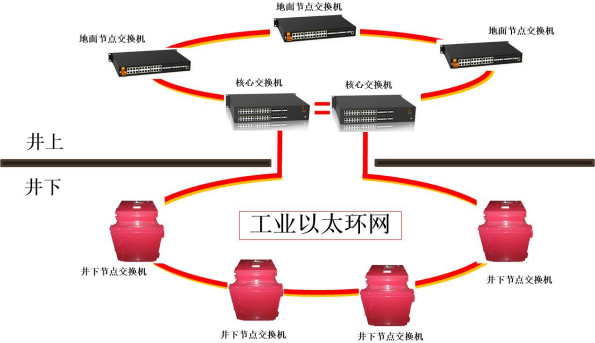
Mine Explosion-proof and Intrinsically Safe Industrial Ethernet Ring Network (10 Gigabit/Gigabit)
Chongqing Mas Sci&Tech Co., Ltd.

Conveyor Belt Intelligent Monitoring System
LUO YANG WIRE ROPE INSPECTION TECHNOLOGY CO., LTD.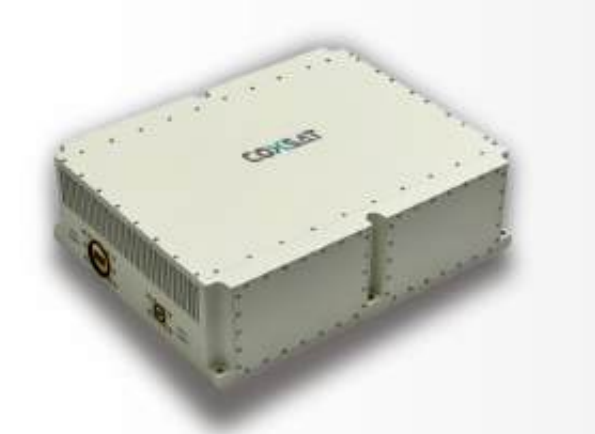

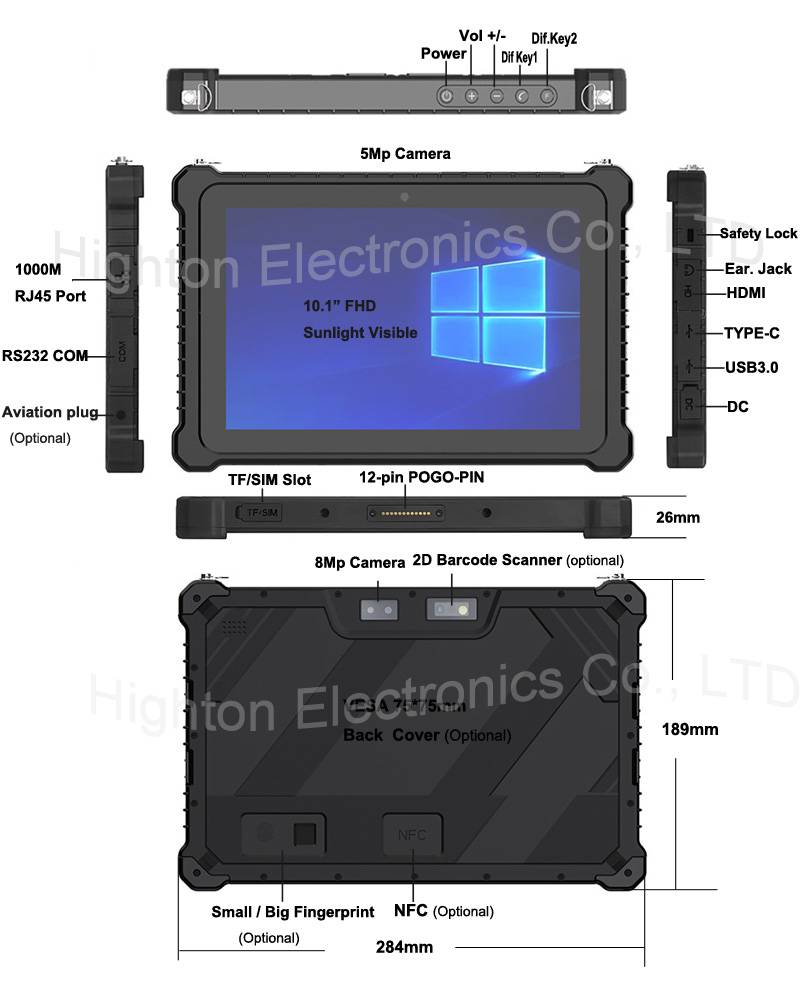
Hot Selling 10 Inch Intel N5100 I5 I7 FHD 8 +128GB 16+256GB Win10 Pro Win11 Pro 4G 5G Rugged Tablet PC Pad with NFC Barcode
Highton Electronics Co., Ltd.
Multi-function Marine Monitoring Low-altitude Detection Radar Sea-air Boundary Ocean Dynamic Environment Measurement
Chengdu Dixin Technology Co., Ltd.