Four Nuclear Power Projects Illustrate China's Nuclear Power Self-Reliance Development Path
en.Wedoany.com Reported - China's Nuclear Power Starting Point: Qinshan Nuclear Power Plant
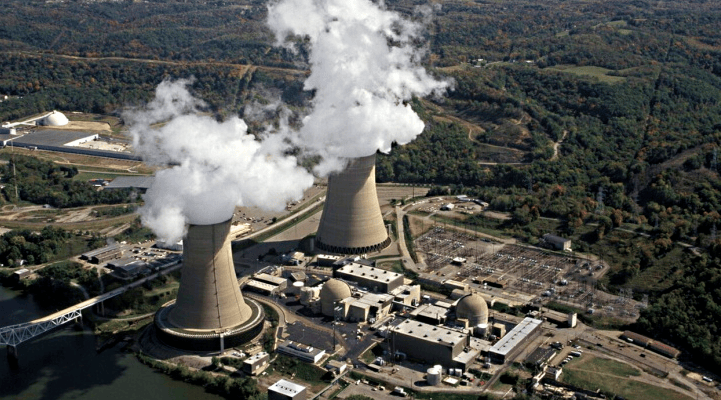
Construction of the Qinshan Nuclear Power Plant began in 1985, and it was officially connected to the grid on December 15, 1991, generating the first kilowatt-hour of nuclear power in mainland China. After multiple expansion phases, it now has 9 units in stable commercial operation, with a total installed capacity of 6,700 MW. This first nuclear power plant independently designed and built by China, hailed as the "Glory of the Nation," overcame difficulties in the absence of complete foreign technology and mature construction experience, achieving a "zero breakthrough" for China's nuclear power industry. It is the cradle of China's nuclear power with the richest variety of reactor types and the most concentrated talent, and it is the red root of China's nuclear power cause.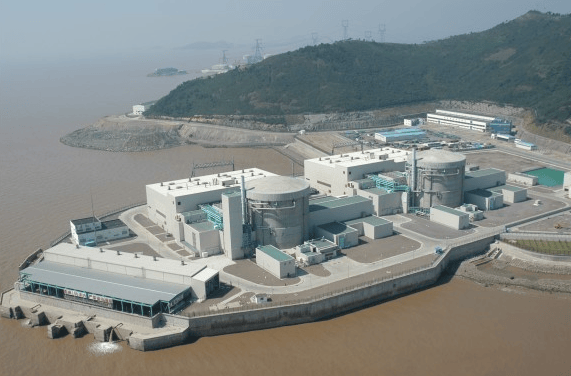
At the beginning of the project, China's nuclear power technology was in a state of complete blankness, and foreign technology was strictly embargoed. The first grassroots Party organization in the nuclear power sector—the Interim Committee of the Party Branch of the 728 Engineering Preparation Office—was established. The first-generation veteran Party member builders started from scratch, explored independently, translated vast amounts of foreign language materials word by word, and tackled equipment challenges one by one, laying a solid foundation for China's independent nuclear power development with their perseverance and practical efforts.
Generations of Qinshan Party members have continued the struggle, establishing Party member technical task forces, innovatively building the "RISK-DNA" Party-building safety integration mechanism, proactively undertaking core maintenance businesses monopolized by foreign manufacturers, and independently overcoming key equipment operation and maintenance technologies such as 500kV GIS and main generators, completely breaking the long-term foreign technical blockade and achieving full independent control over core equipment operation and maintenance.
As of March 2025, the plant has accumulated over 860 billion kWh of safe power generation, equivalent to reducing carbon dioxide emissions by 800 million tons, presenting China's answer to green energy transformation. At the same time, Qinshan Nuclear Power continues to broaden the boundaries of comprehensive nuclear energy utilization. In 2021, it launched the first nuclear energy heating demonstration project in southern China; in 2024, it put into operation China's first commercial reactor isotope irradiation facility, achieving the domestic production of key medical isotopes such as Cobalt-60, Carbon-14, and Lutetium-177, completely ending import dependence. Currently, the base is collaborating with local authorities to build a national nuclear technology application industry demonstration base, striving to achieve the "Thousand Acres, Trillions" nuclear technology industry cluster goal by 2035.
China's Largest Installed Capacity: Liaoning Hongyanhe Nuclear Power Plant
Phase I of the Hongyanhe Nuclear Power Plant started construction in August 2007, and all four units of Phase I entered commercial operation by 2016. Phase II began construction in 2015, and Unit 6 was commissioned in 2022, marking the full completion and operation of the entire base. With six 1,000 MW-class units totaling 6,710 MW of installed capacity, it is currently the largest fully constructed and operational nuclear power base in China and the first in the Northeast region. Phase I of the project adopted the mature CPR1000 reactor type, while Phase II was upgraded to the ACPR1000 unit meeting third-generation safety standards, achieving an overall equipment localization rate of 80%. It replaces a massive amount of coal-fired power generation annually, significantly reducing carbon emissions in the north, and simultaneously launched the first nuclear energy urban heating and seawater desalination livelihood demonstration projects in Northeast China.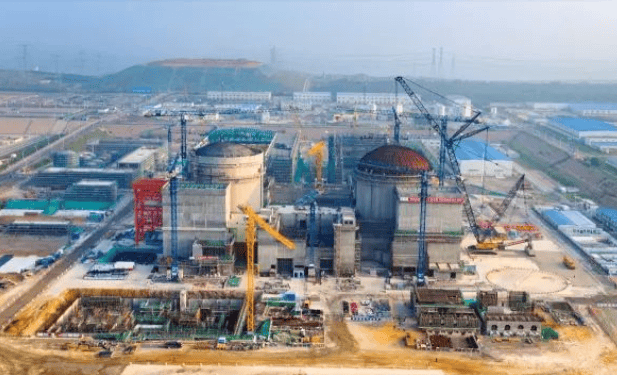
The base has created the distinctive "Red Heart Nuclear Power" Party-building brand, forming cross-field joint Party member task forces with multiple participating units in design, construction, and operation and maintenance, achieving the best schedule from fuel loading to commercial operation among the group's same-type units. As the core green power source for the old industrial base in Northeast China, the base continuously improves regional power supply stability, extends the livelihood value of nuclear energy through nuclear heating and seawater desalination, and supports the green and low-carbon transformation of the northern region.
By the end of 2025, Hongyanhe Nuclear Power achieved an annual on-grid electricity of 49.15 billion kWh, a record high. The six units have cumulatively delivered 380.869 billion kWh of on-grid electricity, equivalent to reducing carbon dioxide emissions by approximately 352 million tons. It has delivered an annual report card of "safe stability, strong innovation, excellent ecology, and solid responsibility" for energy security and ecological protection in Northeast China, as well as the comprehensive revitalization of Liaoning Province.
The National Business Card "Hualong One": Fuqing Nuclear Power Plant Unit 5
The global first reactor of "Hualong One," Fuqing Nuclear Power Plant Unit 5, started construction in May 2015, was connected to the grid in November 2020, and officially entered commercial operation on January 30, 2021. It is a demonstration project for China's third-generation pressurized water reactor with 100% complete independent intellectual property rights, with a core equipment localization rate of 88%, breaking the global nuclear power industry's inherent problem of "first reactor inevitably delayed."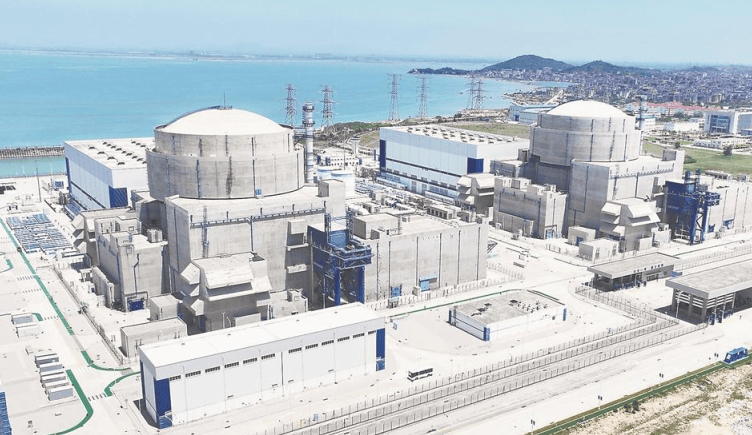
The unit is equipped with a double containment shell and a 177-core, relying on an active plus passive dual safety protection system to withstand large aircraft impacts, with a design life of 60 years. It is not only the main model of China's third-generation nuclear power but also the core business card for China's nuclear power "going global." The same mature technology has been implemented in the Karachi overseas nuclear power project in Pakistan.
Throughout the entire cycle of project construction and unit overhaul, Party building leads the way in tackling challenges. A Hualong One main feedwater pump vibration treatment Party member task force was established across the owner, design, installation, and equipment manufacturers. 35 key Party members calibrated equipment assembly precision to a 0.01 mm standard, working consecutive overnight shifts to solve the core vibration problem of the unit. Since its commissioning, the unit has continuously and stably supplied clean electricity, driving the upgrade of the industrial chain along the southeastern coast, showcasing China's hard power in high-end nuclear power equipment manufacturing to the world.
Global Fourth-Generation Nuclear Power: Shidaowan High-Temperature Gas-Cooled Reactor Nuclear Power Plant
The Shidaowan High-Temperature Gas-Cooled Reactor (HTGR) demonstration project started construction in December 2012, was first connected to the grid in December 2021, and officially entered commercial operation on December 6, 2023. It is a major national science and technology project and the world's first fourth-generation nuclear power plant to achieve commercial operation. Jointly built by China Huaneng Group, Tsinghua University, and China National Nuclear Corporation, it possesses complete independent intellectual property rights. The project has successively overcome multiple world-class key technologies, developed over 2,200 sets of first-of-a-kind equipment and over 600 sets of innovative equipment, achieving an equipment localization rate of 93.4%. As an internationally recognized fourth-generation advanced nuclear power technology, the HTGR's core advantage is inherent safety, with broad commercial application prospects in clean power generation, combined heat, power, and cooling, high-temperature industrial heat supply, and green hydrogen production.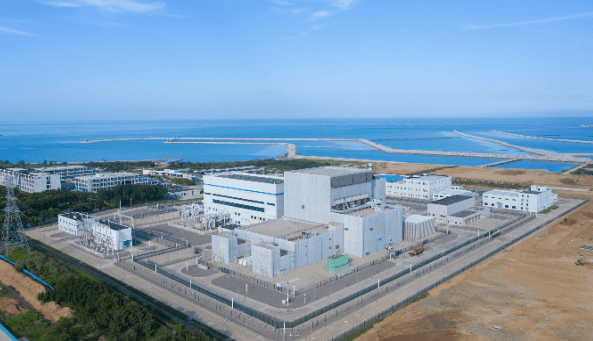
Throughout the project construction, the "Spirit of 200" of hard work and struggle in the nuclear industry was inherited. Key Party member researchers served as the main force for tackling difficulties, focusing on breaking through a series of "bottleneck" core technologies such as spherical fuel elements and steam generators. China Huaneng Group actively fulfilled its owner responsibilities, bravely acting as the source of original technologies and the "chain leader" of the modern industrial chain, concentrating superior resources from upstream and downstream of the chain, collaboratively advancing key technology research and core equipment localization development, far exceeding the 75% target of the national major science and technology project. At the same time, it independently developed and fully mastered the six key commissioning and operation core technologies exclusive to the HTGR.
Related Products

0.66kV Power Supply Instrument Transformer
Guangdong Sihui Instrument Transformer Works Co., Ltd.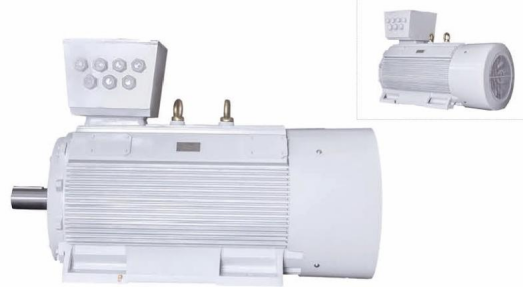
YE3 Series Low Voltage High Power Three-Phase Asynchronous Motor
Shandong Lijiu Electrical Machinery Co., Ltd.
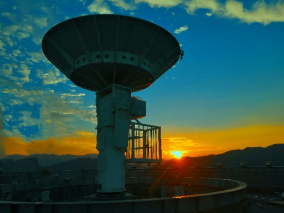
714CD Series C-Band Weather Radar
Chengdu Zhongdian Jinjiang Information Industry Co., Ltd.
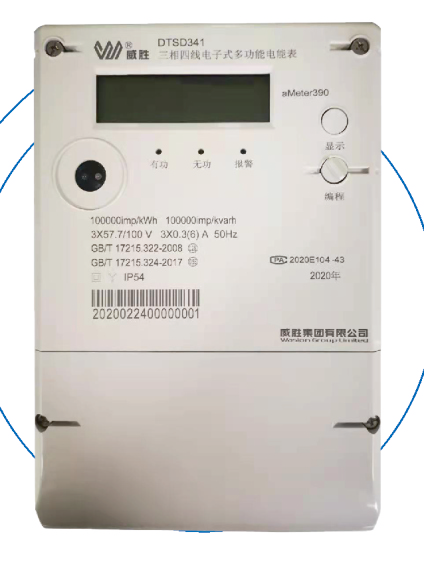
Overseas IEC Gateway Energy Meter - DTSD341/DSSD331-aMeter390
Wasion Group Limited Co., Ltd.