Japan Tripartite Collaboration Launches Photonics-Based Data Center Interconnection Proof of Concept
en.Wedoany.com Reported - Equinix Japan, NTT East, and cloud service provider Sakura Internet will jointly conduct a proof of concept (POC) based on photonics technology, aimed at powering data center interconnections.
The POC revolves around NTT's IoT and All-Photonics Network (APN) technology concept, specifically connecting Sakura Internet's data center in Ishikari, Japan, with Equinix's facilities in Tokyo. In this POC, telecom operator NTT East will provide APN connectivity based on NTT's Innovative Optical and Wireless Network (IOWN) services; Sakura Internet will offer its service platform and testing environment from its data center in Hokkaido; and Equinix Japan will provide interconnection infrastructure, ecosystem connectivity, and operational design. Possible configurations include accessing external cloud services and partner ecosystems through Equinix's Fabric platform.
The three parties will jointly test throughput, latency, and other network performance metrics in a real network environment connecting Hokkaido and Tokyo, to define the operating conditions required for actual deployment. Hokkaido's Ishikari Bay New Port area, a key hub for Japanese data centers, already hosts facilities from Kyocera Communication Systems, and NTT-ME, an engineering and infrastructure subsidiary of NTT East, also plans to build new projects in the region.
This POC further advances NTT's parent company group's strategy for IOWN-APN. Japan's telecom giant NTT, which reported weak mobile business performance in its latest earnings, has shifted its strategic focus to IoT and APN under CEO Akira Shimada. Shimada stated that the company will maintain cash generation through stable profits while repositioning its business around connectivity and transitioning to IOWN and AI-native infrastructure.
In an interview with this publication, Masahisa Kawashima, NTT's IOWN Technical Director and Chair of the IOWN Global Forum, noted that as artificial intelligence (AI) drives demand for greater network bandwidth, IOWN-APN enables operators to support any type of data traffic while centralizing packet nodes in the cloud and overlaying value-added services such as security. Kawashima claimed that this approach reduces the need for large centralized data centers by allowing workloads to be distributed across smaller facilities powered by locally available renewable energy. According to him, this architecture forms the foundation of NTT's AI strategy, with APN's high-speed, low-latency optical connections linking distributed AI data centers to better support model training and inference.
Driven by APN, NTT DoCoMo has this year demonstrated an in-network computing capability in its mainstream 5G core network, connecting mobile networks to all-photonics services to help coordinate AI inference processing and traffic control. Prior to this, DoCoMo launched an APN service in Hong Kong, targeting the low-latency needs of financial institutions in the region.
Related Products


One-Stop Steward Service for the Entire Logistics System Integration Chain
Zhongding Intelligent (Wuxi) Technology Co., Ltd.
Comprehensive Mining Automation Control System
Beijing Tianma Intelligent Control Technology Co., Ltd.

GYTA Type Non-Self-Supporting Aerial/Duct Optical Cable
TONGDING INTERCONNECTION INFORMATION CO., LTD.
Automatic Aiming Laser Remote Obstacle Removal Robot
Pinggao Group Weihai High-Voltage Apparatus Co., Ltd.

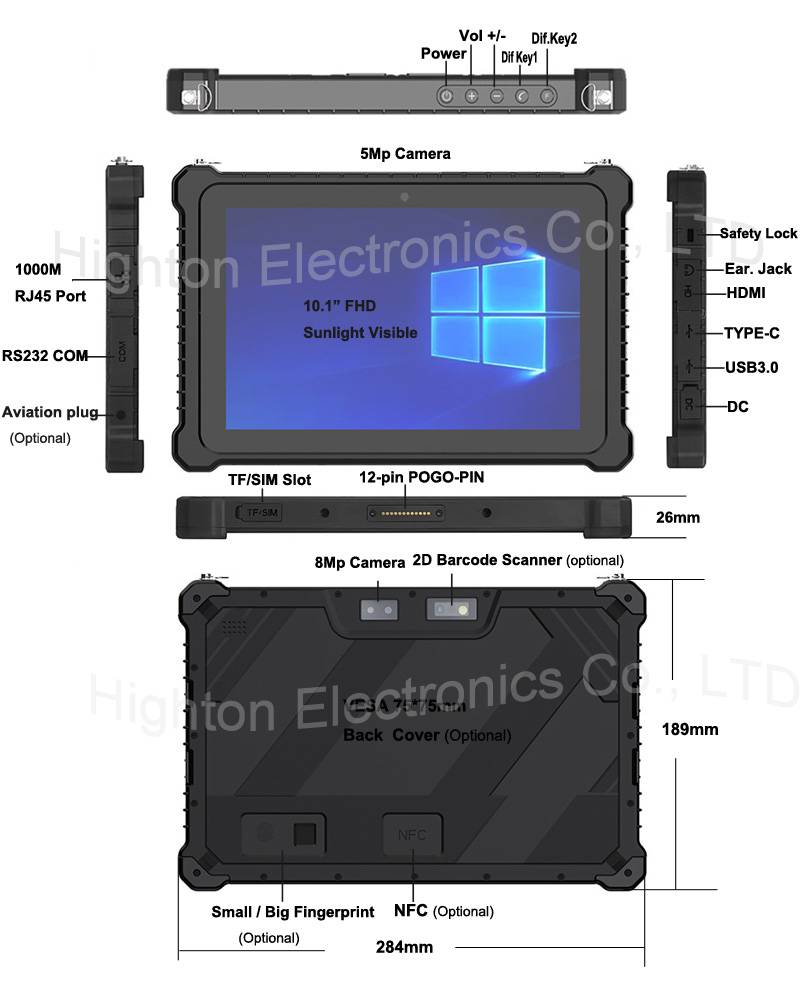
Hot Selling 10 Inch Intel N5100 I5 I7 FHD 8 +128GB 16+256GB Win10 Pro Win11 Pro 4G 5G Rugged Tablet PC Pad with NFC Barcode
Highton Electronics Co., Ltd.