Tackling the World-Class Challenge of "Radiation-Resistant Materials" for Fusion Reactors: Phase II of China Fusion Tianfu R&D Center Breaks Ground
en.Wedoany.com Reported - On June 30, 2026, the Phase II project of the Tianfu Fusion Technology R&D Center of China Fusion Energy Co., Ltd. (referred to as "China Fusion") officially commenced construction in the Fusion Science and Innovation City, Tianfu New Area, Chengdu, Sichuan Province.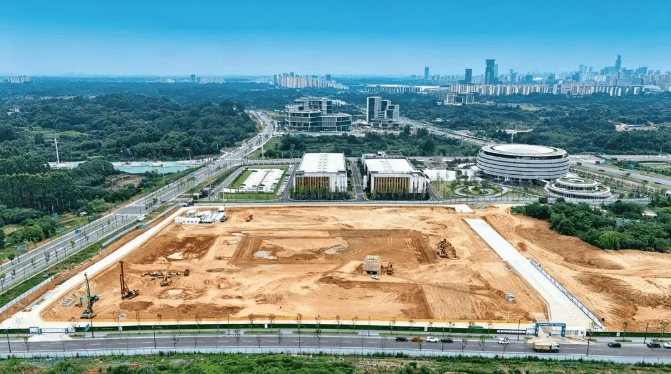
Groundbreaking Ceremony for Phase II of Tianfu Fusion Technology R&D Center
This marks the "first move" by China Fusion since its establishment in July 2025—and a symbolic milestone in China's controlled nuclear fusion technology R&D, transitioning from "experimental research" to "engineering implementation."
The Tianfu Fusion Technology R&D Center is defined by three key focuses: R&D of fusion reactor materials, testing and validation of critical subsystems, and development of key components. The overall campus plan covers approximately 500 mu (about 33.3 hectares), with phased construction.
Phase I was completed and put into operation in May 2026, featuring a circular ring-shaped main R&D building with a diameter of 100 meters.
Phase II targets the core challenge hindering fusion engineering application—"radiation damage to structural materials in fusion reactors"—and plans to build a comprehensive irradiation facility for fusion reactor materials, aiming to provide crucial support for the performance evaluation and engineering application of key materials.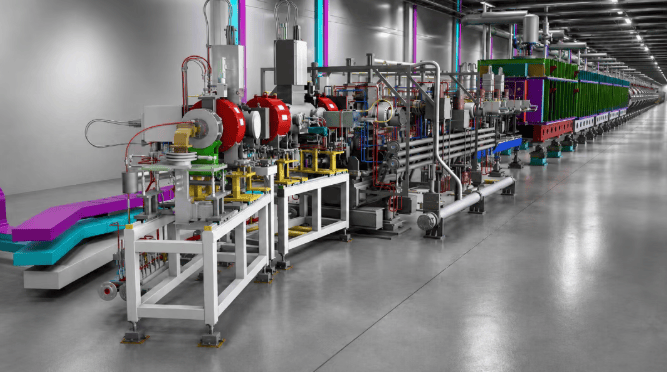
The project itself has been assigned a clear strategic positioning: upon full completion, it will become one of China's largest and most comprehensive fusion R&D bases, significantly enhancing China's fusion engineering technology level and accelerating the achievement of self-reliance in fusion energy. It will also drive the localization of nuclear technology equipment, promote the development of high-end equipment manufacturing and strategic emerging industries, and form an internationally competitive fusion technology innovation system.
At the groundbreaking mobilization meeting, Zhang Libo, General Manager of China Fusion and President of the Southwestern Institute of Physics (SWIP), outlined requirements for all participating construction units: keep the mission in mind, consolidate responsibilities, adhere to the principle of "safety first, quality foremost," advance the project with high standards and quality, ensure timely and quality completion of construction tasks, and lay a solid foundation for accelerating China's self-reliance in fusion energy.
The weight of these words must be understood in the context of the company itself.
Who is China Fusion: A Direct Subsidiary of CNNC with a Registered Capital of 15 Billion RMB
China Fusion Energy Co., Ltd., established in Shanghai in July 2025, is a second-level subsidiary directly under the China National Nuclear Corporation (CNNC), formed on the basis of the Southwestern Institute of Physics (SWIP). Shanghai Mayor Gong Zheng and CNNC Party Secretary and Chairman Shen Yanfeng jointly unveiled the company's plaque. This company is a "Pioneer Enterprise" under the State-owned Assets Supervision and Administration Commission (SASAC) and serves as the innovation entity driving the engineering and commercialization of fusion in China.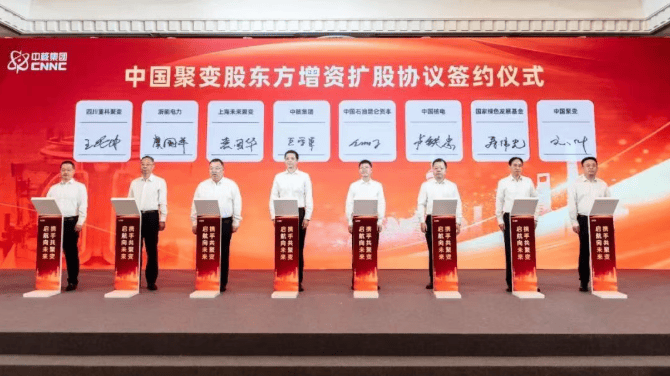
On the day of its establishment, seven major shareholders signed a capital increase and share expansion agreement totaling approximately 11.5 billion RMB, boosting the registered capital to 15 billion RMB. Headquartered in Shanghai, the company deploys core research directions across Sichuan and Shanghai, including fundamental fusion theory, operation and control technology of fusion experimental devices, R&D of key equipment and materials, fusion engineering design, and plasma technology applications.
Why "Radiation-Resistant Structural Materials" Are a Bottleneck for Fusion Reactors
To understand the strategic significance of Phase II, one must first grasp the actual operating conditions of a fusion reactor.
Deuterium-tritium fusion generates high-energy neutrons at 14.1 MeV.
The continuous bombardment of materials by neutrons at this energy level causes swelling, hardening, and embrittlement—known as "radiation damage." In a fusion reactor, the first wall directly facing the plasma and the blanket structure facing high-flux neutrons are the primary "hotspots" for such damage.
Currently, the "long-term service performance" of key structural materials for fusion reactors cannot be fully validated during the experimental phase. The long-term behavior of existing structural steels under the actual neutron flux of a fusion reactor remains unknown.
Addressing this gap requires two parallel efforts:
On the materials side: Develop candidate materials such as radiation-resistant reduced-activation steels, vanadium alloys, and silicon carbide composites;
On the platform side: Build comprehensive irradiation facilities capable of simulating the neutron environment of a fusion reactor, allowing materials to be "tested" for their true performance before engineering application.
Phase II of the project is precisely intended to fill this gap on the platform side. This is why the groundbreaking of Phase II has garnered more attention than any new material announcement.
Fusion Science and Innovation City "1+3": A 4,800-Mu National-Level Industrial Ambition
The Tianfu Fusion Technology R&D Center is located in the Fusion Science and Innovation City within Chengdu Science City, Tianfu New Area—China's first innovation city centered on fusion energy as a leading industry. The core area of the park covers a planned area of 4,800 mu (about 320 hectares) and has established a "1+3" industrial innovation system:
"1": Nuclear Fusion Technology R&D Base (SWIP, Fusion Technology R&D Base, main structure completed, SWIP will relocate entirely here);
"3": Electromagnetic-Driven Fusion Large Scientific Device (a national major science and technology infrastructure project under the "14th Five-Year Plan"), Quasi-Axisymmetric Stellarator, and Fusion Future Industrial Park.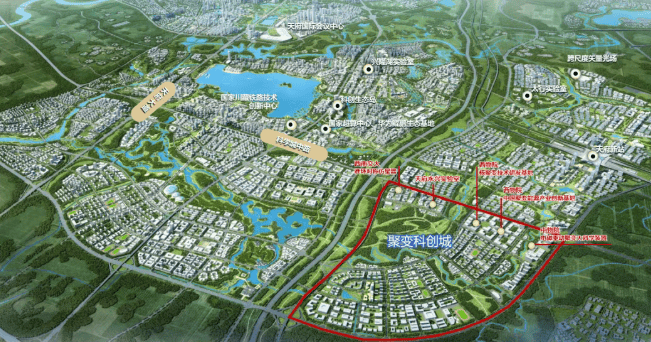
Notably, the Fusion Science and Innovation City has been recognized by the International Atomic Energy Agency (IAEA) as a Fusion Energy Research and Training Cooperation Center, making it the only fusion science and innovation platform in China with dual recognition from both the IAEA and the China Atomic Energy Authority. This park is becoming one of the "main battlefields" for China's fusion industrialization.
When fusion energy is no longer a distant theoretical vision but a concrete engineering practice involving every piece of material and every device, we may more clearly perceive humanity's pursuit of clean energy.
Related Products
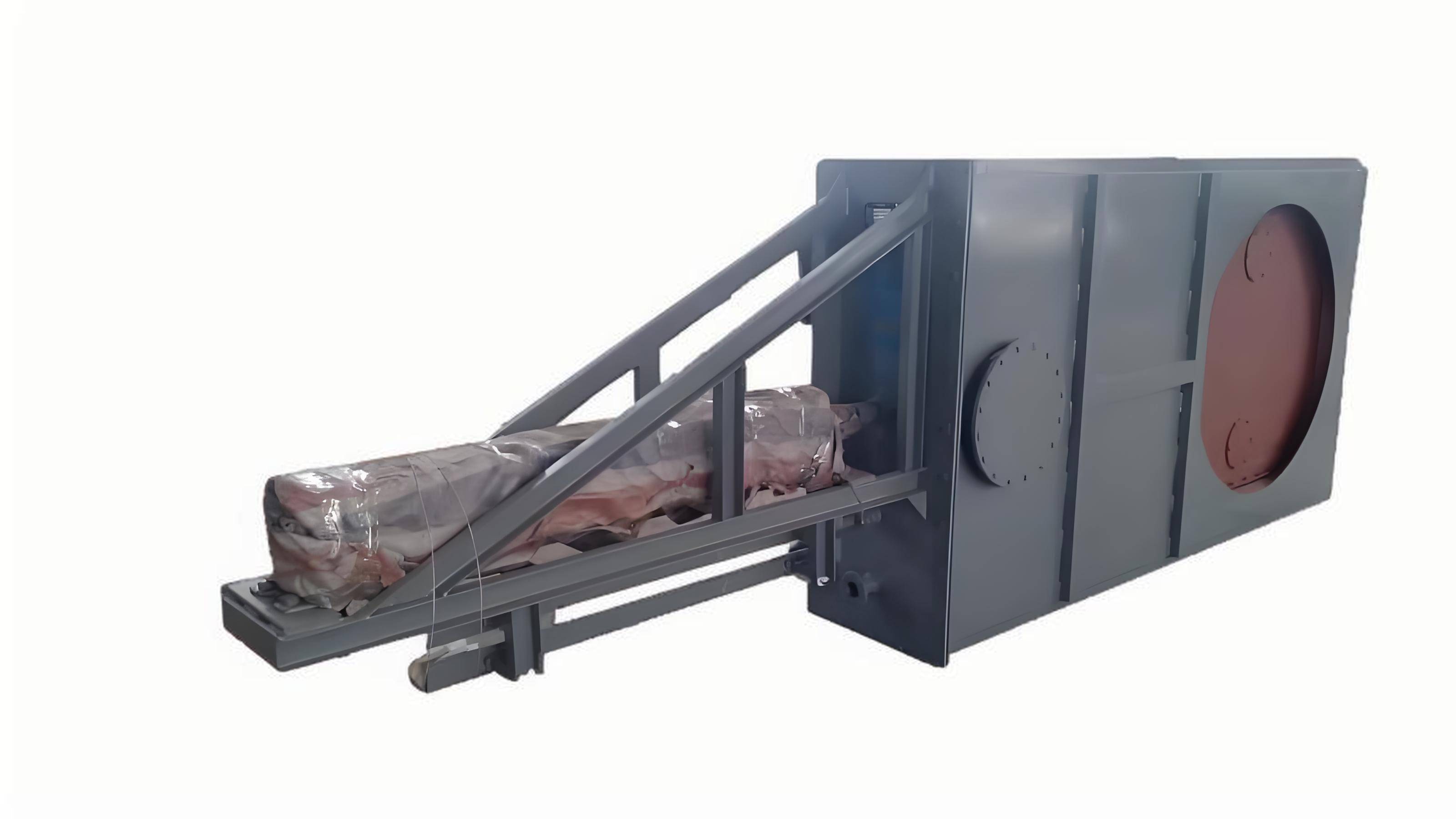

Double-slide Triple-sealed Hot Air Isolation Door
Xi'an Yingchuan Electric Power Equipment Co., Ltd.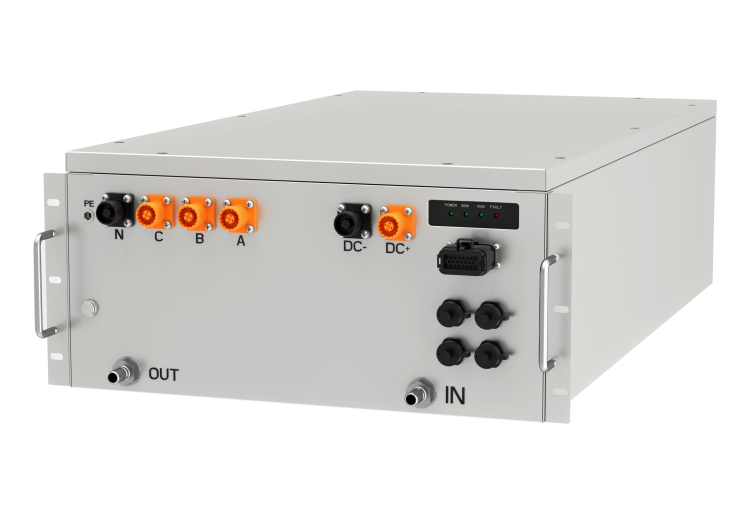
Mars (Liquid Cooling) Series Industrial and Commercial Energy Storage Converter High Protection Module
Shenzhen Winline Technology Co., Ltd.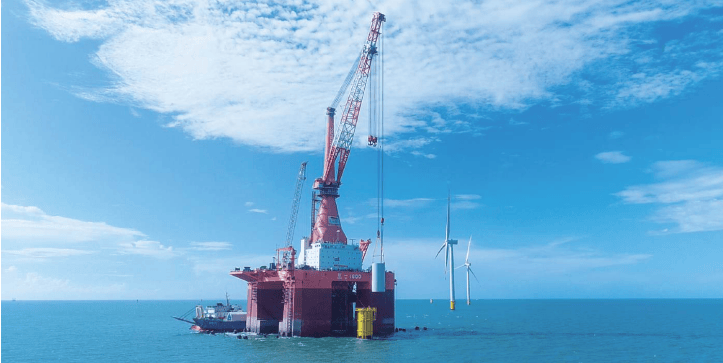
"Shunyi 1600" Deep-submerging Bottom-sitting Multi-functional Wind Power Engineering Vessel
Zhengli Offshore Engineering Co., Ltd.
Modular Multifunctional Water Supply and Drainage Vehicle (18T)
Changsha Dewater Machinery Technology Co., Ltd.
High-voltage Direct Current (HVDC) Transmission System Research and Integrated Design
XI'AN XD POWER SYSTEMS CO., LTD.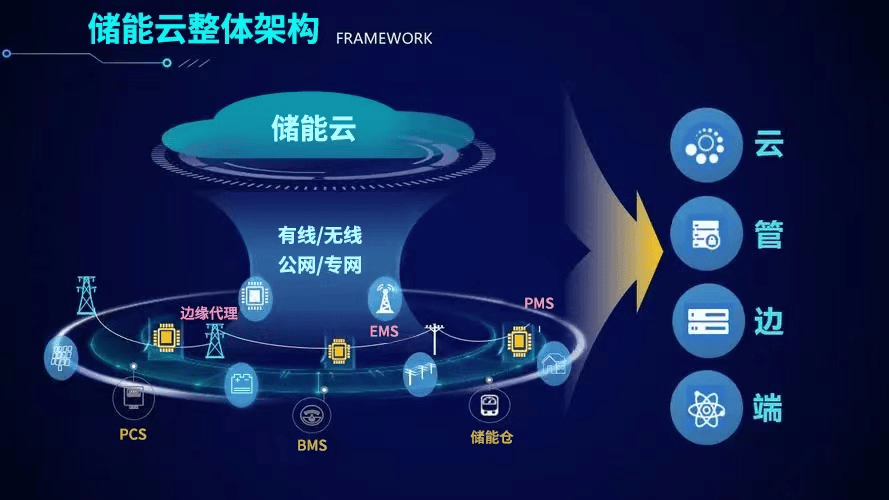

Forest and Grassland Heat Source Infrared Monitor
China Huayun Meteorological Technology Group Co., Ltd.
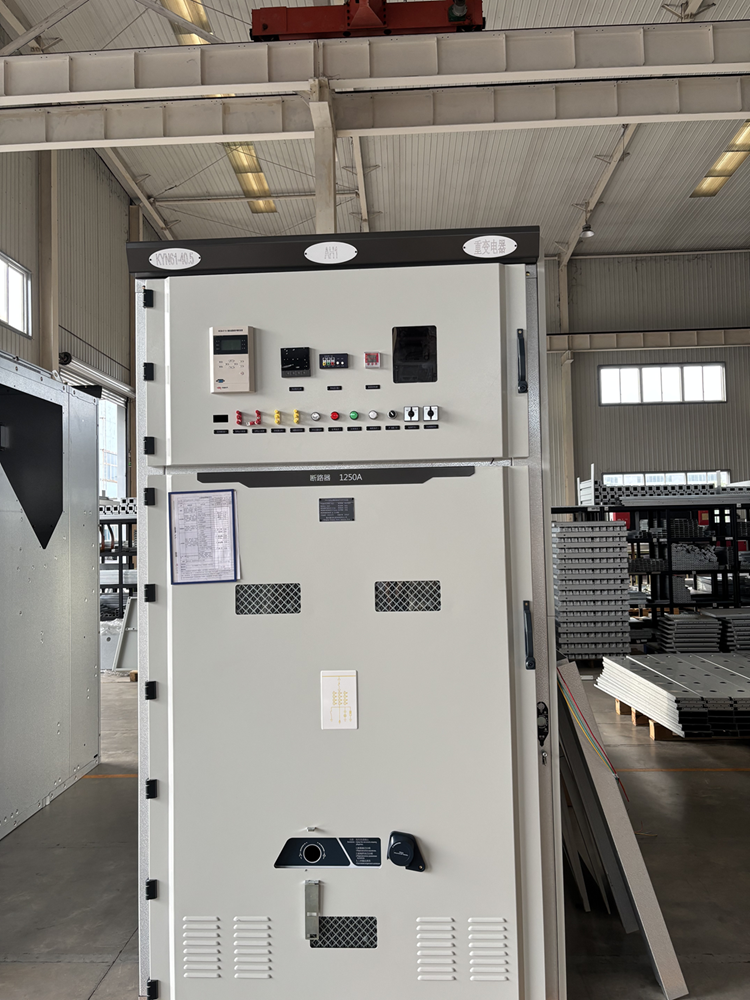
KYN61-40.5 Indoor AC Metal-clad Removable Switchgear
Chongqing Transformer Co., Ltd.