Huawei Launches "All-Band to 5G-A" Strategy to Address AI Traffic Pressure
en.Wedoany.com Reported - Huawei has launched the "All-Band to 5G-A" strategy, aiming to help service providers cope with network pressure driven by mobile artificial intelligence (AI) traffic and lay the foundation for the evolution to 6G.
Global telecommunications networks are facing significant challenges from the explosive growth of AI applications. According to GSMA (Global System for Mobile Communications Association) data, by 2030, AI-driven traffic could triple cellular data traffic compared to the 2024 baseline. Currently, AI applications have over one billion monthly active users worldwide, with token consumption growing hundreds of times. However, traditional mobile networks are primarily designed for downlink traffic, with uplink speeds far below peak downlink performance, making it difficult to meet the millisecond-level response times and uplink capacity required by AI inference applications. Networks are becoming a bottleneck limiting AI potential. At the same time, service providers also face business challenges of traffic growth and diminishing returns, while emerging use cases such as intelligent connected vehicles and industrial digitalization are creating new demands that existing infrastructure cannot meet. Service providers need to build network architectures capable of delivering differentiated services and experiences, expanding their offerings from basic connectivity solutions to new innovation use cases based on differentiated experiences.
With commercial 6G deployment not expected until 2030, 5G-Advanced (5G-A) networks have become a key evolutionary step between 5G and 6G, already deployed in over 300 cities worldwide. Huawei's "All-Band to 5G-A" strategy focuses on evolving the entire spectrum—including low, mid, and high bands—to 5G-A to maximize network performance, energy efficiency, and user experience while reducing capital expenditure. On one hand, the strategy unlocks the potential of existing sub-3 GHz and sub-6 GHz bands through spectrum refarming and technology upgrades; on the other hand, it leverages the upper 6 GHz (U6 GHz) band as the foundation for next-generation network architecture. This cross-band coordination strategy aims to help operators transition from providing commoditized connectivity to offering differentiated, experience-led services, tapping into high-end consumer and enterprise markets to create broader growth engines.
The U6 GHz band has become a key band for 5G-A evolution due to its large bandwidth and excellent coverage capabilities. This band is a critical enabler for next-generation services, supporting large-scale deployment of uplink-intensive use cases such as immersive XR, industrial digital twins, and real-time AI applications. Its inclusion in the evolving 5G-A standard further strengthens its role in future network architectures. Markets such as China, the UAE, and Brazil have already begun spectrum allocation, and the growing availability of compatible chips and devices indicates that the U6 GHz ecosystem is rapidly maturing. The U6 GHz band not only serves 5G-A but is also designed as a smooth entry point to 6G, protecting service providers' long-term spectrum investments. It is the most important resource for the mobile AI era, favored by leading operators in many countries for its ability to drive digital economic growth. By offering a powerful combination of high uplink performance and large bandwidth capabilities, this band ensures that 5G-A networks can seamlessly evolve to 6G while supporting complex demands such as FWA (Fixed Wireless Access) and high-density hotspots. To ensure this capability reaches every corner of the digital world, a diverse ecosystem of base station forms will emerge, providing architectural flexibility to meet various deployment scenarios from dense urban centers to specialized industrial environments. This band supports continuous urban coverage, large-scale terminal access in high-density scenarios, and provides bandwidth support for applications such as mobile AI, the low-altitude economy, local and wide-area enterprise (ToB) sectors, and the Internet of Vehicles (IoV).
Huawei has developed a comprehensive U6 GHz product portfolio covering the entire chain from base station hardware to end-user device support, helping service providers act quickly after spectrum deployment. Its flagship 256 TRx Active Antenna Unit (AAU) uses an extremely large antenna array (ELAA) design and hybrid beamforming technology, providing coverage capabilities similar to the C-band. With advanced MU-MIMO and support for 400 MHz bandwidth, this product can achieve downlink rates of up to 100 Gbps and uplink rates exceeding 10 Gbps, ensuring a consistent high-speed user experience. For indoor environments requiring high concurrency, Huawei has introduced a U6 GHz small cell solution supporting 400 MHz bandwidth, along with a high-bandwidth microwave transmission solution.
As AI applications move from the edge to the mainstream, networks need to provide not only higher speeds but also consistent performance, greater uplink capacity, and deterministic service levels. In this context, spectrum strategy is becoming a decisive factor. Service providers that can transition to 5G-A and effectively combine existing spectrum assets with new bands like U6 GHz will be better positioned to capitalize on AI opportunities.
Related Products
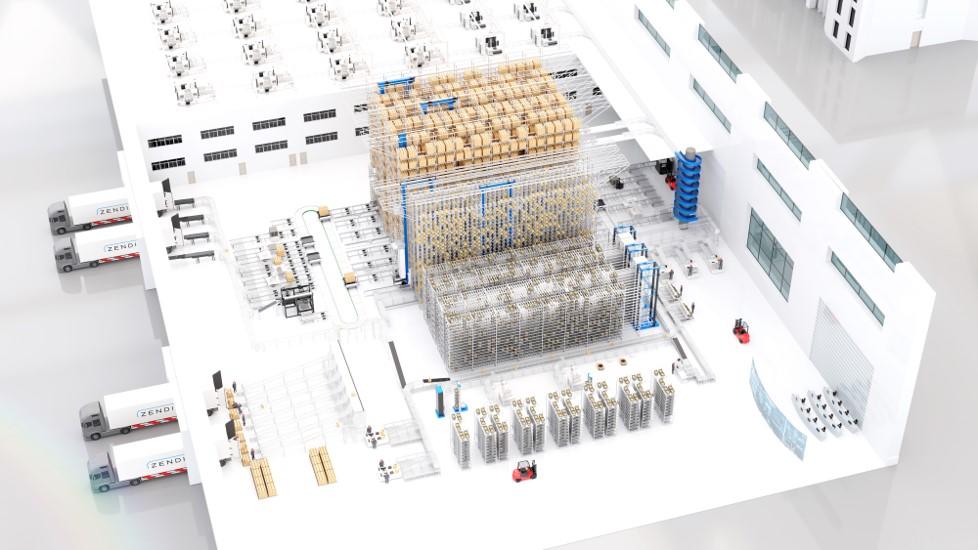

One-Stop Steward Service for the Entire Logistics System Integration Chain
Zhongding Intelligent (Wuxi) Technology Co., Ltd.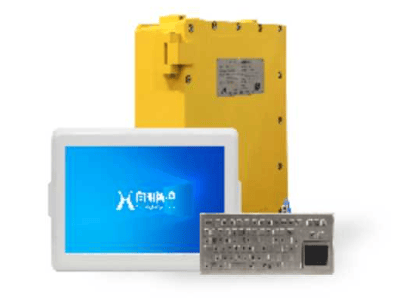
KJD127(A) Mining Explosion-Proof and Intrinsically Safe Computer
Taiyuan Xiangming Intelligent Control Technology Co., Ltd.

GYTA Type Non-Self-Supporting Aerial/Duct Optical Cable
TONGDING INTERCONNECTION INFORMATION CO., LTD.
TWP16 P-Band Tropospheric Wind Profile Radar
China Huayun Meteorological Technology Group Co., Ltd.
Hot Selling 10 Inch Intel N5100 I5 I7 FHD 8 +128GB 16+256GB Win10 Pro Win11 Pro 4G 5G Rugged Tablet PC Pad with NFC Barcode
Highton Electronics Co., Ltd.

Comprehensive Mining Automation Control System
Beijing Tianma Intelligent Control Technology Co., Ltd.