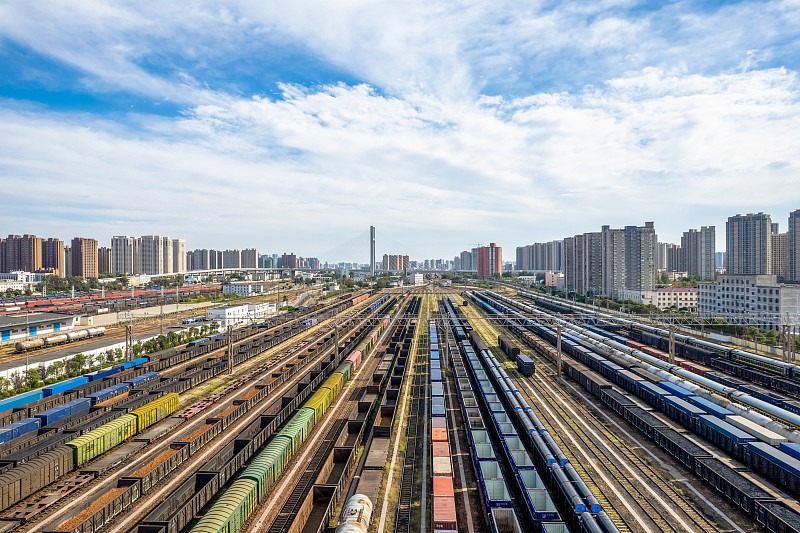
en.Wedoany.com Reported - South Africa's state-owned transport group Transnet's Rail Infrastructure Management Company (TRIM) has signed Rail Access Agreements (RAA), marking the beginning of broader private sector participation in the country's freight rail network. The first 11 private train operating companies have been selected, covering 41 routes and six major corridors, with the first private locomotives expected to enter service in the second half of 2026.
The agreement aims to alleviate the long-standing pressure on South Africa's freight system. In recent years, slow transportation has placed a heavy burden on the road network, transporters, and the overall economy. The newly signed access agreements are expected to improve rail network efficiency, reduce pressure on roads, and create conditions for restoring the reliability of freight transport.
The first group of private operators is expected to add 24 million tons of freight capacity to the network, but this will put pressure on infrastructure around the routes, including cargo loading and securing facilities, as well as connections to ports, industrial zones, agricultural belts, and regional markets. Roelof van den Berg, CEO of GIC Infrastructure Company (GIC), stated that to ensure a smooth transition, South Africa needs to establish structures that can translate rail access into reliable freight transport.
The next phase of infrastructure challenges lies in attracting the necessary private investment to make the rail backbone network viable for large-scale investment. Private capital needs to see the profitability of each asset, how it is used, how performance is measured, and the guarantee of returns over its long operational lifespan. GIC noted that when freight volumes are visible, the operating model is clear, and returns are secured through long-term usage, multimodal terminals or logistics hubs are easier to finance.
To attract investment to help the public sector achieve its goal of increasing annual freight rail volume to 250 million tons by 2029, a stable, repeatable, and financeable infrastructure financial model needs to be introduced. GIC's experience shows that investors respond to projects built around real demand, clear operating models, and return structures that can be sustained over the long term. Follow-through at this scale will help South Africa build capacity before demand materializes, allowing corridors to be reinforced in line with growing freight volumes.