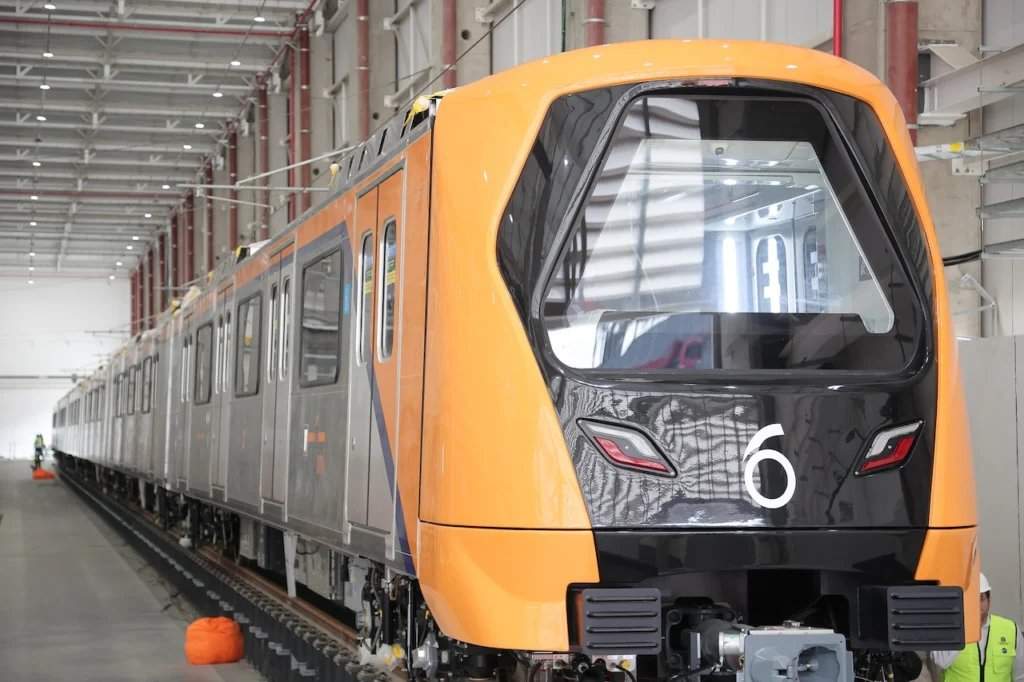
en.Wedoany.com Reported - The São Paulo state government inaugurated the first six stations of Metro Orange Line 6 on the 2nd, a project that has faced nearly two decades of setbacks, repeatedly interrupted by delays, work stoppages, collapses, and changes in concessionaires. The line, planned to connect the north and east zones of São Paulo city, involves a total investment of 19 billion reais, making it the largest single investment in infrastructure in Latin America.
The line was announced in 2008 and originally scheduled to open in 2018, but after a two-year work stoppage due to the "Car Wash" (Lava Jato) investigation, it resumed in 2020. Spanish company Acciona subsequently took over the concession, which was previously held by the MoveSP consortium, composed of Odebrecht, Queiroz Galvão, UTC Participações, and the Eco Realty investment fund. Governor Tarcísio de Freitas (Republicans), who has been in office since 2023, said at the inauguration ceremony at the Nova Marina station in the Água Branca district: "We are talking about the realization of a dream."
Currently, only six of the 15 planned stations on the entire line are operational, using an auxiliary operating model: João Paulo I, Freguesia do Ó, Santa Marina, Água Branca, Sesc-Pompeia, and Perdizes. At this stage, the line operates only on specific dates and times and does not allow transfers to other lines. Upon full completion, it is expected to connect with Line 1 Blue, Line 4 Yellow, and Line 7 Red of the metro-rail system. At the Água Branca station, which will connect with CPTM (São Paulo Metropolitan Train Company) Line 7 Red, there are currently no internal transfer facilities, requiring passengers to cross the tracks to transfer. When asked about this issue, the governor stated that starting in the second half of this year, "necessary works will be carried out to achieve the best possible transfer."
This inauguration comes just two days before the start of electoral restrictions imposed by the TSE (Superior Electoral Court), which prohibit pre-candidates holding public office from publishing institutional advertising.