UK's Arcus Acquires Verne's Volta London 6MW Data Center
en.Wedoany.com Reported - Arcus Infrastructure Partners has agreed to acquire Volta Data Centres from Verne, taking over its 6MW carrier-neutral colocation and interconnection site in central London. The transaction is expected to close in July 2026, giving Arcus a foothold in the supply-constrained UK market, while Verne narrows its focus to low-carbon, high-density facilities in other parts of Northern Europe targeting AI workloads.
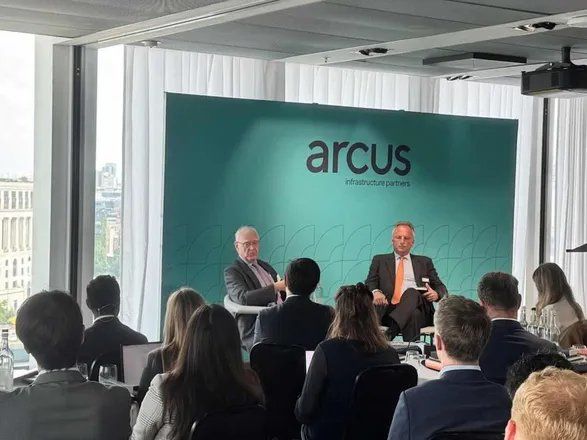
For infrastructure buyers, this is not a massive hyperscale deal; it is smaller, more targeted, and potentially more revealing. Volta's London facility is close to the City of London, meaning it serves a market where latency, interconnection, and geographic location still hold tangible commercial value. The site hosts over 40 on-site carriers and more than 1,200 cross-connects, which is critical for financial services, telecommunications, IT providers, and enterprise customers who still require dense connectivity and for whom building new data center capacity in the city is no easy feat. Arcus is acquiring contracted revenue, low churn, and a central London interconnection asset, not just megawatt capacity.
Arcus European Infrastructure Fund 4, the fund behind this deal, entered Volta after 18 months of research into the European market. The UK is attractive because demand is growing while supply remains constrained. This is particularly pronounced in London, where power, planning, land, and grid access make new capacity far more difficult than investor presentations typically suggest.
Arcus has previously been involved in the colocation sector through Portus Data Centres, an investment from its prior European Infrastructure Fund. Volta gives the company another platform in a market where central interconnection assets are difficult to replicate. Arcus's statements point toward growth and commercial improvement, as well as further acquisitions. For enterprise customers, the immediate operational concern is continuity. Volta's ownership is changing, but the facility, customer base, and on-site team appear to remain core selling points. Arcus needs to avoid disrupting customers using the site for connectivity-sensitive workloads. Financial firms, carriers, and enterprise IT teams dislike uncertainty near production environments.
For Arcus, the commercial upside is clearer. Stable colocation revenue is attractive to infrastructure investors because it combines long-term demand, recurring contracts, and scarcity. Add interconnection density, and the asset transcends mere space and power. Cross-connects create stickier customers, and building a carrier-neutral ecosystem is not an overnight task. However, 6MW is not large. In a market increasingly focused on AI factories and hundreds of megawatts, Volta is a different asset: urban, interconnected, constrained, and potentially valuable precisely because of those constraints.
For Verne, the sale is a portfolio decision. The company wants to concentrate capital and management effort on low-carbon, high-density data center infrastructure in Northern Europe, primarily targeting workloads like AI and high-performance computing. This strategy aligns with market narratives. AI and HPC buyers require high power density, efficient cooling, and large-scale deployment options. Northern Europe may offer a cleaner energy mix, cooler climate, and larger development sites compared to central London. But operators still need to secure power, permits, supply chains, and customers willing to deploy workloads outside traditional urban hubs.
This divestiture also highlights the divergence in the data center market: on one side, urban colocation and interconnection assets close to enterprise users and network density; on the other, large, high-power facilities built for AI, HPC, and cloud-scale workloads. They are all data centers, but the economics, customers, and constraints are vastly different. Verne leans toward the latter, while Arcus buys into the former.
For regulators and urban planners, the deal is another reminder that digital infrastructure demand is not abstract. London remains strategically important, but the city cannot easily meet all new compute demand. High-density AI growth may increasingly shift toward regions with better energy accessibility, while urban center sites will grow in value as network nodes, interconnection points, and enterprise colocation anchors. For investors, this deal shows why older or smaller assets can still attract attention. The market is not only about the largest campuses. A well-located, carrier-rich facility with contracted customers is precisely the kind of infrastructure asset funds covet: hard to replace, operationally essential, and capable of gradually improving commercial performance.
The advisory teams are also noteworthy, underscoring the institutional nature of the deal. Arcus engaged Alantra for M&A, Ashurst for legal, WSP for technical advice, Altman Solon for commercial review, Deloitte for financial and tax advisory, and Aon for insurance. Verne hired Guggenheim Securities, BDO, and A&O Shearman Sterling. The target completion date is July 2026, subject to contractual requirements. Until then, customers are primarily concerned with service continuity, while investors will watch Arcus's next acquisition.
Why did Arcus want Volta? Arcus acquired a carrier-rich London colocation asset in a market where adding new capacity is difficult, featuring recurring revenue, customer stickiness, and scarcity value. Volta customers should primarily focus on ownership transition, service continuity, contract terms, and any future investment plans that could impact connectivity, support, or capacity expansion. Verne is concentrating resources on low-carbon, high-density facilities in Northern Europe, as AI and HPC workloads may be operationally better suited there. Proximity to financial and enterprise customers, dense carrier access, and an existing cross-connect ecosystem give smaller urban sites commercial resilience. Growth may be constrained by power, space, and planning limitations, while customer retention depends on maintaining operational stability during the ownership change.
Related Products


Comprehensive Mining Automation Control System
Beijing Tianma Intelligent Control Technology Co., Ltd.

Industrial and Commercial Point-Type Gas Detector
Jinan Benan Technology Development Co., Ltd.
Mine Explosion-proof and Intrinsically Safe Industrial Ethernet Ring Network (10 Gigabit/Gigabit)
Chongqing Mas Sci&Tech Co., Ltd.
Multi-function Marine Monitoring Low-altitude Detection Radar Sea-air Boundary Ocean Dynamic Environment Measurement
Chengdu Dixin Technology Co., Ltd.

20 Inch 1600*900 Full HD 60Hz TFT LED Monitor with VGA and DP Interfaces for Desktop Computers-Business Use
Guangzhou Zanying Optoelectronics Technology Co., Ltd.


MUX Series Communication Interface Device for Security and Stability Control System
Nanjing NR Electric Co., Ltd.