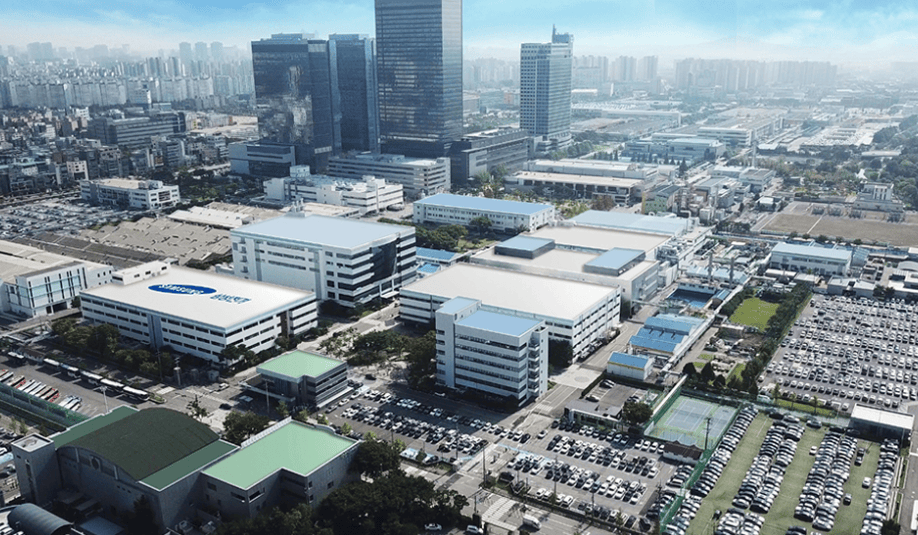
Samsung Electronics and SK Hynix Achieve Record-Best First-Half Performance
en.Wedoany.com Reported - Samsung Electronics and SK Hynix posted their best-ever performances in the first half of the year. Samsung Electronics recorded an operating profit of 57 trillion won in the first quarter, with the second quarter expected to reach around 90 trillion won. SK Hynix also achieved its highest performance since its founding. However, the internal atmosphere within the companies remains uncertain. Samsung Electronics faced its first potential general strike crisis due to conflicts over performance bonuses, which was resolved through negotiations at the end of May. Yet, underlying issues such as generational differences in compensation perception persist. Additionally, with the 896 trillion won Hunnan Cluster investment imminent, engineers' reluctance to work in local areas and union risks have compounded concerns. There are reports that companies are weighing speed adjustments, known as "sliding investment." While the government pushes for rapid permitting, companies may apply the brakes due to labor risks. Whether the Hunnan Cluster becomes a reality depends on labor-management stability.
Domestic AI companies point out that the real bottleneck in infrastructure is the "inability to purchase GPUs when needed." Domestic cloud providers bind GPUs in long-term subscription models, making it difficult to flexibly use them based on demand. This has even led to situations where domestic A100 costs exceed overseas H100 costs. Furthermore, public, medical, and financial data are restricted by regulations, so even with increased GPUs, there is no trainable data. AWS, Google, and Microsoft Azure leverage their ability to organically utilize global regions. If domestic cloud providers cannot keep up with this structure, AI companies will naturally migrate overseas. The competitiveness of domestic AI infrastructure has shifted to the flexibility of "renting."

Regarding the power supply and demand issues for the Hunnan Semiconductor Cluster, the Blue House responded directly. Kim Woo-chang, AI Policy Secretary at the Presidential Office, stated that renewable energy in the southwestern region is already sufficient and can be further increased, announcing a composite strategy combining nuclear power and renewable energy. The logic is that building power-intensive facilities like semiconductor factories near power generation sites is more advantageous. Addressing the controversy over nuclear phase-out, Kim Woo-chang drew a clear line, saying, "New nuclear power plants will also be built." However, grid connections or renewable energy expansion are difficult to achieve in the short term, and the gap between policy will and actual infrastructure construction speed may become a persistent point of contention in the second half of the year.
Recently, among software companies, AI token usage fees are being treated as "trade secrets." Webcash Group disclosed figures of 150 million to 200 million won per month, a 3,144% increase year-on-year, but most companies, including Naver Cloud, AhnLab, and Hancom, remain silent on the amounts. The reason is that token usage alone can reveal a company's strategy, such as where and how it uses AI. Last year, AI costs were considered "testing expenses," but starting this year, their nature has shifted to "permanent infrastructure costs." AI token fees have become a formal item in corporate cost structures. The distinction between "companies that use AI" and "companies that make money from AI" may depend on the competition to optimize token fees.

Following the outbreak of the U.S. government's export control issue targeting Anthropic's frontier model, Claude Mythos, some media reported that "the government will invest 5 trillion won in supplementary budget to develop domestic AI." However, the Ministry of Science and ICT immediately clarified that "there is no such plan," and both budget formulation and model development plans remain a blank slate. Nevertheless, the demand for security-specific foundation models continues to be raised in the industry, and the government is separately promoting the "Independent AI Foundation Model" project. Discussions on AI sovereignty are expected to deepen, but the government's stance is "acknowledging the necessity, but the budget has not yet been determined." Whether actual independent model development accelerates remains to be seen.
Related Products





Multi-function Marine Monitoring Low-altitude Detection Radar Sea-air Boundary Ocean Dynamic Environment Measurement
Chengdu Dixin Technology Co., Ltd.

Comprehensive Mining Automation Control System
Beijing Tianma Intelligent Control Technology Co., Ltd.


Industrial and Commercial Point-Type Gas Detector
Jinan Benan Technology Development Co., Ltd.