China's Guangxiang Technology Completes Hundreds of Millions in Angel Round Financing, Deploying Physics-Native Foundation Models
en.Wedoany.com Reported - China's Guangxiang Technology announced the completion of cumulative hundreds of millions of yuan in angel round financing. The latest round saw participation from multiple investment institutions, including Zhuhai Science and Technology Industry Group, Xingzheng Capital, Songhe Capital, Shunxi Fund, Muhua Kechuang, See Fund, Yichen Capital, and listed company Xingyun Technology. Existing shareholders, including Zero One Ventures and L2F Light Source Entrepreneurs Fund, continued to follow the investment. The funds will be primarily invested in the research and development iteration of physics-native foundation models and will advance the commercial delivery of embodied intelligent robot products.
Current mainstream technical routes still face fundamental limitations in achieving general-purpose physical interaction. The VLA (Vision-Language-Action) route grafts action experts onto vision-language models to achieve task reasoning and action generation. However, semantic generality does not equate to physical interaction capability; the model is essentially a mapper of perception and action. While fine-tuning for specific tasks enables the completion of fixed actions, it struggles to cultivate general operational capabilities through physical interaction. Video-predictive world models focus on pixel-level prediction of environmental observation sequences, but predicting appearances does not equate to understanding physical causality. Images are insufficient to characterize physical properties such as mass, inertia, friction, deformation, and contact, making it difficult to support generalizable action generation.
Zhang Tao, Founder and CEO of Guangxiang Technology, stated that true physics-native intelligence is an ability that autonomously emerges through perception, interaction, feedback, exploration, and constraints within the physical world. A physics-native foundation model must prioritize physical interaction as its primary principle, enabling continuous learning of world laws, behavioral consequences, and task constraints from the physical environment, thereby possessing general intelligence for complex task closure. Guangxiang Technology's self-developed physics-native foundation model relies on its self-built high-fidelity, large-scale, interactive physical data assets and proprietary reinforcement learning algorithm matrix. Through extensive interaction within the physical environment, the model learns explicit physical law reasoning, such as dynamics, contact, constraints, and conservation, as well as implicit environmental state inference and physical behavior attribution, including randomness, uncertainty, and long-range consequences. This enables the model to develop a general understanding of physical laws through continuous physical interaction, achieving generalizable behavioral capabilities.
The core team of Guangxiang Technology possesses a complete capability loop from fundamental research to large-scale delivery in the field of embodied intelligence. Founder and CEO Zhang Tao previously led the mass production and deployment of spatial perception and positioning technology in millions of vehicle-mounted terminals. The industrialization team comes from technology and robotics companies such as Alibaba, Tencent, Huawei, KUKA, and Geek+, bringing expertise in systems engineering and commercial implementation. Co-founder Professor Li Shengbo is an internationally renowned expert in reinforcement learning and autonomous driving, with over 250 published papers and more than 30,000 citations, and has been selected as an Elsevier Highly Cited Chinese Researcher for five consecutive years. The core technical team holds doctoral degrees from prestigious universities such as Tsinghua University and Zhejiang University, covering the full stack of embodied intelligence, including robot design, reinforcement learning, and end-to-end models.
Guangxiang Technology has built a physics-native intelligence generation system, synergistically composed of the reinforcement learning algorithm matrix Phi-RL Matrix, the physical data asset Phi-Space, and the general physical intelligence development platform Phi-Arch. At the algorithm layer, reinforcement learning is positioned as the capability growth engine for physical intelligence. The self-developed embodied reinforcement learning algorithm matrix Phi-RL Matrix has achieved progress in areas such as core task performance, multimodal action strategy generation, complex scenario decision-making, and safety, enabling robots to grow physics-native intelligence from physical interaction through trial-and-error iteration. At the data layer, the high-fidelity physical data asset Phi-Space is constructed based on core 3D modeling algorithms and physical modeling technologies, achieving high-fidelity replication of real industrial scenes from geometric structures to physical properties, and employing generative models for exponential scene scale expansion. At the platform layer, the physical intelligence development platform Phi-Arch is built, transforming each model construction and terminal deployment into reusable and transferable systematic accumulation.
Guangxiang Technology recently released the industrial-grade self-evolving embodied intelligent robot Phi-Bot X1, which has been validated in real automotive production line welding feeding stations. The X1 features a four-steering-wheel omnidirectional chassis, adaptable to narrow passages and assembly line stations, enabling dynamic operations that combine movement and manipulation, with parking stability and autonomous locking capabilities. The lifting waist design provides the X1 with anti-tipping and whole-body coordination capabilities, with a vertical working range covering 0 to 2.5 meters and a distal reach of 1.2 meters. The X1 employs full-joint force-controlled dual arms, building a real-time force sensing and feedback system from joints to end effectors. Leveraging generalized skill models built on physics-native intelligence, the X1 relies solely on its proprioceptive capabilities to achieve high-precision continuous operation positioning in dynamic and complex industrial environments. Its strong generalization ability compresses deployment cycles to weeks or even days. At the 2026 ATC exhibition, the X1 operated continuously for 21.5 hours over three days, completing the full welding loading and unloading process with zero errors and zero interruptions, while collaborating in real-time with production line automation equipment. During the loading process involving simultaneous dual-hole alignment, the X1 relied solely on proprioception to control dynamic operation precision at the millimeter level, with angle control within 0.3°, achieving a 100% success rate for continuous operation in dynamic environments.
Guangxiang Technology is an embodied intelligence company jointly incubated by the School of Vehicle and Mobility and the School of Artificial Intelligence at Tsinghua University, possessing an embodied intelligence algorithm capability matrix, data system, and physical intelligence development platform. Currently, Guangxiang Technology has completed real-world scenario validation for typical high-value stations in automotive manufacturing, such as loading, unloading, and quality inspection, and has established commercial partnerships with multiple leading domestic and international automotive companies. In the future, starting with automotive manufacturing, the company will gradually expand into 3C, electronics, and broader industrial scenarios.
Related Products


Pneumatic high-pressure wear-resistant ball valve
Zhejiang Deca Control Valve Meter Co., Ltd.
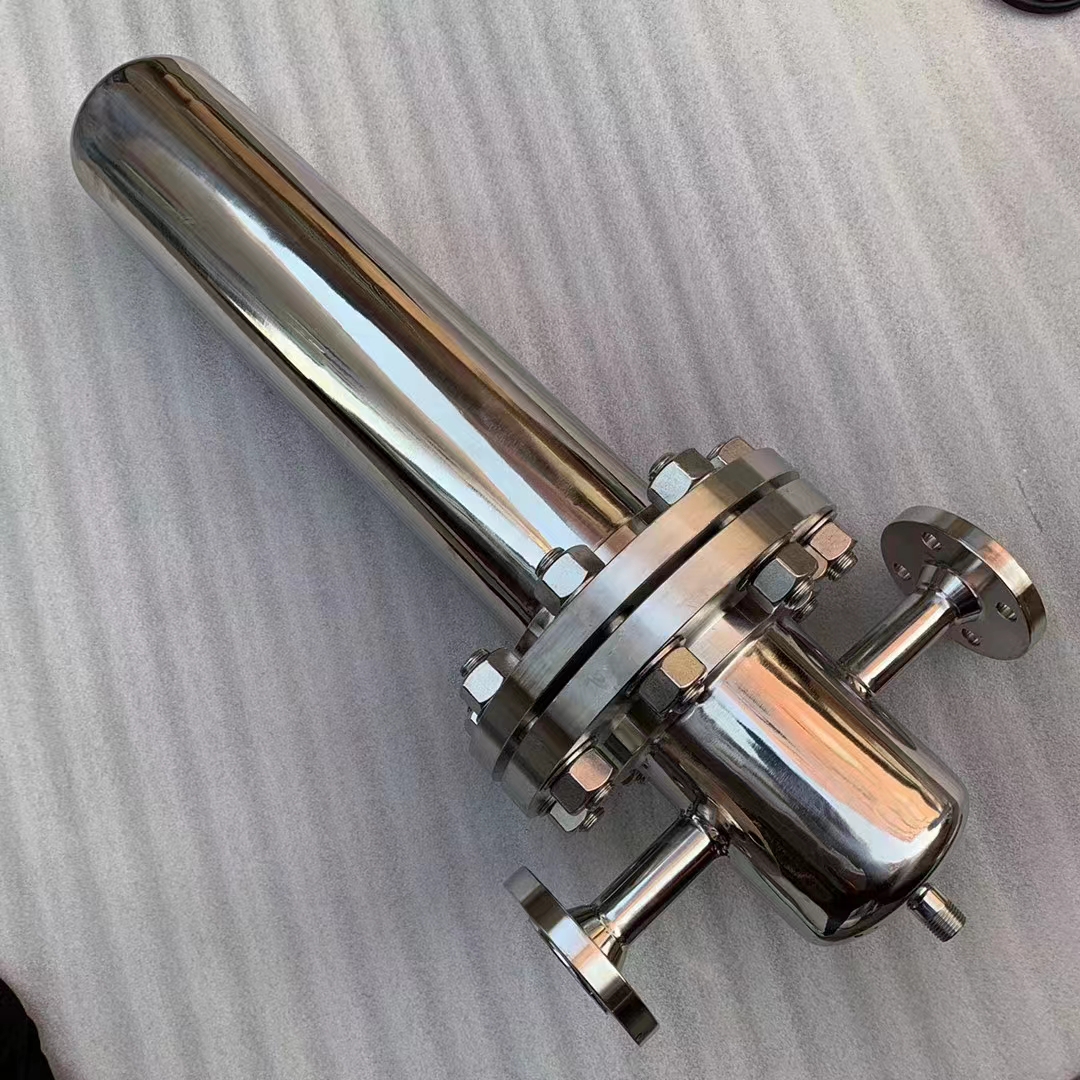


CAP1400 main feedwater flow nozzle flowmeter.
Jiangsu Hongda Instrument Technology Co., LTD.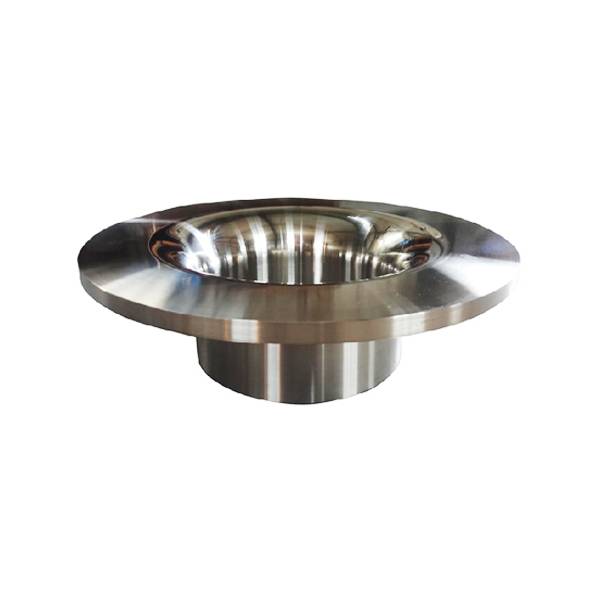
Standard Nozzle Flowmeter
Jinggong Automatic Control Instrument Complete Technology Development Company

Industrial and Commercial Point-Type Gas Detector
Jinan Benan Technology Development Co., Ltd.