China's Overhead Hoist Transfer System Market Expected to Reach 6.81 Billion Yuan in 2026
en.Wedoany.com Reported - In the semiconductor manufacturing field, OHT (Overhead Hoist Transfer) is an automated material transport system installed on overhead rails in factory ceilings. The system uses belt-driven lifting components to directly access the load ports of processing equipment, enabling the gripping and transport of Front-Opening Unified Pods (FOUPs). It is widely regarded as the mainstream transport solution for 300mm wafer fabs and next-generation factories.
System Composition and Basic Architecture
As a core subsystem of the Automated Material Handling System (AMHS), the complete OHT architecture encompasses both hardware equipment and control software.
The hardware layer includes: a rail system laid along the ceiling, which can exceed 50 kilometers in length in advanced factories with over 5,000 intersections; OHT units traveling along the rails, typically with a load capacity of 15-20 kg and adjustable travel speeds; a lifting mechanism for precise vertical positioning, matching the load port heights of different equipment; a pick-and-place mechanism for gripping FOUPs; and a power supply system (sliding contact or inductive power) supporting 24/7 continuous operation.
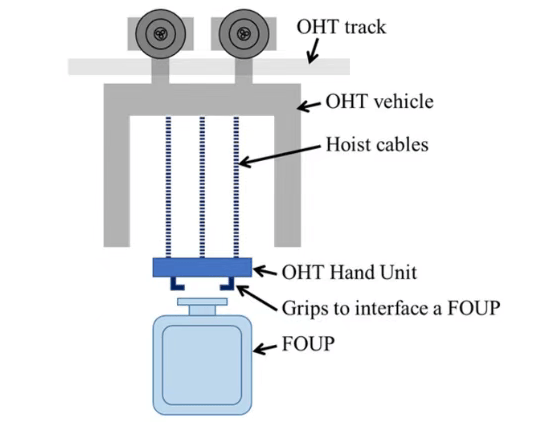
The software control layer consists of the Material Control System (MCS), Transport System Controller (TSC), and Storage Device Controller (STC), working in coordination. The MCS interfaces with the Manufacturing Execution System (MES), receiving global transport commands and dispatching them to controllers; the TSC manages the status and task assignment of individual OHT units; the STC manages FOUP information within storage devices. Real-time wireless communication occurs between all layers, with the central server constructing a complete picture of every device's movement throughout the factory, similar to a traffic control center monitoring city traffic flow.
Workflow and Operating Principles
The OHT operation process can be summarized into four stages: "Command Reception—Path Planning—Transport Execution—Precise Delivery." First, the MCS receives material transport requests from the MES, parses information such as target equipment, process priority, and carrier type, and dispatches them to the corresponding TSC. Subsequently, the TSC schedules an idle OHT, calculates the optimal path from start to destination based on the rail topology map, and controls the hoist to move along the guide rail.
When the OHT approaches the target position, the system switches to low-speed mode, achieving millimeter-level positioning via position sensors. The lifting mechanism adjusts height, and the pick-and-place mechanism completes the gripping or placement of the FOUP. Throughout the transport process, the average speed of the OHT on straight tracks can reach 5 m/s (18 km/h), while on curved tracks it is 1 m/s (3.6 km/h). In advanced factories, a single transport cycle (including waiting, travel, and pick-and-place) takes approximately 18-25 seconds, with daily system throughput reaching hundreds of thousands of trips, and system availability must be maintained above 99.99%.
Key Performance Indicators and Technical Essentials
Core parameters of the OHT system cover positioning accuracy, operational performance, vibration control, and cleanliness. Advanced processes require horizontal positioning errors not exceeding ±0.1 mm, vertical alignment errors not exceeding ±0.2 mm, maximum operating speeds of 3.0-3.5 m/s, and pick-and-place cycles under 5 seconds. Vibration control is a critical factor affecting yield in advanced processes; the 3nm node requires transport vibration acceleration below 0.2G, as exceeding this could cause photolithography alignment errors. To suppress vibration, high-end OHT systems commonly employ magnetic levitation drive technology, eliminating frictional vibration through non-contact transport, achieving precisely controlled start-stop processes, while avoiding particle contamination from lubricating oil grease, with noise levels below 55 dB.
In terms of positioning solutions, Gray code positioning, due to its strong anti-interference capability (unaffected by dust and electromagnetic interference) and accuracy of ±2 mm, has become the mainstream choice for high-end fabs; encoder positioning is lower in cost but susceptible to slippage, suitable for mature processes; laser ranging is used for customized scenarios. Additionally, the OHT system has real-time status tracking capabilities, monitoring anomalies such as temperature and vibration during wafer transport, and responding promptly to ensure transport safety.
Application Advantages and Industry Status
Compared to ground-based Automated Guided Vehicles (AGVs) or conveyor belts, the OHT system offers significant advantages in multiple dimensions. Its overhead installation does not occupy floor space, improving the area utilization of cleanrooms; fully automated operation reduces direct contact between personnel and materials, lowering the risk of particle contamination; high-speed transport shortens material processing time, thereby enhancing overall production efficiency; simultaneously, automated operation helps reduce labor and maintenance costs, and ensures production continuity through high operational stability.
From a market perspective, the global OHT system has long been dominated by companies such as Daifuku and Murata Machinery from Japan, with extremely high concentration in the high-end 12-inch fab market. According to market research estimates, China's OHT market size is expected to reach 6.81 billion yuan in 2026. Chinese manufacturers such as Mifei Technology, Huaxin Equipment, Chengchuan Technology, and Zhijianeng have achieved breakthroughs in some production lines, but gaps remain in indicators such as positioning accuracy (China: ±0.1 mm vs. International: ±0.05 mm), operating speed (China: 3.5 m/s vs. International: 4.0 m/s), and vibration control (China: 0.5 μm/s vs. International: 0.1 μm/s). With the large-scale expansion of Chinese wafer fabs and the acceleration of domestic substitution, the OHT system is expected to become the next major track for comprehensive breakthroughs in the semiconductor equipment sector.
Related Products

LBH4000 Batch Environmental Protection Asphalt Mixing Plant | Asphalt Batching Plant | Asphalt Mixing Plant
Jilin Province Road Construction Machinery Co., Ltd.
Strip Coating and Plating Production Line Equipment
MCC-SFRE HEAVY INDUSTRY EQUIPMENT CO., LTD.

Pneumatic high-pressure wear-resistant ball valve
Zhejiang Deca Control Valve Meter Co., Ltd.
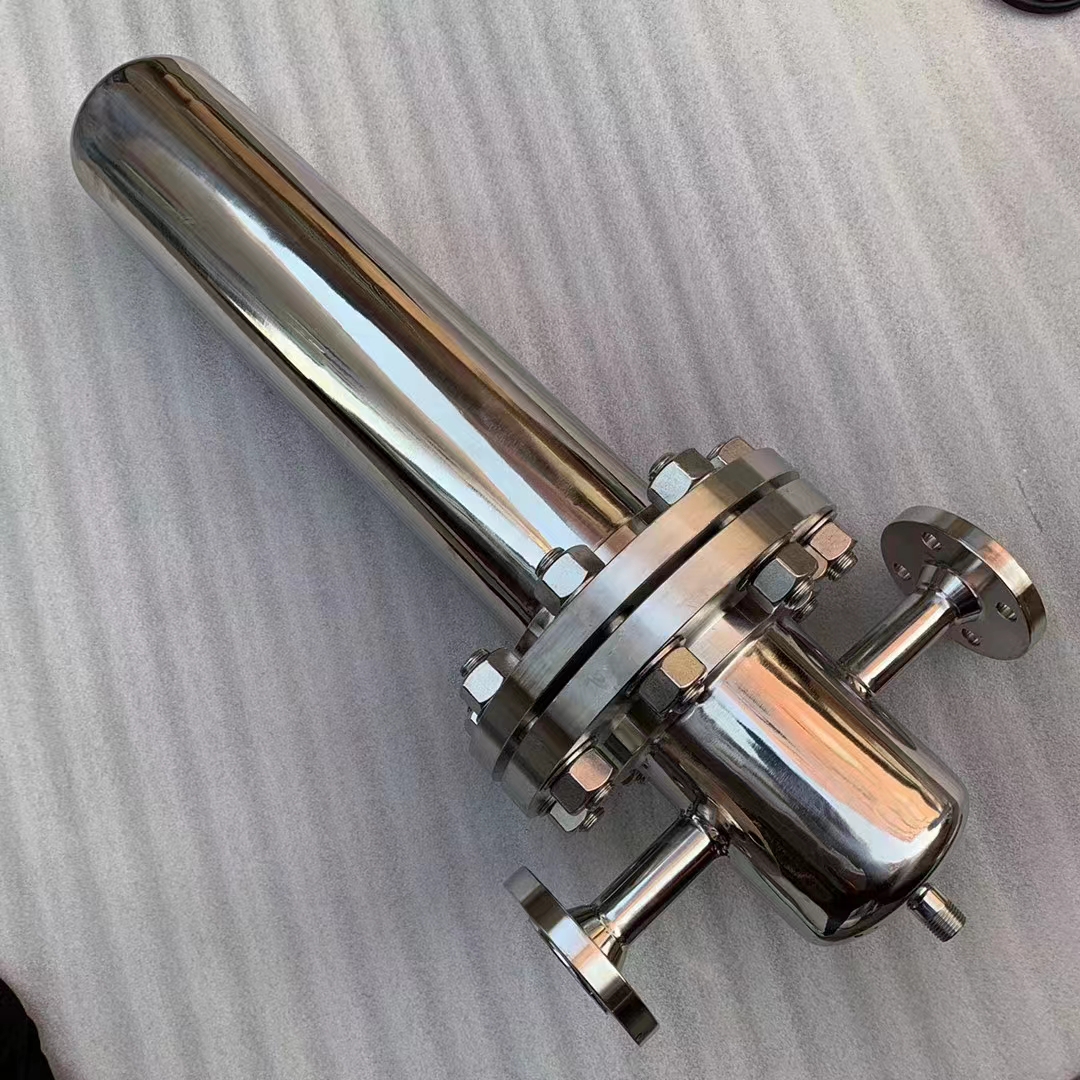

CAP1400 main feedwater flow nozzle flowmeter.
Jiangsu Hongda Instrument Technology Co., LTD.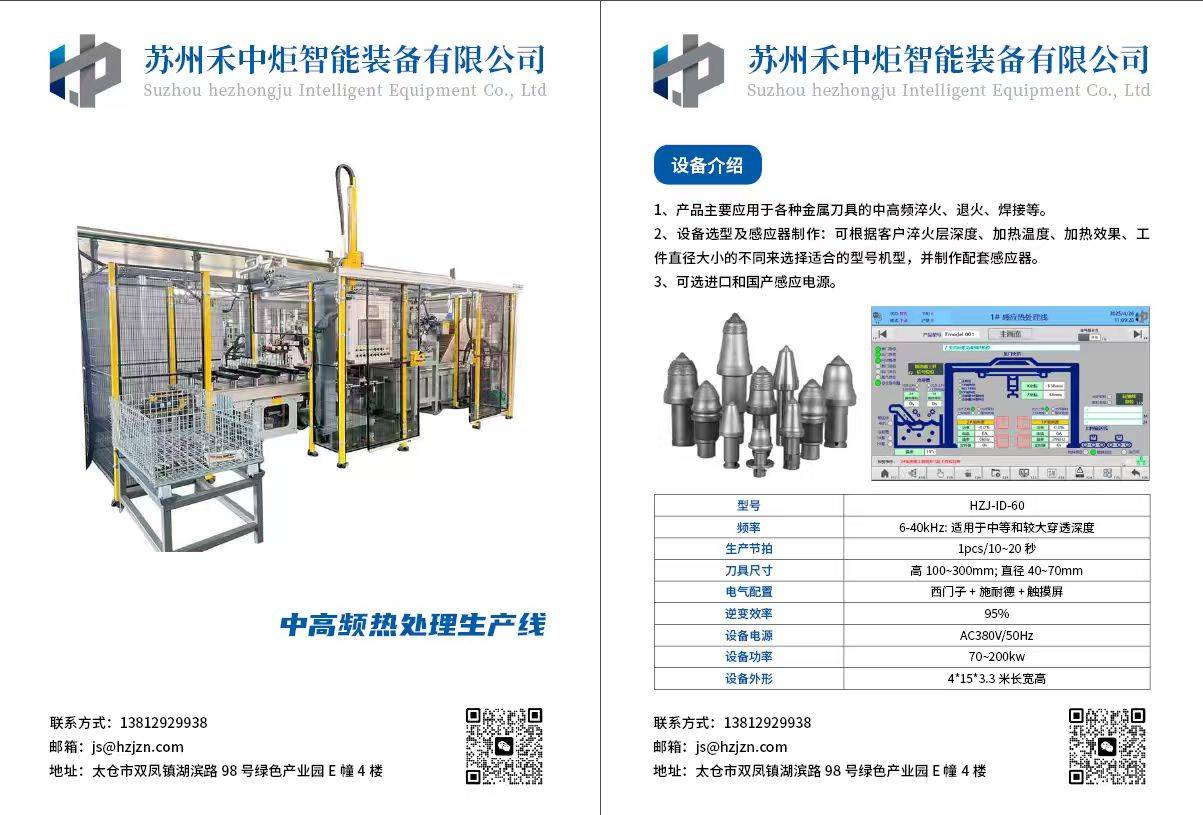
Excavator Bucket Teeth Heat Treatment Production Line
Suzhou Hezhongju Intelligent Equipment Co., Ltd.