en.Wedoany.com Reported - Tudor Gold (TSXV: TUD) has announced that it has engaged ZEMÎ Technologies to use artificial intelligence to evaluate its Treaty Creek project in British Columbia's Golden Triangle, guiding drill locations for this year and next. The evaluation is based on drilling records from over 200 drill holes dating back to 2007, with these long-term rock samples and drill notes becoming increasingly valuable as machine learning can identify patterns within them.
Drilling that began in 2007 has continued almost annually, with records accumulating after each resource estimate release. Each drill hole leaves behind not just ounce counts, but also rock descriptions, structural notes, and laboratory results. These drilling records have been reinterpreted multiple times: an early 2021 estimate suggested resources of approximately 15 million ounces of gold equivalent, and by 2024, the same dataset supported an estimate of nearly 28 million ounces. The latest estimate from late 2025 reported separate figures for gold, silver, and copper rather than blended data, totaling approximately 25 million ounces of gold. It should be noted that these figures are not directly comparable, as the 2024 estimate assumed open-pit mining while the 2025 estimate assumed underground mining, with the change in calculation method altering how resources appear on paper.
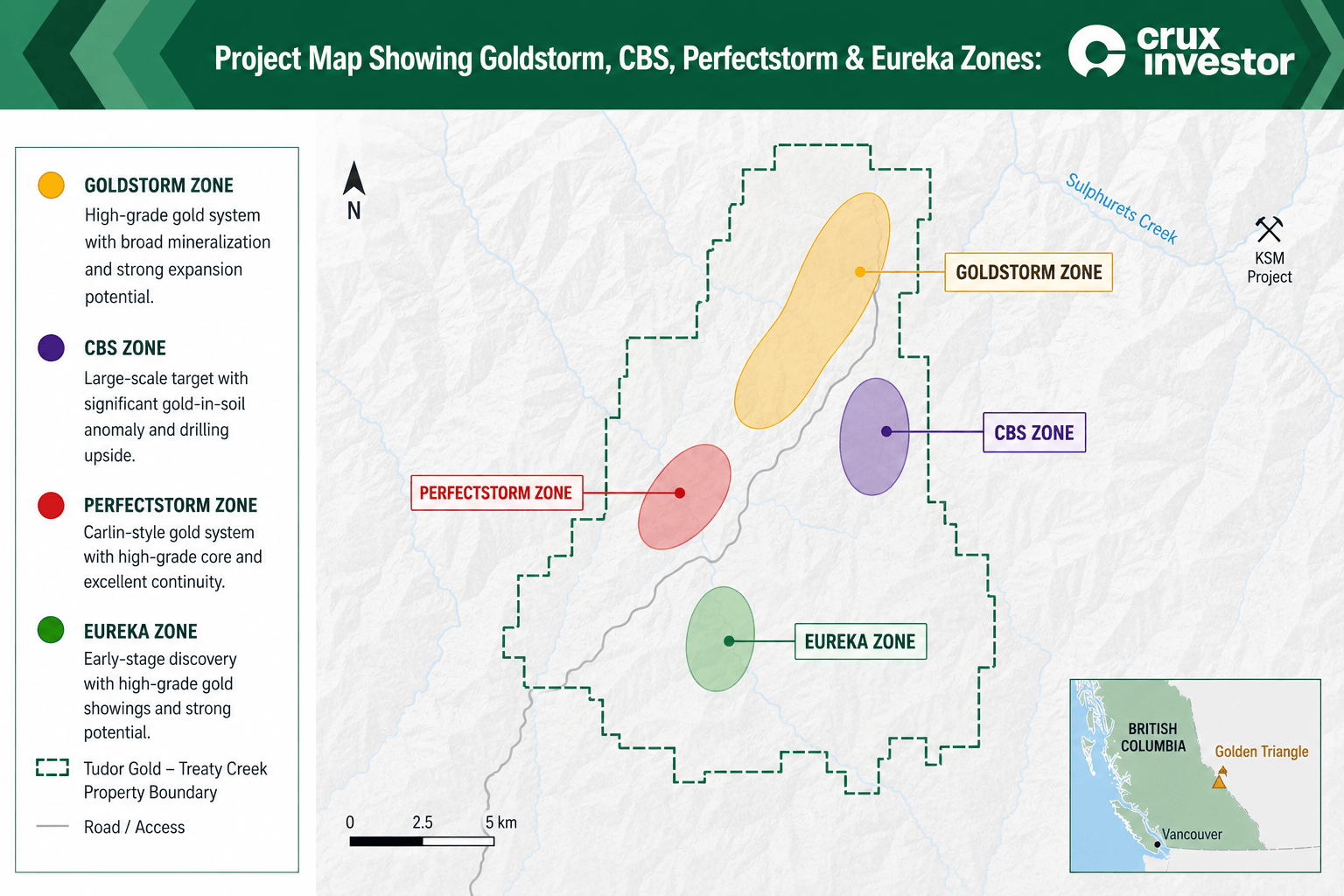
Tudor Gold stated that the evaluation combines its exploration records with machine learning to flag areas most likely to contain valuable minerals. Such tools perform better with more historical data, searching for patterns across the entire property that are difficult for the human eye to detect. Treaty Creek's data is not limited to the Goldstorm zone; nearby Perfectstorm, CBS, and Eureka zones also have their own drilling histories, even if formal resource estimates have not yet been established. This older drilling data is precisely the material that AI models can re-examine to find new targets without drilling a single new hole.
This evaluation accompanies other milestones: an economic study launched in February 2026 to assess converting Goldstorm into an underground mine, and a pending permit application for an underground exploration decline to access the high-grade zone known as SC-1. Tudor has also increased its ownership of the project this year by acquiring its partner, American Creek Resources. External reports have also highlighted encouraging metallurgical test results.
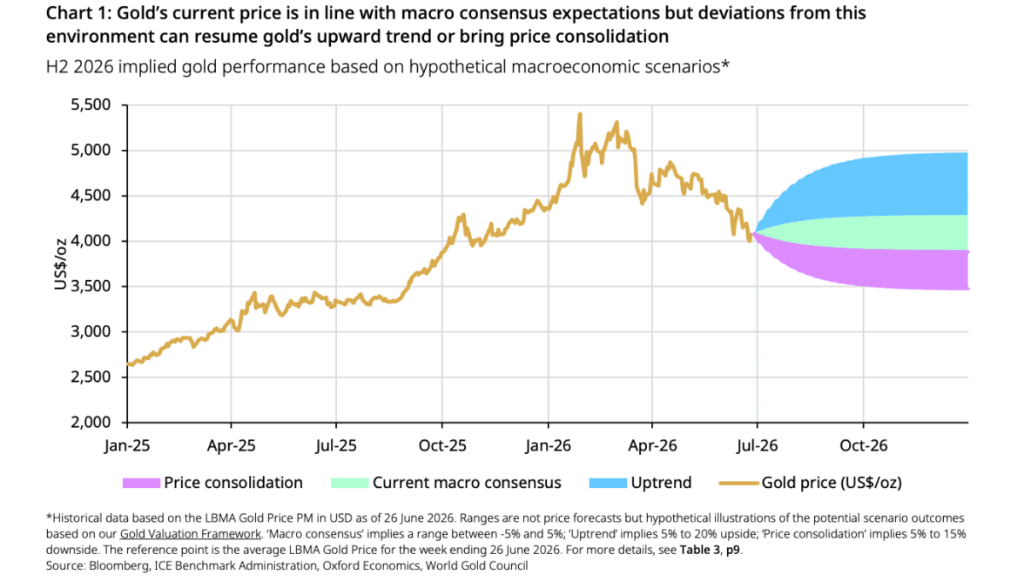
Gold prices are significantly higher than a year ago, supporting increased exploration spending across the industry, meaning more new drilling and more data for such models to absorb. Treaty Creek is located on a longer fault system that contains several deposits belonging to neighboring, more advanced projects, situated within what is considered a productive mineral belt. The exploration history in the region spans decades before Tudor's involvement, with similarly long drilling records on other nearby properties. Investors focused on Treaty Creek should watch for new drilling results from the CBS and Perfectstorm zones this quarter, as well as how the AI evaluation results translate into future drill targets. Progress on the underground decline permit application, results from the ongoing economic study, and confirmation of the aforementioned metallurgical tests are also worth monitoring, in addition to whether future resource estimates will incorporate the SC-1 zone.