Africa's Air Cargo Grows 7% Annually, Infrastructure and Regulation Remain Constraints
en.Wedoany.com Reported - Africa's air cargo industry has become one of the fastest-growing aviation sectors on the continent, but industry leaders point out that African airlines remain constrained by challenges such as regulatory fragmentation, inadequate cargo infrastructure, and high operating costs.
Air cargo was a key topic at the recent 14th Aviation Stakeholders Conference of the African Airlines Association (AFRAA), where it was positioned as an increasingly important driver of economic growth, rather than merely a supplementary source of revenue for airlines.
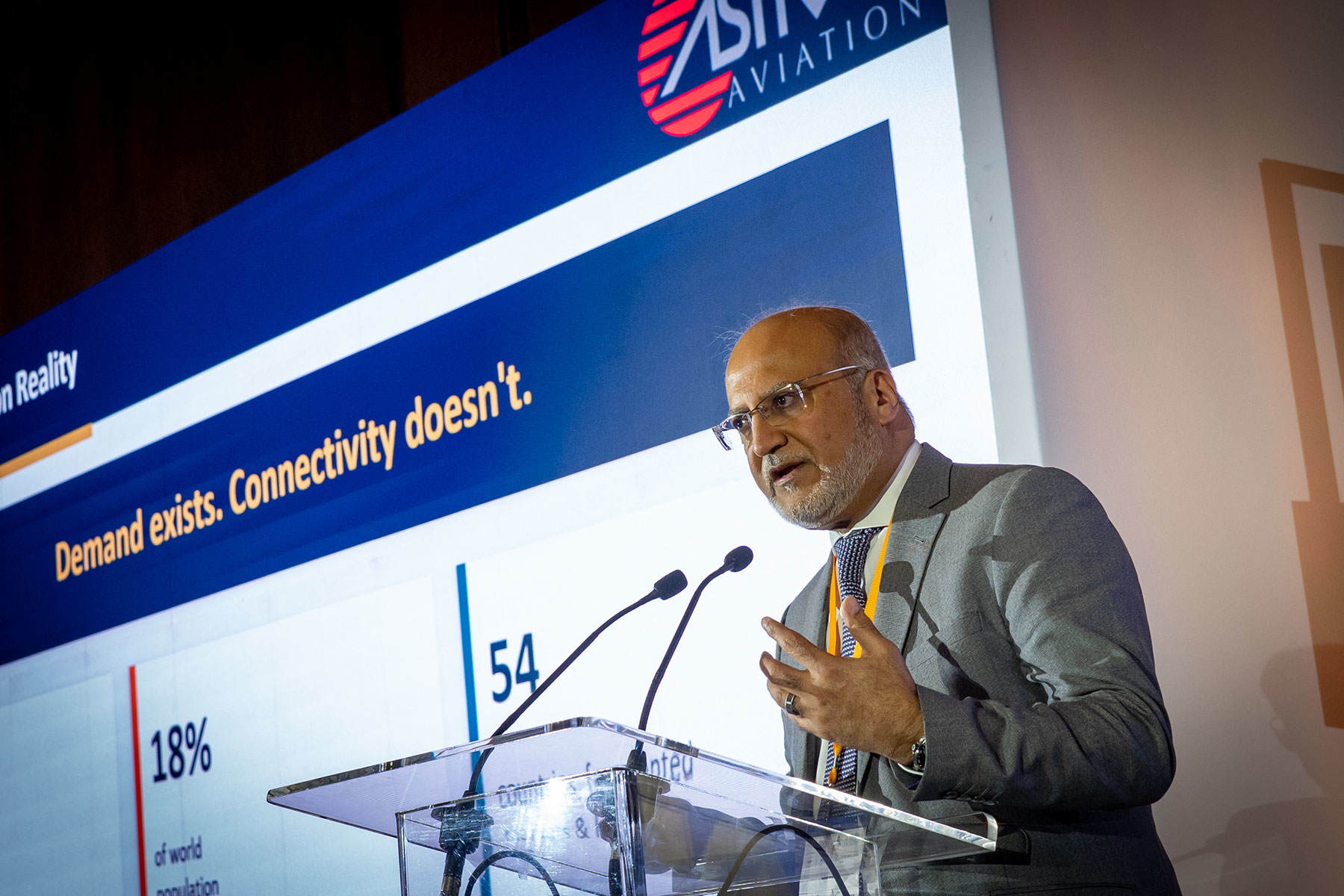
Sanjeev Gadhia, CEO of Astral Aviation, stated that Africa currently accounts for only 3% of the global air cargo market, despite being the fastest-growing cargo region globally, with an annual growth rate of approximately 7%. The continent's demographics provide a foundation for future expansion. Africa is home to about 18% of the world's population, with roughly 60% of its people under the age of 30.
Astral Aviation, a pan-African cargo airline headquartered in Nairobi and led by Gadhia, operates a fleet of Boeing aircraft serving approximately 14 African destinations. The company also operates routes to the Middle East, Asia, and China, and partners with eight African airlines and about 52 international carriers.
Despite the industry's rapid growth, Africa's regulatory environment remains highly fragmented. With 54 countries each maintaining their own aviation regulations, organizations such as AFRAA and the African Civil Aviation Commission (AFCAC) are working to reduce regulatory disparities across the continent.
Cargo operations are also becoming increasingly important to airlines' business models, contributing 14% to 20% of airline profitability. However, the sector's expansion requires significant investment in specialized infrastructure. Many African airports have historically been developed around passenger operations, resulting in underdeveloped cargo facilities.
With the African Continental Free Trade Area (AfCFTA) creating one of the largest consumer markets globally, greater investment in cargo infrastructure, particularly through public-private partnerships, is seen as critical.
Demand for air cargo is already growing through the export of fresh produce from countries such as South Africa and East Africa, especially to Europe and the Middle East. Pharmaceuticals and cold chain logistics, whose importance was further highlighted during the COVID-19 pandemic, also rely on a stable air cargo industry. The rapid expansion of e-commerce has further intensified the need for faster cargo services.
Air cargo also offers significant advantages in delivery times. While shipping goods by sea from Asia can take 60 to 75 days, air freight takes approximately seven days. As consumer expectations shift toward faster deliveries, efficient cargo networks are expected to become increasingly important.
Although Africa's cargo volumes are growing faster than the global average, the continent still has relatively few dedicated cargo airlines. There is also room for passenger airlines to develop stronger cargo operations. South African Airways was cited as an example, operating a large passenger fleet but lacking dedicated cargo aircraft.
The growing air cargo market spans agriculture, oil and gas, mining, and manufacturing, sectors that increasingly rely on efficient cargo services, particularly when rapid transportation of equipment, products, and time-sensitive goods is required.
Operating costs remain one of the industry's biggest challenges. High taxes and fees levied on goods at various stages of transport make intra-African cargo costs far higher than they should be. In some countries, cargo is taxed more heavily than passenger operations.
Regulatory reform is another major issue, with the industry still awaiting full liberalization of air cargo under the Single African Air Transport Market (SAATM). Many goods transported between African countries pass through hubs in the Middle East or even Paris before reaching their final destinations within the continent. This reflects the limited direct cargo connectivity across Africa.
Airport investment also continues to prioritize passenger terminals, while cargo infrastructure receives comparatively less attention. Competition from foreign airlines remains significant. According to Gadhia, approximately 80% of cargo moving to and from Africa is carried by foreign carriers, with African airlines holding only about 20% of the market share.
Africa's limited intra-regional trade remains a challenge. Only about 20% of Africa's trade occurs within the continent, while roughly 80% is conducted with markets outside Africa. Industry stakeholders believe that improved implementation of SAATM could help raise intra-African trade connectivity to at least 50%. The AfCFTA, representing a $3.4 trillion market, is considered a major opportunity for future cargo expansion.
To support this growth, Africa needs faster adoption of electronic air waybills, real-time cargo tracking systems, and broader digitalization of cargo operations. With Africa's e-commerce market growing at approximately 20% per year and approaching a scale of $100 billion, these reforms are becoming increasingly important. Platforms such as Jumia and South Africa's Takealot were cited as examples of Africa's e-commerce expansion.
Perceptions of Africa also continue to impact the cargo industry. Gadhia cited the recent Ebola outbreak in the Democratic Republic of Congo as an example of how a health crisis in one region of the continent can create broader perceptions, negatively affecting travel and cargo demand in countries including Rwanda and Uganda.
Policy and regulatory reform remain among the industry's biggest obstacles. AFCAC and the African Union are being called upon to accelerate the implementation of SAATM, while the industry also needs stronger partnerships among African airlines, cooperation with international carriers from China and India, public-private partnerships, and closer collaboration with the maritime shipping sector.
Africa's air cargo industry requires a combination of liberalization, infrastructure investment, digitalization, and supportive government policies to unlock its full potential, enabling African airlines to capture a larger share of the continent's growing cargo market.
Related Products




Wheel and Track Technology Business
Beijing Research & Design Institute of Rubber Industry Co., Ltd.
ZY(J)7(M) Sealed Type Electro-Hydraulic Turnout Machine
TAIYUAN CR JINGFENG EQUIPMENT TECHNOLOGY CO., LTD.

CLW5180TXSD6 Dongfeng Tianjin Washing and Sweeping Truck
ChengLi Special Automobile Co., Ltd.
China - Alashankou/Khorgos - Europe Full Range Transportation (Mala/Hamburg/Duisburg/Budapest, etc.)
Shenzhen Neptune Logistics Co., Ltd.



Explosion-proof lithium battery dispatching monorail crane locomotive (permanent magnet frequency conversion integrated machine)
Xiangtan Hengxin Industrial Co., Ltd.