China's WAIC 2026 Launches Open-Source Memory Operating System MemOS
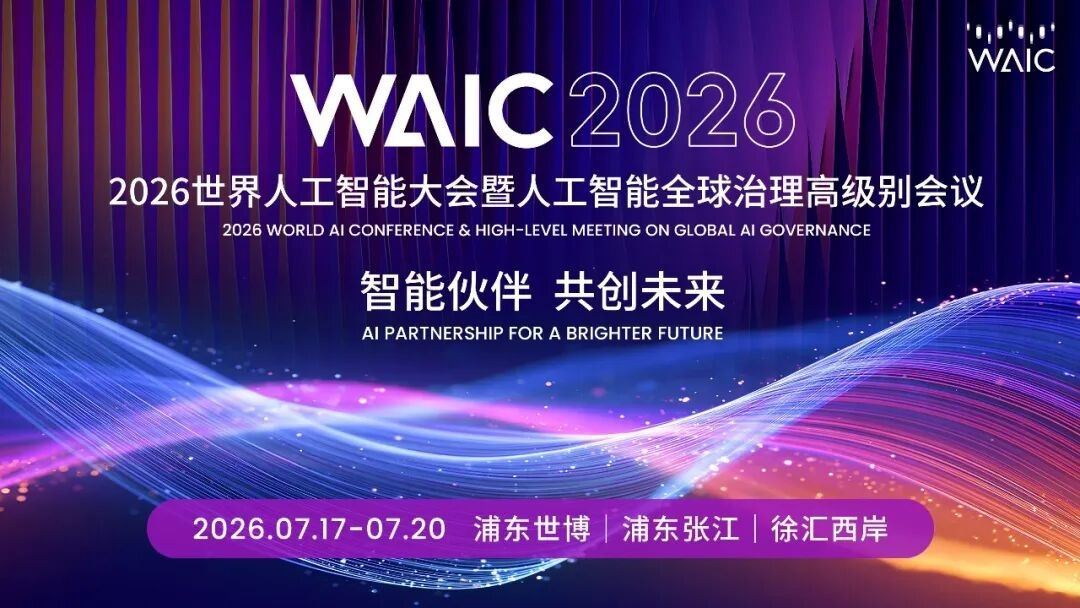
en.Wedoany.com Reported - In 2026, the artificial intelligence (AI) industry has moved away from the scaling model centered on stacking computing power and parameters, entering a post-scaling productivity era with agents at its core, focusing on scenario deployment and industrial efficiency. As a global bellwether for AI, the World Artificial Intelligence Conference (WAIC) 2026 revolves around five dimensions—paradigm reconstruction, cognitive upgrade, engineering deployment, industrial catch-up, and commercial compliance—showcasing a domestic technology matrix including the MemTensor memory architecture, the Harness engineering framework, and the Hermes agent scheduling system. It also addresses key topics such as scaling route iteration, memory and cognitive innovation, multi-agent collaborative scheduling, and large-scale vertical scenario deployment, painting a picture of domestic artificial general intelligence (AGI) transitioning from technical validation to industrialized productivity deployment.
Currently, the marginal returns of the traditional development model of stacking computing power and parameters are diminishing. Industry consensus holds that scaling itself has not failed but has undergone a paradigm upgrade from a single dimension to a three-dimensional scaling of pre-training, post-training, and inference-time computation. To solidify the theoretical innovation foundation for the post-scaling era, this year's conference launched the WAIC Academic section for the first time, chaired by Turing Award winner Andrew Chi-Chih Yao.
Addressing shortcomings of large models in real-world industrial scenarios—such as cognitive rigidity, lack of long-term state retention, and absence of self-iteration—the conference released the open-source memory operating system MemOS, based on the MemTensor architecture. Test data shows that compared to OpenAI's global memory solution, this approach improves average accuracy by 38.97%, reduces token operational overhead by 60.95%, and boosts performance on temporal complex reasoning tasks by 159%.
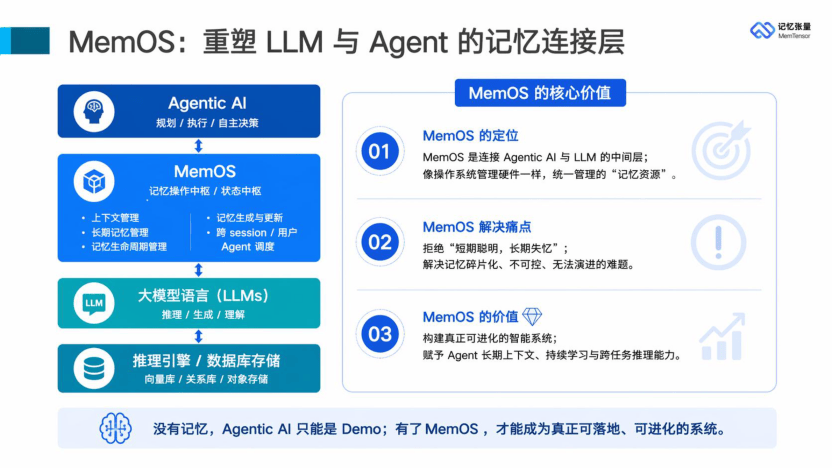
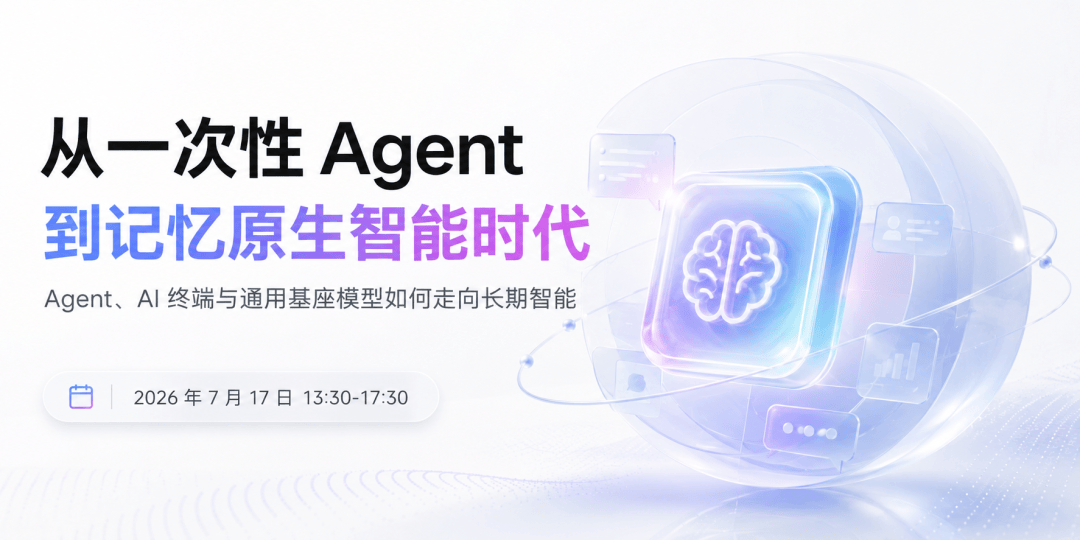
In terms of agent industrialization, Tencent Vice President Han Kaichuang noted that the memory loss rate for long-duration multi-agent tasks is as high as 40%, with instruction deviation and context discontinuity being the primary causes of failures. The industry faces barriers such as fragmented enterprise data, incompatible government-enterprise permission systems, a lack of industry evaluation standards, and overlapping multi-layered security risks. The conference featured the AI TIME · AGI Eve Forum, where live demo comparisons were conducted to highlight performance gaps between native models and the Harness engineering framework. As an intermediate operating system bridging large models and business applications, Harness delivers engineering capabilities such as intent correction, task decomposition, process scheduling, and exception handling, and is seen as key to breaking through AGI capability bottlenecks.
At WAIC 2026, multiple companies showcased their technological achievements. Baidu presented its full-stack "chip-cloud-model-agent" capabilities, launching the general-purpose agent DuMate. Kingsoft Office exhibited an office agent covering comprehensive document intelligence. Kimi introduced the Agent Swarm multi-agent cluster system. Lingyi Wanwu's Wance agent focuses on government and enterprise decision-making scenarios. Midea unveiled a dual-agent office solution for document creation and intelligent proofreading. PPIO PayCloud launched the Agentic Cloud platform. PatSnap built a professional agent matrix for intellectual property and R&D scenarios. ModelBest showcased the SuperMate intelligent cockpit solution. Tezign introduced the GEA enterprise agent. YSTen released the LumiSleep consumer-grade brain-computer sleep device. Moxi Intelligence established an integrated multimodal data lake foundation.
The MemTensor memory architecture and the Harness engineering framework form the two core technology foundations of domestic AGI. Unlike the U.S. approach centered on general-purpose large models with extreme scaling, China has charted a distinctive post-scaling path characterized by memory innovation, engineering empowerment, and scenario orientation. As an AI hub, Shanghai has nurtured AI enterprises such as MiniMax, SenseTime, StepFun, Midea, United Imaging Intelligence, and PPIO PayCloud, providing practical examples for this new route. These industrial achievements will be showcased from July 17 to 20 at WAIC 2026.
Related Products

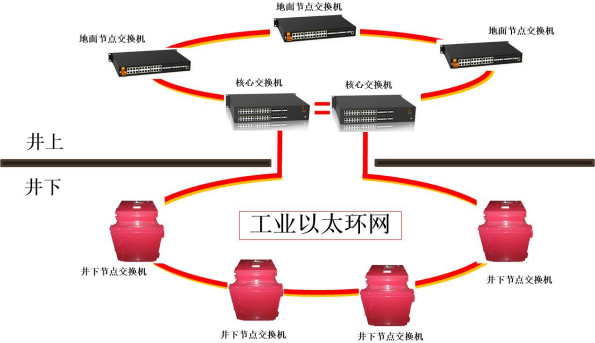
Mine Explosion-proof and Intrinsically Safe Industrial Ethernet Ring Network (10 Gigabit/Gigabit)
Chongqing Mas Sci&Tech Co., Ltd.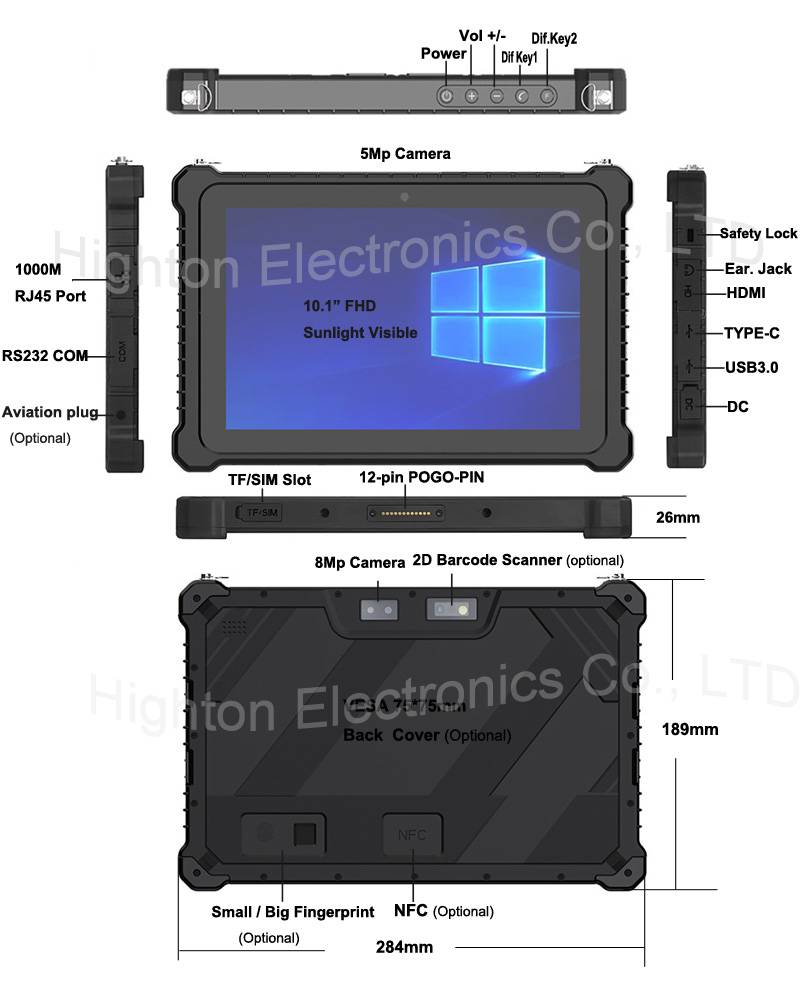
Hot Selling 10 Inch Intel N5100 I5 I7 FHD 8 +128GB 16+256GB Win10 Pro Win11 Pro 4G 5G Rugged Tablet PC Pad with NFC Barcode
Highton Electronics Co., Ltd.
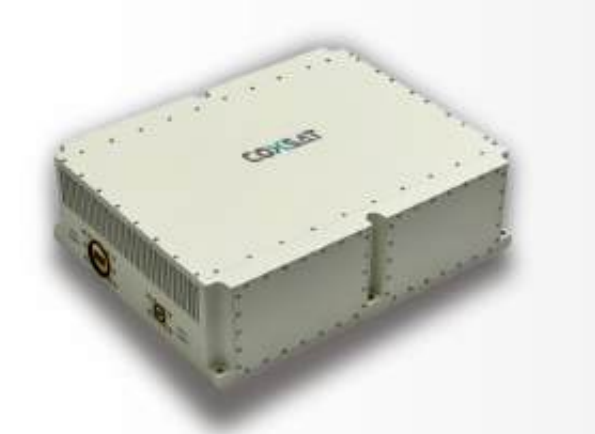
MUX Series Communication Interface Device for Security and Stability Control System
Nanjing NR Electric Co., Ltd.


Comprehensive Mining Automation Control System
Beijing Tianma Intelligent Control Technology Co., Ltd.
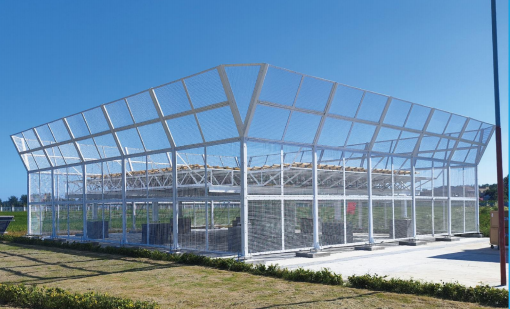
TWP16 P-Band Tropospheric Wind Profile Radar
China Huayun Meteorological Technology Group Co., Ltd.
Conveyor Belt Intelligent Monitoring System
LUO YANG WIRE ROPE INSPECTION TECHNOLOGY CO., LTD.