New Material from Lithuania Boosts Indoor Perovskite Solar Cell Efficiency to 37.0%
en.Wedoany.com Reported - A research team at Kaunas University of Technology in Lithuania has synthesized a novel organic semiconductor material specifically designed to capture weak light in indoor environments, enabling perovskite solar cells to achieve a power conversion efficiency of 37.0% under 1000 lux of 3000K LED lighting. This breakthrough aims to address the growing distributed energy demands of Internet of Things (IoT) devices, with the research led by Dr. Asta Dabulienė, Senior Researcher in the Materials Chemistry Group.
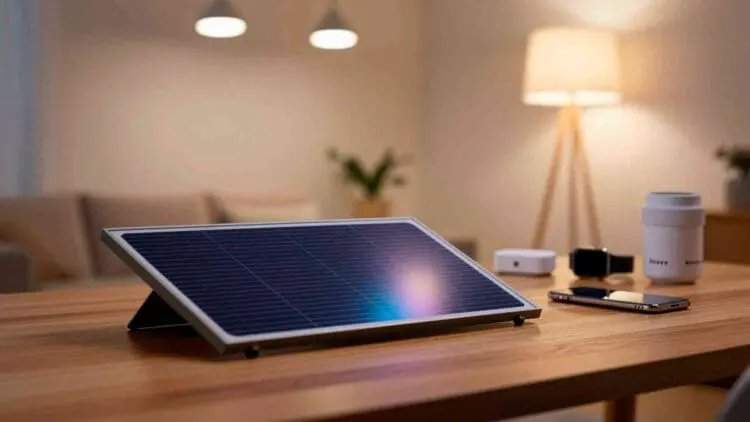
Direct sunlight streaming through office windows and the light from indoor LEDs permeate living spaces daily, yet most of this energy typically goes unused. Conventional outdoor solar cells are designed for strong, direct light and perform poorly under dim, diffuse indoor conditions. With the rapid expansion of IoT devices—such as smart sensors, wearables, and connected appliances—the market demand for compact, self-sufficient energy sources is growing, and indoor photovoltaic technology is considered an effective solution to fill this gap.
Dr. Dabulienė synthesized a series of thiazol[5,4-d]thiazole derivatives, specifically designed to serve as hole transport layers in perovskite solar cells. These materials are engineered to precisely move positive charge carriers (holes) while blocking the reverse movement of electrons, addressing energy losses caused by premature charge recombination. Dr. Dabulienė noted that an ideal hole transport semiconductor must possess high hole mobility and achieve good energy level alignment with adjacent layers, and the new compounds were designed with these criteria in mind.
Researchers at Ming Chi University of Technology in Taiwan utilized a thiazol[5,4-d]thiazole derivative containing a triphenylamine donor fragment provided by Dr. Dabulienė to fabricate perovskite solar cells optimized for indoor applications. Under well-lit indoor conditions, the cell achieved an efficiency of 37.0%. Scientists at King Abdullah University of Science and Technology in Saudi Arabia independently conducted theoretical modeling of the compound.
This achievement required cross-border collaboration spanning material synthesis in Lithuania, theoretical modeling in Saudi Arabia, and device fabrication and testing in Taiwan. The Materials Chemistry Group at Kaunas University of Technology comprises members from multiple countries. Team leader Professor Gražulevičius believes that diverse cultural perspectives help generate new ideas and expand the team's skill set. In 2024, the group secured four Horizon Europe projects and received collaboration invitations from peers in the United Kingdom and Germany.
Related Products


Industrial and Commercial Point-Type Gas Detector
Jinan Benan Technology Development Co., Ltd.
Bidirectional Metal Hard Sealed Seawater Butterfly Valve
Henan Quanshun Flow Control Science & Technology Co., Ltd.
Jiujiang Pinggang 125MW Subcritical Gas Power Generation Project
Capital Engineering & Research Incorporation Limited
Pneumatic high-pressure wear-resistant ball valve
Zhejiang Deca Control Valve Meter Co., Ltd.
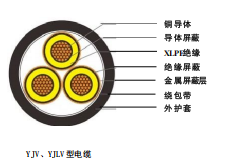
Rated Voltage 6-35kV Cross-linked Polyethylene Insulated Power Cable
TONGDING INTERCONNECTION INFORMATION CO., LTD.
TAI Slew-drive Single-axis Independent 1P Tracking Bracket System
ANTAI TECHNOLOGY CO., LTD.
Yingping Mining Section Open-pit Tailings Backfill Treatment of Goaf Ecological Restoration EPC Project
China Bluestar Lehigh Engineering Corporation