Wedoany.com Report-Apr. 26, A geothermal research project in the Canton of Thurgau, Switzerland, has been underway since 2022, yielding valuable insights into the subsurface and geothermal resources near Schlattingen. The findings are expected to guide the identification of suitable locations for future geothermal energy projects in the region.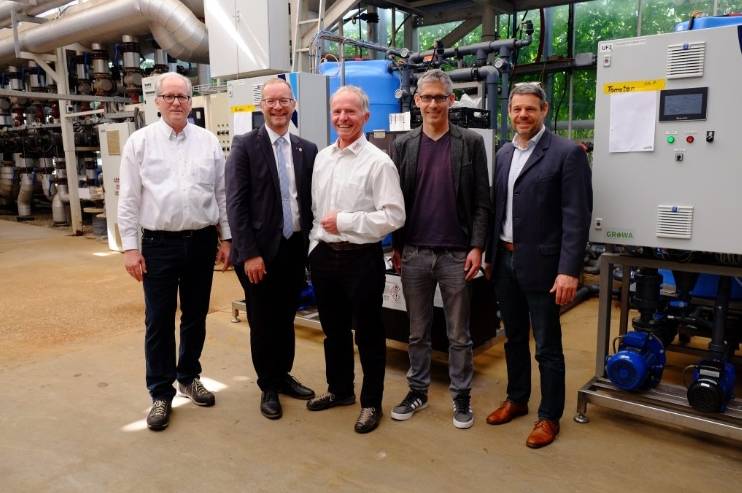
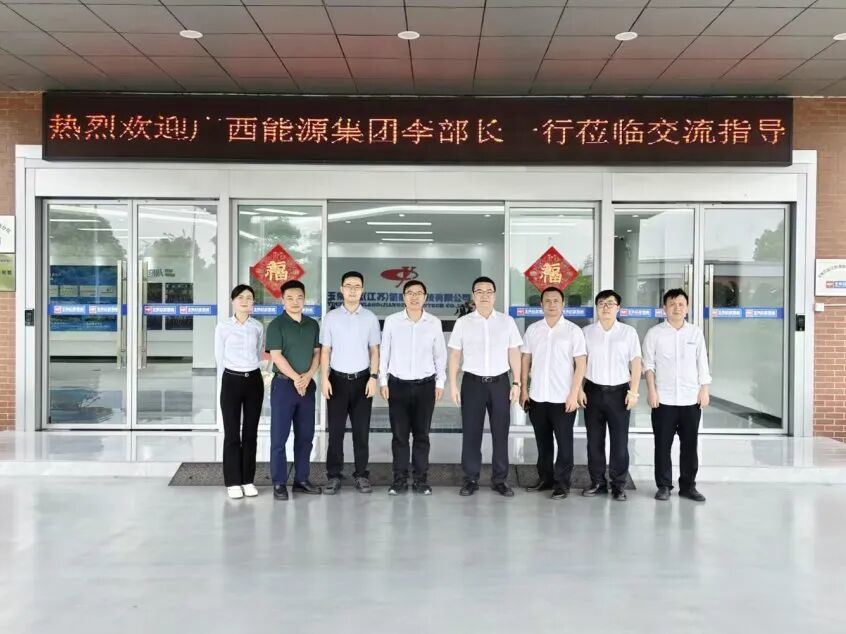
Prime Minister Walter Schönholzer with representatives of Grob Gemüse, University of Bern, and SFOE at the geothermal greenhouse in Schlattingen, Thurgau, Switzerland
Central to the project are two deep boreholes in Schlattingen, which have supplied heat to greenhouses operated by Grob Gemüse AG since 2022. The boreholes, drilled to 1,200 meters into the Muschelkalk formation—a water-bearing clay and limestone layer—provide water at a surface temperature of 64°C. This system has reduced heating oil consumption by approximately 500,000 liters annually.
The boreholes offer a unique opportunity to study the geothermal reservoir. In 2022, the Canton of Thurgau proposed a research project to the Swiss Federal Office of Energy (SFOE), which, along with the canton, is co-funding the initiative. Grob Gemüse AG has made the boreholes available for scientific analysis, with research led by the University of Bern starting in early 2023 through water sample collection.
Philippe Müller, Head of the Energy Research and Cleantech Section at the SFOE, stated: “The goal is to understand how this geothermal reservoir works and thus increase the chances of success for the future use of geothermal energy.”
Analysis reveals distinct origins for the water from the two boreholes. The vertical borehole (Borehole 1) draws water from precipitation that fell during the last Ice Age in the Wutach Valley, southern Black Forest, where the carbonate layer surfaces. In contrast, the deviated borehole (Borehole 2), located about one kilometer away, contains water from deeper crystalline basement layers, as evidenced by elevated helium and lithium levels, according to Dr. Christoph Wanner, the project’s scientific director from the University of Bern.
Dr. Wanner noted: “Fault zones are therefore of particular interest for this type of geothermal energy use, so-called hydrothermal geothermal energy.” The water from Borehole 2, similar to thermal water in Schinznach, Baden, or Riehen, likely cools during its ascent, possibly due to its distance from the extraction point or slow rise along fault zones like the nearby Randen Fault.
The research is informing two models: one simulating groundwater flow near the boreholes and another analyzing fracture networks near fault zones to understand water ascent from deeper layers. These models will enhance knowledge of water-bearing rock layers in Schlattingen and support geothermal development across Thurgau.
Set to conclude in autumn 2025, the project will provide critical data to identify additional geothermal sites, improving the prospects for sustainable energy initiatives in the canton.