Spain's SARA Project Advances Next-Generation Autonomous Manufacturing Systems
en.Wedoany.com Reported - A Spanish initiative, the SARA project, aimed at advancing next-generation autonomous manufacturing systems, is transforming data generated during manufacturing processes into decision-making knowledge by integrating multiple technologies such as artificial intelligence, federated learning, machine vision, robotics, and blockchain. Funded by CDTI (Centre for the Development of Industrial Technology) and AEI (Spanish Innovation Agency), the project brings together a consortium of companies including Fagor Automation and a consortium of research institutions including the Advanced Aerospace Manufacturing Centre (CFAA) at the University of the Basque Country, to validate technologies in real-world scenarios around five industrial demonstrators.
Within the project, CFAA is undertaking three research lines aimed at increasing the autonomy of manufacturing systems. The first work line focuses on applying federated learning to intelligent monitoring of machine tool processes, including cutting fluid condition management and tool remaining useful life prediction. The experimental system developed for this purpose, 'Matabichos', integrates a physical treatment system based on UV-C ultraviolet light and compressed air bubbles, along with an intelligent monitoring platform. Experimental validation showed that this system can significantly reduce total bacteria count and Pseudomonas genus, while continuously recording the evolution of variables such as turbidity, conductivity, pH, and temperature. The system is currently being transferred to a 500-liter tank for testing under conditions closer to industrial reality.
The second work line involves autonomous robotized manufacturing, developing an adaptive trajectory generation system for deburring operations. This system processes deviation signals detected from contours in simple images to generate tool paths that adapt in real-time to the actual conditions of the part. It can quickly detect edges and burrs and dynamically adjust machining conditions based on their size. Tests indicate that the technology can achieve a scale factor of less than one-tenth of a millimeter, requiring at least 5 megapixels in the measurement direction. An autonomous programming tool is currently being developed, allowing the robot to automatically modify its working trajectory based on the measured geometry.
The third work line introduces blockchain technology and digital identities to add a layer of trust to industrial data. An architecture has been developed combining Decentralized Identifiers (DIDs), Verifiable Credentials, and a private blockchain network based on Hyperledger Fabric. Validation performed on an Ibarmia THR 16 machine tool showed that for a 2MB CSV file, the total certification process took approximately 2.388 seconds, indicating that introducing digital identity and certification mechanisms incurs only a minimal time overhead, compatible with standard industrial data acquisition workflows. Current efforts focus on extending this architecture to be applicable to more complex industrial scenarios and to promote interoperability among manufacturers, suppliers, and customers.
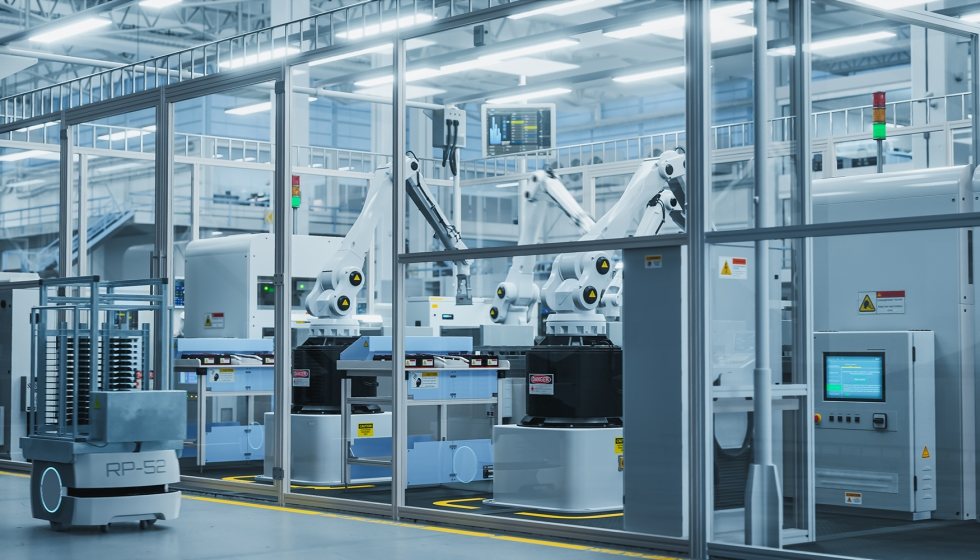
The SARA project addresses autonomy from a holistic perspective, covering the entire process from process definition to execution, monitoring, maintenance, and planning. Its goal is to develop a technological architecture that promotes more autonomous, intelligent, and interconnected manufacturing systems, enabling machines to understand their environment, learn from experience, and act in increasingly intelligent ways. The project's outcomes are significant for enhancing the competitiveness of high-value-added manufacturing sectors such as aerospace.

To achieve its objectives, the project has established five industrial demonstrators, focusing on autonomous assistance in defining new processes, assistance in defining and monitoring process parameter adjustments on machine tools, autonomy in predictive maintenance of machine components, autonomy in robotic manufacturing, and autonomy in flexible factory planning.
Regarding specific technical progress, the Matabichos system developed by CFAA for cutting fluid management has demonstrated effectiveness in experimental validation. Comparative tests in two 25-liter tanks showed that surface contaminants in the treated tank were reduced until they nearly disappeared, and microbiological analysis confirmed a significant reduction in total bacteria count. The monitoring system successfully recorded changes in key variables continuously during one month of real data collection.
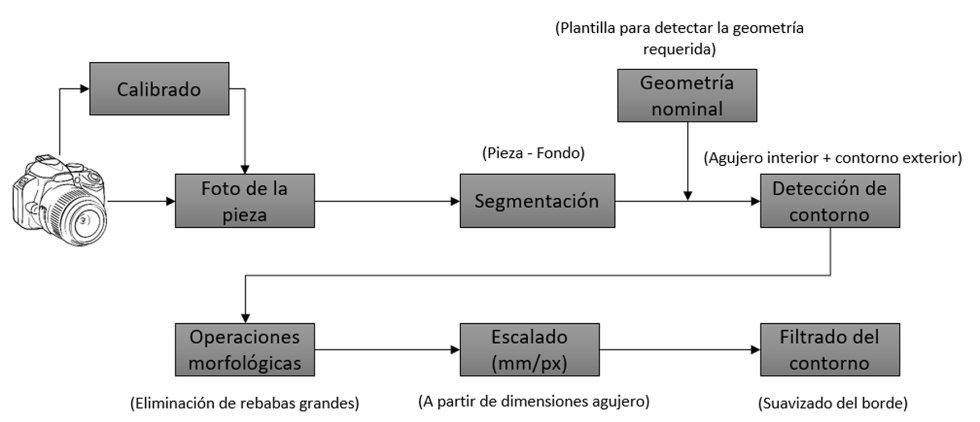
In robotic deburring, the project developed a contour detection technique based on image processing. Using a photographic camera to take 24-megapixel photos at a distance of 420 mm, and reducing resolution with editing tools for testing, results showed that at least 5 megapixels are required in the detection direction. The technique processes images through steps including calibration, segmentation, detection, and scaling to generate robot trajectories adapted to the actual conditions of the part.
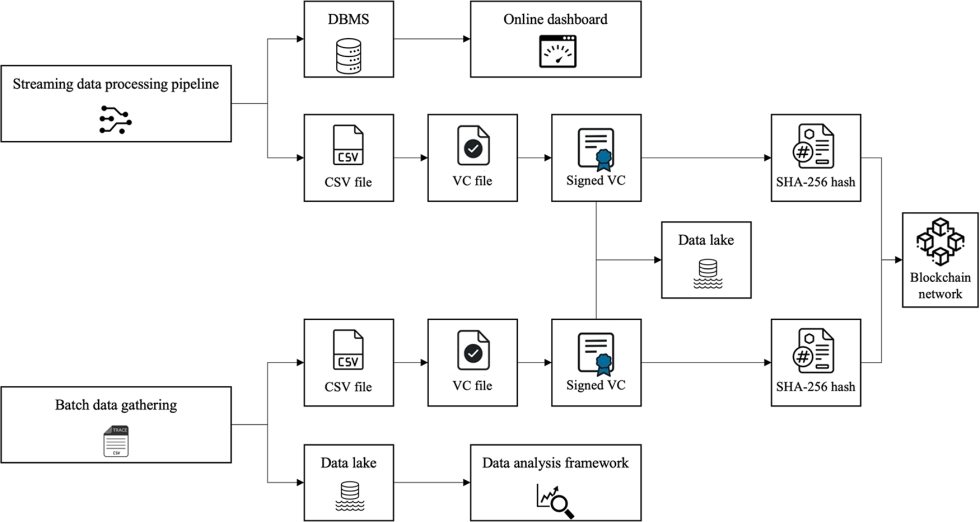
In the area of data trust, performance analysis of the blockchain solution showed that the certification process overhead is small. For a 2MB CSV file, generating a verifiable credential takes approximately 2.29 seconds, SHA-256 hash calculation takes 2.6 milliseconds, and writing the hash to the blockchain takes 94.8 milliseconds. Tests indicate that the architecture is feasible as an additional trust layer on existing industrial infrastructure.
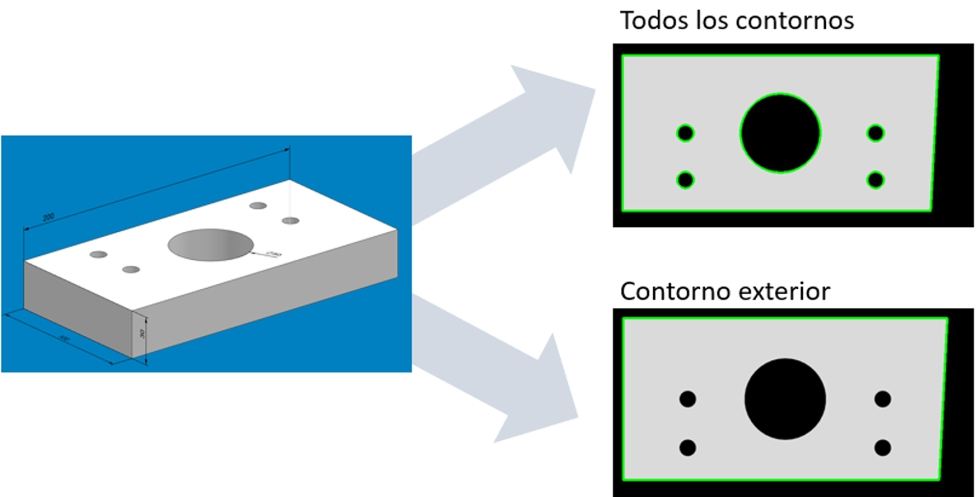
The image processing stages include calibration, part photo acquisition, part-background segmentation, and contour detection using the nominal geometry as a template. Morphological operations are then applied to filter large burrs, scaling is performed in mm/pixel based on aperture size, and finally, the contour geometry, which will guide the robot's updated motion, is smoothed.
The project analyzed acquisition systems suitable for this application, ruling out technologies such as probe measurement, structured light, and laser.
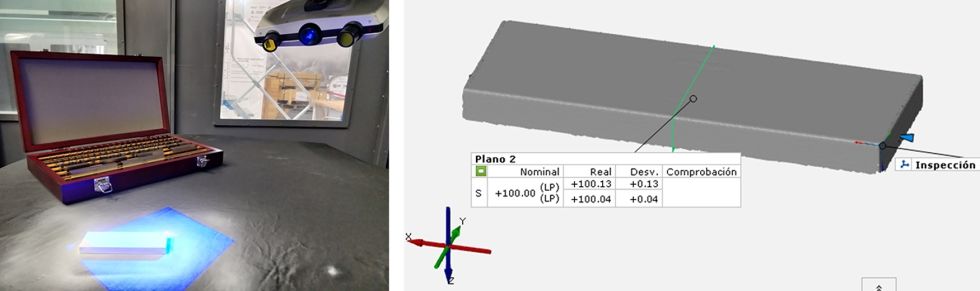
Ultimately, photographic camera image processing was chosen because it is a fast and economical technique, with precision within the defined range, and suitable for edge applications on planar surfaces. The feasibility of this technique was tested in a preliminary setup using a Grade 0 ceramic standard gauge block (length 100 mm) and a calibration hole (50.8 mm) from an IIW-Type1 block.
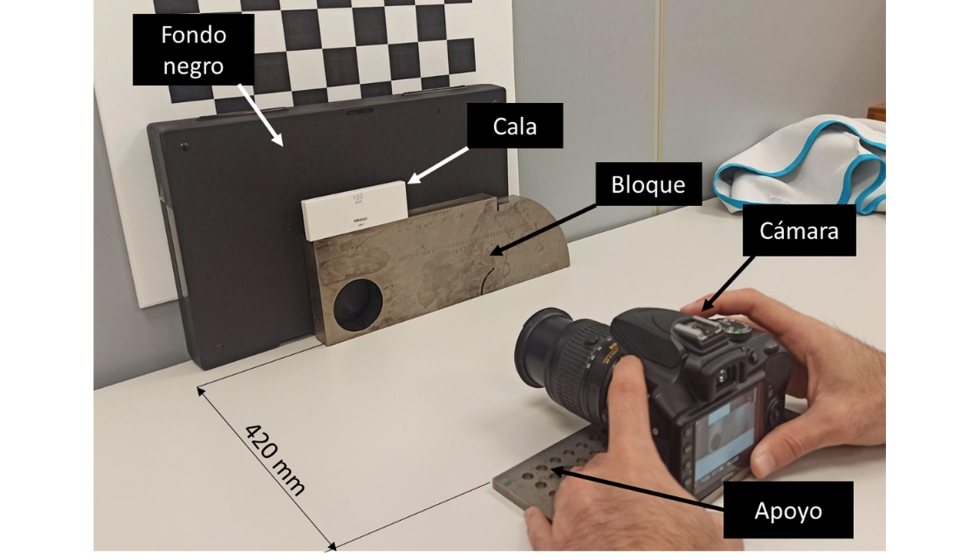
Tests involved taking a single photo with a 24-megapixel camera at a distance of 420 mm. Subsequently, the image resolution was reduced to study its effect on measuring the gauge block length. Results showed that the technique can achieve a scale factor of less than one-tenth of a millimeter, requiring at least 5 megapixels in the measurement direction.
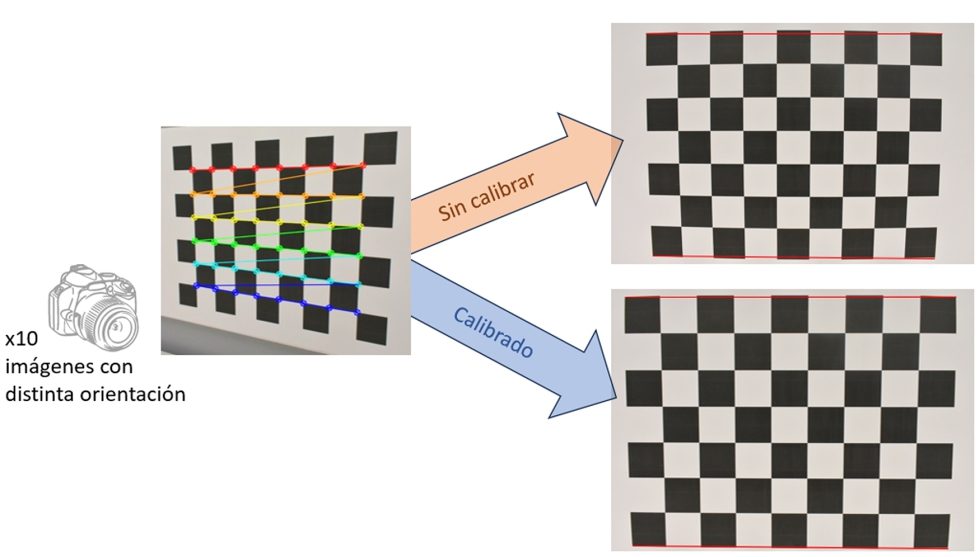
For segmentation, different contour recognition algorithms and filtering techniques will be studied until optimal parameters are found to obtain a complete closed contour of the target part.
In the blockchain area, the developed architecture combines Decentralized Identifiers (DIDs), Verifiable Credentials, and a private blockchain network based on Hyperledger Fabric. Machine-generated data is structured into digital credentials and signed, then stored in CFAA's data lake. A cryptographic hash (SHA-256) is computed for each credential, and only this proof is stored on the blockchain to verify data integrity while maintaining system efficiency.
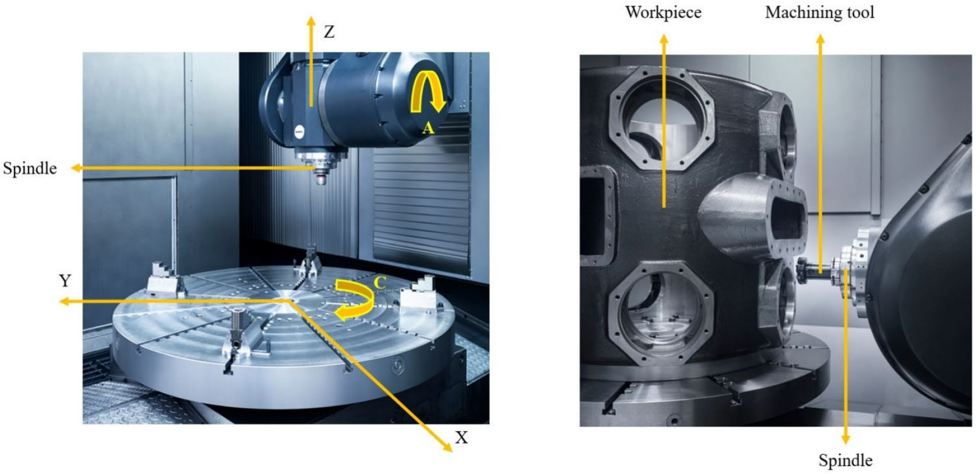
Validation of the blockchain solution was performed on an Ibarmia THR 16 machine tool.
Performance analysis showed that for a 2MB CSV file, the total certification process took approximately 2.388 seconds.

Although the development of various technologies is still ongoing, the results achieved so far validate the feasibility of the proposed solutions, laying the foundation for continuing progress towards more autonomous, interconnected, and efficient manufacturing environments. The project represents a significant step towards a new generation of factories that not only automate processes but also learn, collaborate, and make decisions based on reliable information.
Related Products
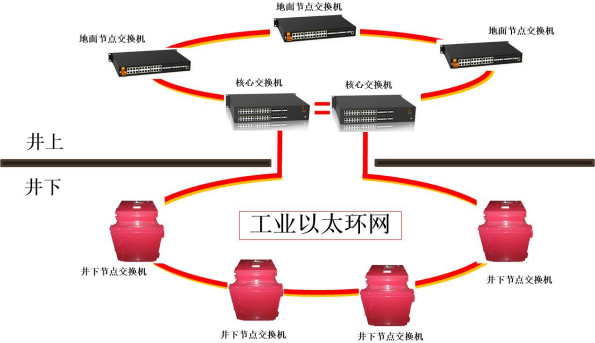

Mine Explosion-proof and Intrinsically Safe Industrial Ethernet Ring Network (10 Gigabit/Gigabit)
Chongqing Mas Sci&Tech Co., Ltd.
TWP16 P-Band Tropospheric Wind Profile Radar
China Huayun Meteorological Technology Group Co., Ltd.
MUX Series Communication Interface Device for Security and Stability Control System
Nanjing NR Electric Co., Ltd.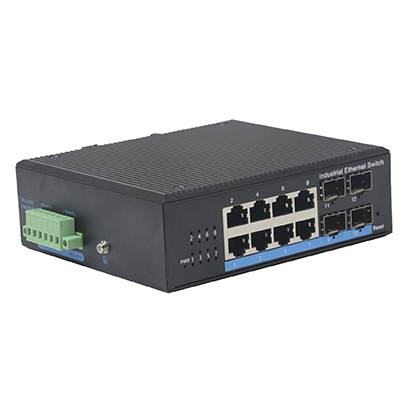

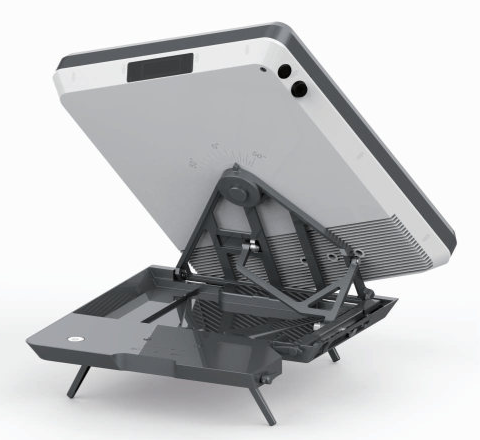
Flat Portable Satellite Terminal 0.35m Aperture Manual Portable Terminal
China Starwin Science & Technology Co., Ltd.
GYTA Type Non-Self-Supporting Aerial/Duct Optical Cable
TONGDING INTERCONNECTION INFORMATION CO., LTD.

Industrial and Commercial Point-Type Gas Detector
Jinan Benan Technology Development Co., Ltd.
20 Inch 1600*900 Full HD 60Hz TFT LED Monitor with VGA and DP Interfaces for Desktop Computers-Business Use
Guangzhou Zanying Optoelectronics Technology Co., Ltd.
Conveyor Belt Intelligent Monitoring System
LUO YANG WIRE ROPE INSPECTION TECHNOLOGY CO., LTD.